
74LS32SC vs CD74AC04M96S2357
| Part Number |
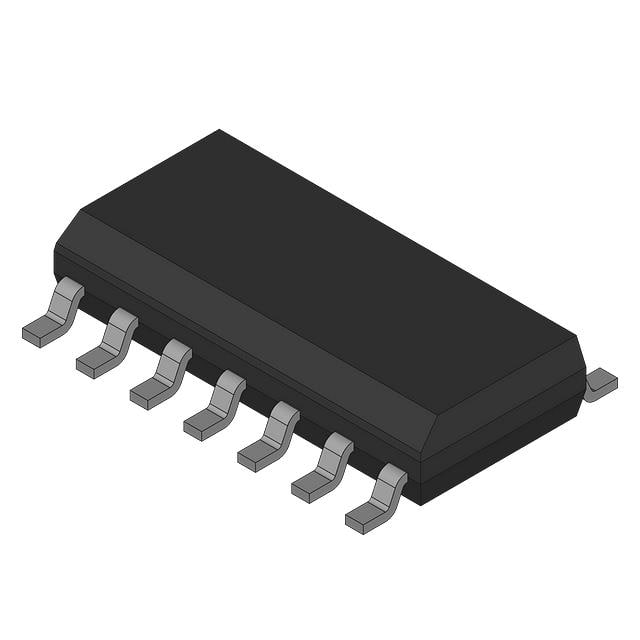
|
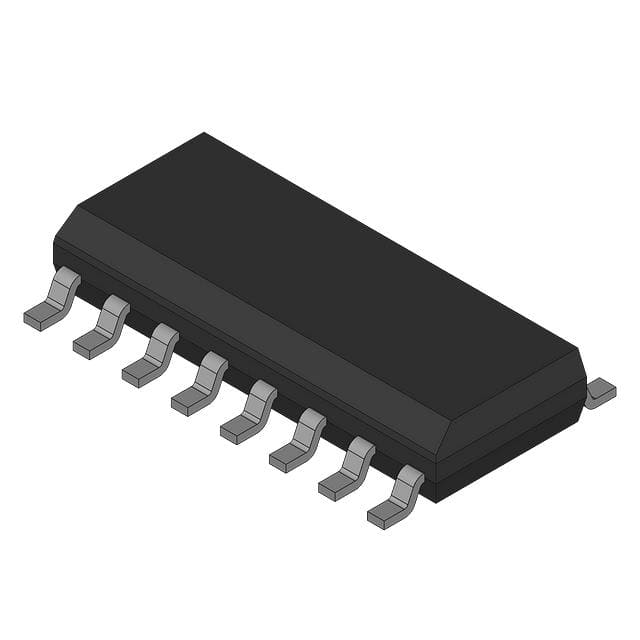
|
| Category | Logic - Gates and Inverters | Logic - Gates and Inverters |
| Manufacturer | National Semiconductor | Texas Instruments |
| Description | OR GATE, TTL | CD74AC04M96S2357, MOS LOGIC AUTO |
| Package | Bulk | Bulk |
| Series | - | - |
| Features | - | - |
| Voltage - Supply | - | - |
| Operating Temperature | - | - |
| Mounting Type | - | - |
| Package / Case | - | - |
| Supplier Device Package | - | - |
| Number of Circuits | - | - |
| Number of Inputs | - | - |
| Current - Output High, Low | - | - |
| Current - Quiescent (Max) | - | - |
| Logic Type | - | - |
| Max Propagation Delay @ V, Max CL | - | - |
| Logic Level - Low | - | - |
| Logic Level - High | - | - |
-
1. What is a logic gate in an IC?
A logic gate in an IC is an electronic component used to perform logic operations. Logic gates are often used to implement basic logic functions such as AND, OR, NOT, etc., and are the basic building blocks in digital circuits.
The working principle of the logic gate is based on the properties of semiconductor materials, especially PN junctions. When a voltage is applied between the source and the drain, current will not flow through this barrier without a gate voltage. However, when an appropriate voltage is applied to the gate, it changes the electric field distribution at the PN junction, allowing current to pass. In short, the gate voltage controls the flow of current from the source to the drain, which enables the transistor to be used as a switch: closed when there is no gate voltage and open when there is a gate voltage.
In integrated circuits (ICs), logic gates usually refer to field effect transistors (FETs) or metal oxide semiconductor field effect transistors (MOSFETs). These transistors have three terminals: source, drain, and gate. The source and drain are the entrance and exit of the current, while the gate is used to control the flow of current. By controlling the gate voltage, the switching control of the current in the circuit can be achieved, thereby performing various logical operations. -
2. Which logic gate can be used as a controlled inverter?
IGBT can be used as a controlled inverter. IGBT (insulated gate bipolar transistor) is a commonly used power electronic device with high input impedance and low on-state voltage drop, which is very suitable for the production of inverters.
The application of IGBT in inverters is mainly reflected in its ability to control the switching state of power electronic equipment. By controlling the on and off of IGBT, the conversion and control of electric energy can be achieved. The switching speed of IGBT is fast, which can meet the requirements of the inverter for response speed. At the same time, its high voltage and high current resistance characteristics make it perform well in high voltage and high current occasions. -
3. Which logic gate is used as an inverter?
NAND gate can be used as an inverter. In digital logic, NAND gate can realize the logic negation function, which is equivalent to an inverter or NOT gate.
The working principle of the NAND gate is to perform an AND operation on two input signals and then take the negation. When both input signals are 0, the output is 1; otherwise, the output is 0. This characteristic enables the NAND gate to achieve signal inversion, that is, when the input is high, the output is low, and when the input is low, the output is high.
In addition to the NAND gate, the inverter can also be implemented through other logic gates, such as the NOR gate, which can also be used as an inverter. The NOR gate performs an OR operation on an input signal and a signal that is always 1 and then takes the negation, which can also achieve the signal inversion function. -
4. Why is it called an inverter?
The name inverter comes from its working principle of converting direct current into alternating current, that is, "reversing" the operation of the rectifier. The inverter was originally called an "inverter" because it converts direct current into alternating current, which is the opposite of the working principle of the rectifier.
The definition and basic function of the inverter is to convert direct current power into alternating current. It is a device that converts the power of a DC power source such as a battery or storage battery into alternating current power for use by various devices that require AC power.
The history of the inverter also reflects the origin of its name. Early inverters were devices that converted AC to DC, while modern inverters reversed the process and converted DC to AC. With the development of technology, inverters have changed from mechanical devices to devices with solid-state circuits, becoming an important part of the field of power electronics.
