
AD648CH vs AD745KN
| Part Number |
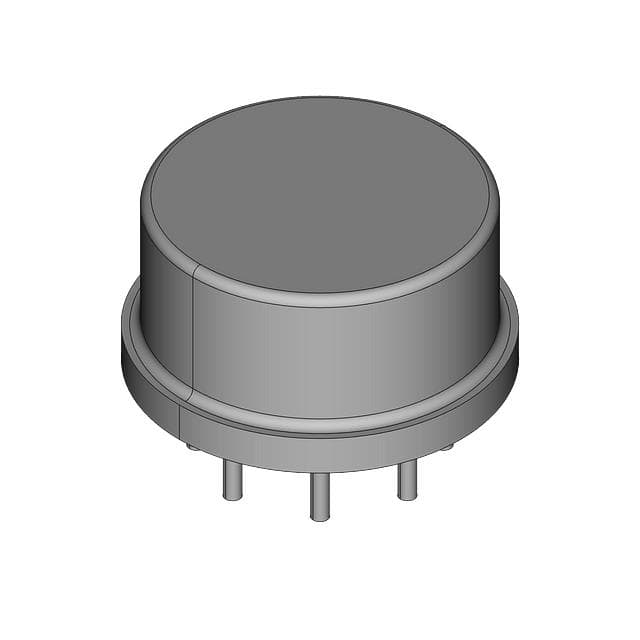
|

|
| Category | Linear - Amplifiers - Instrumentation, OP Amps, Buffer Amps | Linear - Amplifiers - Instrumentation, OP Amps, Buffer Amps |
| Manufacturer | Analog Devices Inc. | Analog Devices Inc. |
| Description | DUAL OP AMP | OP AMP,1000UV OFFSET-MAX |
| Package | Bulk | Bulk |
| Series | - | - |
| Operating Temperature | 0°C ~ 70°C | 0°C ~ 70°C |
| Mounting Type | Surface Mount | Through Hole |
| Package / Case | 8-SOIC (0.154\", 3.90mm Width) | 8-DIP (0.300\", 7.62mm) |
| Supplier Device Package | 8-SOIC | 8-PDIP |
| Current - Supply | 340µA (x2 Channels) | 8mA |
| Output Type | - | - |
| Number of Circuits | 2 | 1 |
| Voltage - Supply, Single/Dual (±) | ±4.5V ~ 18V | ±4.8V ~ 36V, ±18V |
| Current - Output / Channel | 15 mA | 40 mA |
| -3db Bandwidth | 1 MHz | 20 MHz |
| Amplifier Type | J-FET | J-FET |
| Current - Input Bias | 3 pA | 150 pA |
| Voltage - Input Offset | 300 µV | 250 µV |
| Slew Rate | 1.8V/µs | 12V/µs |
| Gain Bandwidth Product | 1 MHz | 20 MHz |
-
1. What is an instrumentation amplifier and what is it mainly used for?
An instrumentation amplifier is a high-precision amplifier designed to amplify low-level differential signals with high input impedance and high common mode rejection ratio (CMRR), and is commonly used in scenarios such as medical equipment, sensor signal processing, and industrial measurements.
-
2. How is the noise performance of instrumentation amplifiers optimized?
Select low-noise amplifiers in your design and use shielding, filters, and precise power management to minimize external noise. High-quality resistors should be used wherever possible and PCB layout should be optimized to reduce noise coupling.
-
3. How to choose the right operational amplifier?
Parameters such as input offset voltage, input bias current, gain bandwidth product, slew rate, noise characteristics, supply voltage, and power consumption should be considered when selecting an operational amplifier to meet the needs of a particular application.
-
4. What is the effect of the op amp's out-of-range voltage on accuracy?
An out-of-phase voltage is the difference in voltage at which the output is not zero when the signal at the input is zero. A large out-of-phase voltage reduces the accuracy of a system, especially in high-gain applications, and selecting an op amp with a low out-of-phase voltage can improve accuracy.
