
ALPHA7/4M/FMEF/SMAM/S/S/11 vs ANT-PUKDB
| Part Number |

|
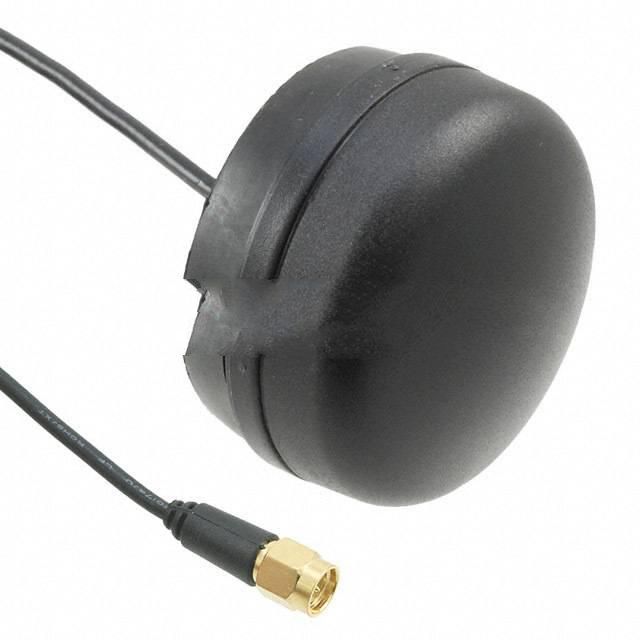
|
| Category | RF Antennas | RF Antennas |
| Manufacturer | Siretta Ltd | RF Solutions |
| Description | ANT PUCK FME FEMALE ADHESIVE MNT | RUGGED PUK ANTENNA 433/868MHZ IP |
| Package | - | - |
| Series | ALPHA 7 | - |
| Mounting Type | Adhesive | Panel Mount |
| Applications | GPRS, GPS, GSM | - |
| Gain | 27dB | 2dBi |
| Frequency Group | UHF (300 MHz ~ 1 GHz), UHF (1 GHz ~ 2 GHz) | UHF (300 MHz ~ 1 GHz) |
| Frequency (Center/Band) | 900MHz, 1.575GHz, 1.8GHz | 433MHz, 868MHz |
| Antenna Type | Puck | Puck |
| Number of Bands | 3 | 2 |
| VSWR | 2 | 1.5, 1.3 |
| Termination | Connector, FME Female | Cable (1.5M) - SMA Male |
| Height (Max) | 0.689" (17.50mm) | 0.957" (24.30mm) |
| Return Loss | - | -14.7dB, -16.8dB |
| Ingress Protection | - | IP67 |
-
1. What is antenna gain, and why is it important?
Antenna gain measures how effectively an antenna directs or focuses energy compared to an isotropic source. Higher gain antennas provide better range and signal strength in a specific direction.
-
2. What is polarization in RF antennas?
Polarization refers to the orientation of the electric field of the signal. It can be linear (vertical or horizontal) or circular. Matching the polarization between the transmitter and receiver improves efficiency.
-
3. What is an embedded RF antenna?
Embedded antennas are integrated into devices such as smartphones or IoT sensors, designed to be compact while maintaining signal performance.
-
4. Can RF antennas be used for both transmitting and receiving signals?
Yes, most RF antennas are designed to work bidirectionally, capable of both transmitting and receiving signals within their specified frequency range.
