
BAS40-04/ZLR vs MBR20H100CT-E3/4W
| Part Number |
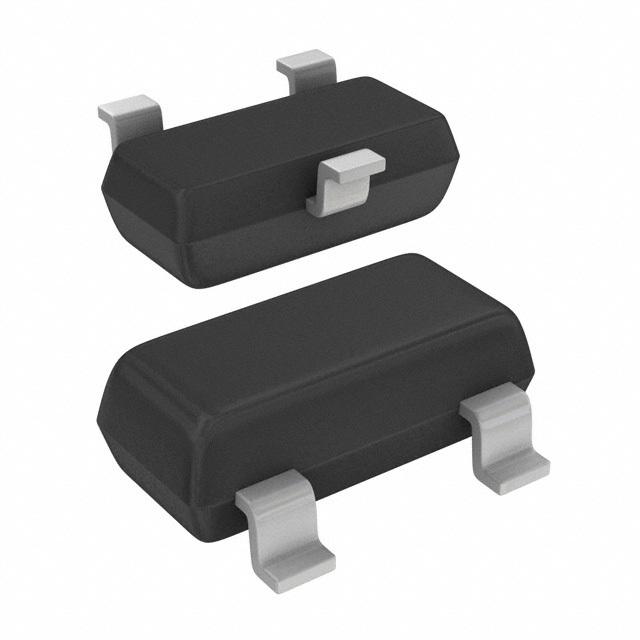
|

|
| Category | Diodes - Rectifiers - Arrays | Diodes - Rectifiers - Arrays |
| Manufacturer | NXP USA Inc. | Vishay Semiconductor - Diodes Division |
| Description | DIODE ARRAY SCHOTTKY 40V SOT23 | DIODE SCHOTTKY DUAL CC TO220 |
| Package | Tape & Reel (TR) | Tray |
| Series | - | - |
| Mounting Type | Surface Mount | Through Hole |
| Package / Case | TO-236-3, SC-59, SOT-23-3 | TO-220-3 |
| Supplier Device Package | SOT-23 (TO-236AB) | TO-220-3 |
| Diode Type | Schottky | Schottky |
| Voltage - Forward (Vf) (Max) @ If | 1 V @ 40 mA | 770 mV @ 10 A |
| Current - Reverse Leakage @ Vr | 10 µA @ 40 V | 4.5 µA @ 100 V |
| Diode Configuration | 1 Pair Series Connection | 1 Pair Common Cathode |
| Voltage - DC Reverse (Vr) (Max) | 40 V | 100 V |
| Current - Average Rectified (Io) (per Diode) | 120mA (DC) | 10A |
| Speed | Small Signal =< 200mA (Io), Any Speed | Fast Recovery =< 500ns, > 200mA (Io) |
| Reverse Recovery Time (trr) | - | - |
| Operating Temperature - Junction | 150°C (Max) | -65°C ~ 175°C |
-
1. What are the typical applications of rectifier diode arrays?
They are widely used in power modules, chargers, communication equipment, automotive electronics, industrial control systems, and motor drives, especially in complex circuits that require multiple rectification paths.
-
2. What packaging types does the rectifier diode array support?
Common packaging includes SMD (Surface Mount), DIP (Dual In Line), and TO packaging, which are suitable for different installation requirements. SMD packaging is suitable for space constrained designs, while DIP and TO packaging are suitable for higher power applications.
-
3. Does each diode in the rectifier diode array work independently?
Yes, each diode in the rectifier diode array is usually independent and can perform rectification or protection tasks separately. Designers can use them in parallel or series according to their needs to form specific circuit configurations.
-
4. Can rectifier diode arrays be used for high-frequency applications?
Yes, especially with arrays of Schottky diodes or fast recovery diodes, it is suitable for rectification tasks in high-frequency applications, which can reduce switching losses and improve conversion efficiency.
