
CCB3T16210QDGGRQ1 vs MC100EL58DG
| Part Number |
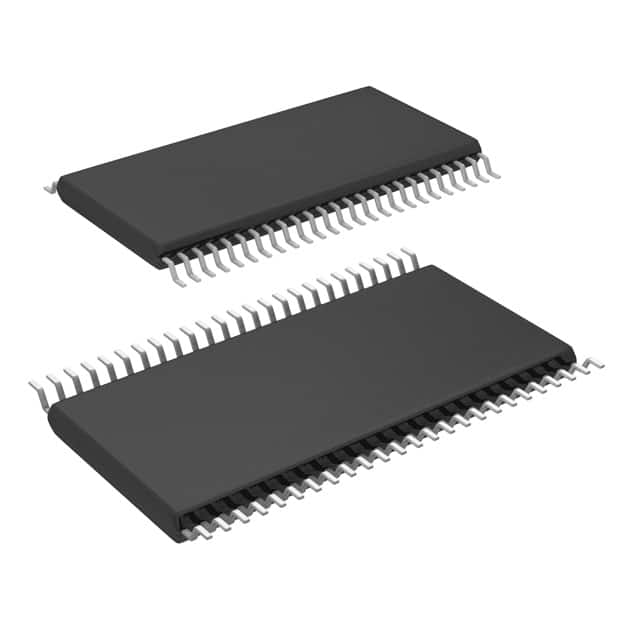
|

|
| Category | Logic - Signal Switches, Multiplexers, Decoders | Logic - Signal Switches, Multiplexers, Decoders |
| Manufacturer | Texas Instruments | ON Semiconductor |
| Description | IC BUS SWITCH 10 X 1:1 48TSSOP | BBG ECL MLTIPLXR 2:1 |
| Package | Tape & Reel (TR) | Bulk |
| Series | Automotive, AEC-Q100, 74CB | 100EL |
| Type | Bus Switch | Multiplexer |
| Voltage - Supply | 2.3V ~ 3.6V | ±4.2V ~ 5.7V |
| Operating Temperature | -40°C ~ 125°C | -40°C ~ 85°C |
| Mounting Type | Surface Mount | Surface Mount |
| Package / Case | 48-TFSOP (0.240\", 6.10mm Width) | 8-SOIC (0.154\", 3.90mm Width) |
| Supplier Device Package | 48-TSSOP | 8-SOIC |
| Voltage Supply Source | Single Supply | Dual Supply |
| Circuit | 10 x 1:1 | 1 x 2:1 |
| Current - Output High, Low | - | - |
| Independent Circuits | 2 | 1 |
-
1. What is a signal switch?
A signal switch is an electronic component that controls the path of a signal. It can be mechanical (such as a toggle switch, button, etc.) or electronic (such as a transistor, field effect tube, etc.). The main function of a signal switch is to switch the signal path between different circuits, or to turn on/off a specific signal line.
-
2. How does a signal switch work?
When a signal switch is activated, it changes the path of the signal. In simple mechanical switches, this usually means connecting or disconnecting between physical contact points. For electronic switches, such as MOSFETs or BJTs, the on and off states are controlled by applying voltage or current to achieve the conduction or blocking of signals.
-
3. Is a decoder a transmitter or a receiver?
A decoder is neither a transmitter nor a receiver, but is located between the two to process received data or prepare data to be sent.
-
4. What are the applications of decoders?
Display driver
Address decoding
Control signal generation
Data conversion
