
D151G33U2JH6UJ5R vs D151G33U2JH6TL2R
| Part Number |
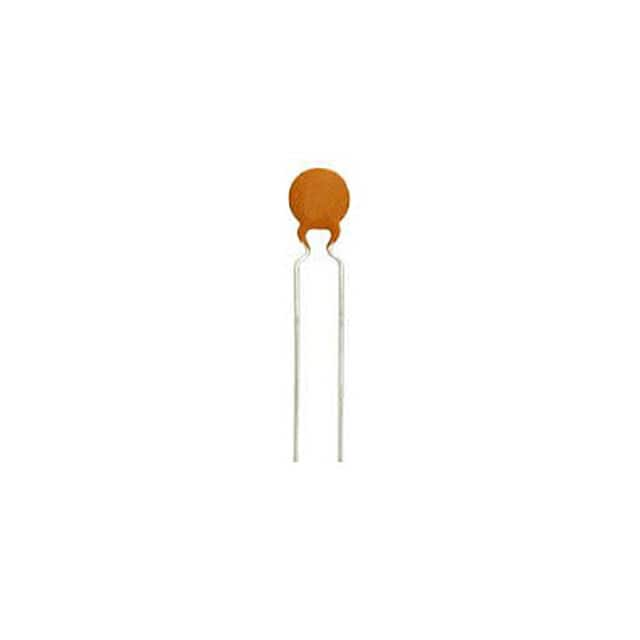
|
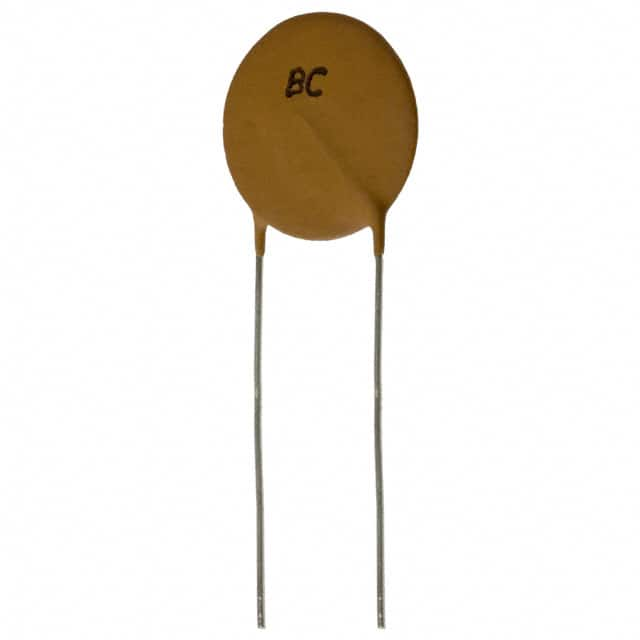
|
| Category | Ceramic Capacitors | Ceramic Capacitors |
| Manufacturer | Vishay Beyschlag/Draloric/BC Components | Vishay Beyschlag/Draloric/BC Components |
| Description | CAP CER 150PF 100V U2J RADIAL | CAP CER 150PF 100V U2J RADIAL |
| Package | Tape & Box (TB) | Tape & Reel (TR) |
| Series | D | D |
| Features | - | - |
| Operating Temperature | -55°C ~ 125°C | -55°C ~ 125°C |
| Mounting Type | Through Hole | Through Hole |
| Package / Case | Radial, Disc | Radial, Disc |
| Applications | General Purpose | General Purpose |
| Tolerance | ±2% | ±2% |
| Temperature Coefficient | U2J | U2J |
| Size / Dimension | 0.335\" Dia (8.50mm) | 0.335\" Dia (8.50mm) |
| Voltage - Rated | 100V | 100V |
| Lead Spacing | 0.197\" (5.00mm) | 0.098\" (2.50mm) |
| Thickness (Max) | - | - |
| Ratings | - | - |
| Height - Seated (Max) | - | - |
| Capacitance | 150 pF | 150 pF |
| Lead Style | Formed Leads - Kinked | Straight |
| Failure Rate | - | - |
-
1. What are ceramic capacitors used for?
Ceramic capacitors are widely used in various electronic devices, mainly for:
Coupling and decoupling: used in circuits to isolate DC signals while transmitting AC signals.
Filtering: remove noise from the power supply or smooth the output voltage.
Resonant circuit: such as oscillators in radio frequency (RF) circuits.
Temperature compensation: some types of ceramic capacitors have temperature coefficients that can be used to stabilize circuit performance.
Bypass: provide a low impedance path for high-frequency signals, thereby reducing the impact on other parts. -
2. What is the difference between ceramic capacitors and electrolytic capacitors?
Polarity: Ceramic capacitors are non-polar, while electrolytic capacitors are polar.
Capacity range: Electrolytic capacitors generally offer larger capacitance values.
Stability: Ceramic capacitors are more stable, especially when the temperature changes.
Lifespan: Ceramic capacitors have a longer lifespan because there is no liquid electrolyte to dry out. -
3. Does the voltage of ceramic capacitors matter?
Voltage ratings are critical to ensure safe operation. Using a capacitor below the rated voltage may cause premature failure; using a capacitor above the rated voltage may cause immediate damage.
-
4. Can I replace ceramic capacitors with film capacitors?
Film capacitors can be used to replace ceramic capacitors in some application scenarios, especially when better temperature stability and lower losses are required.
