
FDH400 vs BAV21WS-7-F
| Part Number |

|
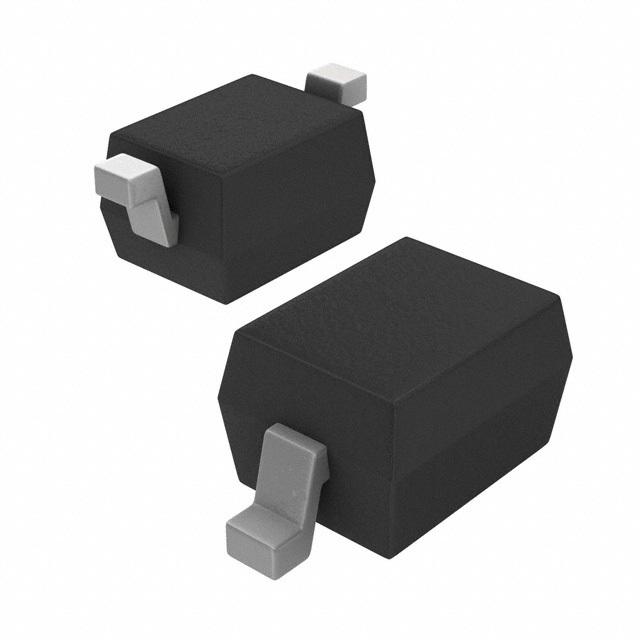
|
| Category | Diodes - Rectifiers - Single | Diodes - Rectifiers - Single |
| Manufacturer | ON Semiconductor | Diodes Incorporated |
| Description | DIODE GEN PURP 150V 200MA DO35 | DIODE GEN PURP 200V 200MA SOD323 |
| Package | Tape & Reel (TR) | Cut Tape (CT) |
| Series | - | - |
| Mounting Type | Through Hole | Surface Mount |
| Package / Case | DO-204AH, DO-35, Axial | SC-76, SOD-323 |
| Supplier Device Package | DO-35 | SOD-323 |
| Diode Type | Standard | Standard |
| Current - Average Rectified (Io) | 200mA | 200mA |
| Voltage - Forward (Vf) (Max) @ If | 1.1 V @ 300 mA | 1.25 V @ 200 mA |
| Current - Reverse Leakage @ Vr | 100 nA @ 150 V | 100 nA @ 200 V |
| Capacitance @ Vr, F | 2pF @ 0V, 1MHz | 5pF @ 0V, 1MHz |
| Voltage - DC Reverse (Vr) (Max) | 150 V | 200 V |
| Speed | Small Signal =< 200mA (Io), Any Speed | Small Signal =< 200mA (Io), Any Speed |
| Reverse Recovery Time (trr) | 50 ns | 50 ns |
| Operating Temperature - Junction | 175°C (Max) | -65°C ~ 150°C |
-
1. What is the working principle of a single rectifier diode?
A rectifier diode conducts current when forward biased, converting the positive half wave of alternating current into direct current. When reverse biased, the diode blocks the current, thereby preventing the negative half wave from passing through and achieving rectification effect.
-
2. What is the maximum reverse voltage (PIV) of a rectifier diode?
The Peak Inverse Voltage (PIV) is the maximum reverse voltage that a diode can withstand. When selecting a diode, the PIV must be higher than the maximum reverse voltage in the circuit, usually twice or more the input voltage.
-
3. What is the reverse recovery time of a rectifier diode?
Reverse recovery time refers to the time required for a diode to transition from a forward conducting state to a reverse blocking state. A shorter reverse recovery time is particularly important in high-frequency applications to reduce power loss.
-
4. How to identify the polarity of a single rectifier diode?
Rectifying diodes usually have polarity markings, with the positive (anode) of the diode being "+" and the negative (cathode) being "-". On the packaging of diodes, there is usually a circular mark on the cathode side indicating the direction of the diode.
