
INA206AIPWR vs INA201AIDR
| Part Number |

|
|
| Category | PMIC - Current Regulation/Management | PMIC - Current Regulation/Management |
| Manufacturer | Texas Instruments | National Semiconductor |
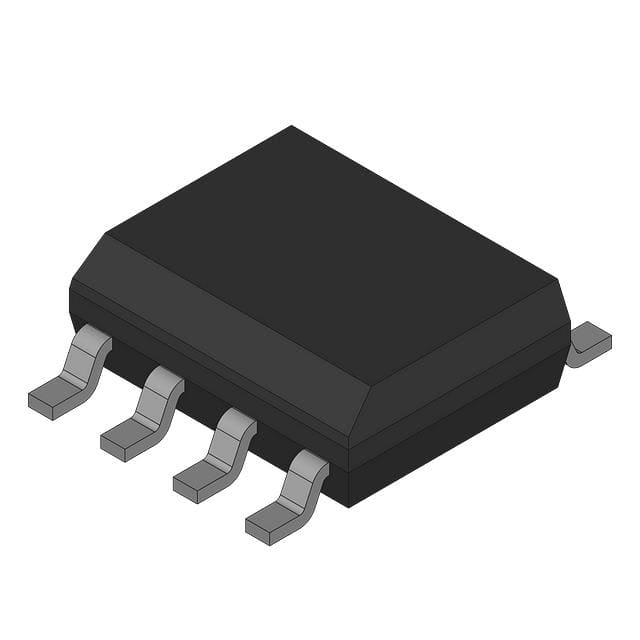
| Description | IC CURRENT SHUNT MONITOR 14TSSOP | INA201 80V, LOW-/HIGH-SIDE, HIGH |
| Package | Bulk | Bulk |
| Series | - | - |
| Operating Temperature | -40°C ~ 125°C | -40°C ~ 125°C |
| Mounting Type | Surface Mount | Surface Mount |
| Package / Case | 14-TSSOP (0.173\", 4.40mm Width) | 8-SOIC (0.154\", 3.90mm Width) |
| Supplier Device Package | 14-TSSOP | 8-SOIC |
| Function | Current Monitor | Current Monitor |
| Accuracy | ±3.5% | ±3.5% |
| Current - Output | 1mA | - |
| Voltage - Input | -16V ~ 80V | -16V ~ 80V |
| Sensing Method | High-Side | High-Side |
-
1. What is a PMIC current regulation/management IC? What is its main function?
A current regulation/management IC is a power management integrated circuit (PMIC) used to control and regulate the current in a circuit. It is mainly used to stabilize current output, prevent overcurrent, protect circuits, and ensure efficient and safe operation of the device.
-
2. What are the typical application scenarios of PMIC current regulators?
Current regulators are commonly used in scenarios such as LED driving, charging management, battery protection, motor control, and sensor circuits to provide precise current control and protection functions.
-
3. What is the difference between a current regulation IC and a voltage regulation IC?
The current regulation IC is responsible for controlling the current to ensure that the load obtains the appropriate amount of current, while the voltage regulation IC is responsible for controlling the voltage output to maintain a stable voltage supply. Both have their own responsibilities in power management.
-
4. What is over-current protection (OCP) in current management ICs?
Over-current protection (OCP) is a protection mechanism that automatically limits or cuts off the current when an excessive current is detected to prevent circuit damage or thermal runaway.
