
PBPC604 vs PBPC605
| Part Number |
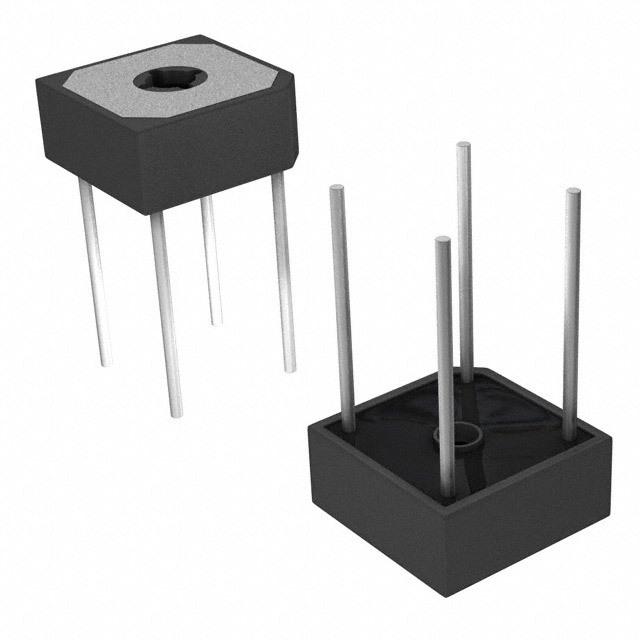
|
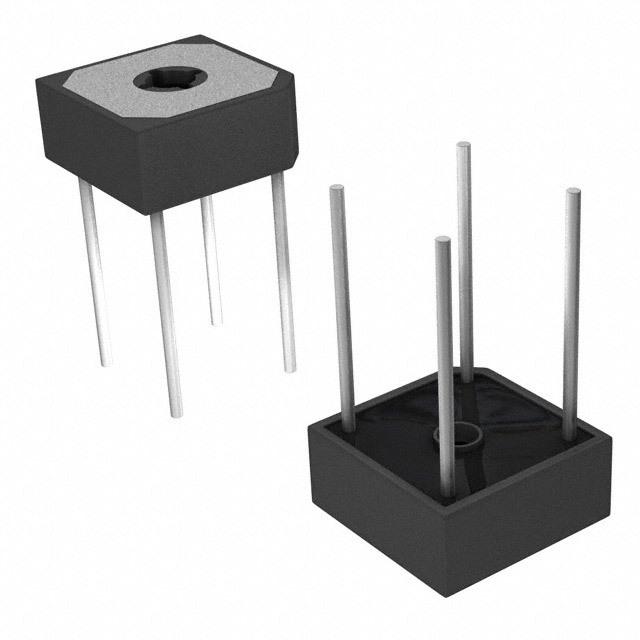
|
| Category | Diodes - Bridge Rectifiers | Diodes - Bridge Rectifiers |
| Manufacturer | Diodes Incorporated | Diodes Incorporated |
| Description | BRIDGE RECT 1P 400V 4A PBPC-6 | BRIDGE RECT 1P 600V 4A PBPC-6 |
| Package | Bulk | Bulk |
| Series | - | - |
| Operating Temperature | -65°C ~ 125°C (TJ) | -65°C ~ 125°C (TJ) |
| Mounting Type | Through Hole | Through Hole |
| Package / Case | 4-Square, PBPC-6 | 4-Square, PBPC-6 |
| Supplier Device Package | PBPC-6 | PBPC-6 |
| Technology | Standard | Standard |
| Diode Type | Single Phase | Single Phase |
| Voltage - Peak Reverse (Max) | 400 V | 600 V |
| Current - Average Rectified (Io) | 4 A | 4 A |
| Voltage - Forward (Vf) (Max) @ If | 1.1 V @ 3 A | 1.1 V @ 3 A |
| Current - Reverse Leakage @ Vr | 10 µA @ 400 V | 10 µA @ 600 V |
-
1. What are the common applications of bridge rectifiers?
Bridge rectifiers are widely used in power supplies, chargers, household appliances, power tools, lighting systems, and various electronic devices to provide stable DC power.
-
2. How to choose a suitable bridge rectifier?
When choosing a bridge rectifier, the following factors need to be considered:
Current capacity: Select the appropriate rectification current capacity according to the load demand.
Voltage level: Ensure that the rectifier can withstand the maximum peak voltage of the input.
Forward voltage drop: The lower the forward voltage drop, the higher the efficiency.
Packaging form: Choose the packaging type that is suitable for the circuit board or heat dissipation requirements. -
3. Does the bridge rectifier require heat dissipation?
Yes, high-power bridge rectifiers typically generate a large amount of heat and require cooling through radiators or cooling schemes to reduce temperature and prevent component damage due to overheating.
-
4. How to reduce the ripple voltage of bridge rectifier?
Ripple voltage can be reduced by adding filtering capacitors or using more complex filters (such as inductive filters) in the rectifier circuit, resulting in a smoother DC output.
