
S-1740C18-A6T2U4 vs BU12JA2DG-CTR
| Part Number |
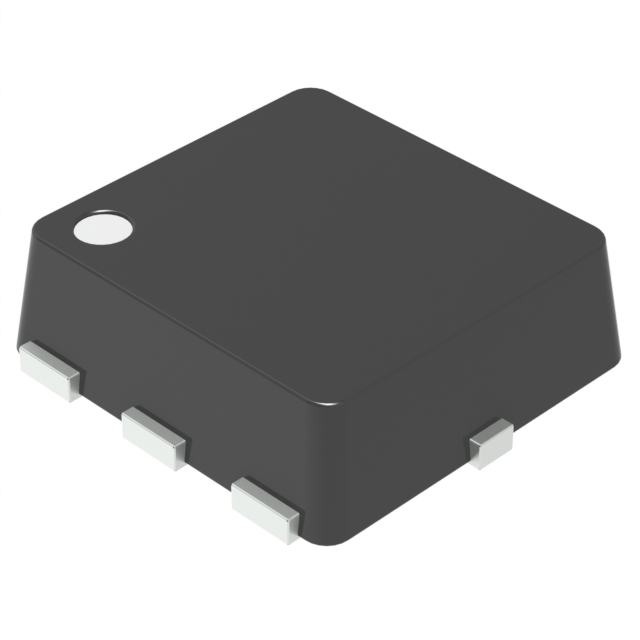
|

|
| Category | PMIC - Voltage Regulators - Linear | PMIC - Voltage Regulators - Linear |
| Manufacturer | ABLIC U.S.A. Inc. | Rohm Semiconductor |
| Description | IC REG LINEAR 1.8V 100MA HSNT6-B | IC REG LINEAR 1.2V 100MA 5SSOP |
| Package | Tape & Reel (TR) | Tape & Reel (TR) |
| Series | S-1740 | Automotive, AEC-Q100 |
| Operating Temperature | -40°C ~ 85°C (TA) | -40°C ~ 125°C (TA) |
| Mounting Type | Surface Mount | Surface Mount |
| Package / Case | 6-SMD, Flat Lead Exposed Pad | SC-74A, SOT-753 |
| Supplier Device Package | HSNT-6-B | 5-SSOP |
| Output Type | Fixed | Fixed |
| Voltage - Output (Min/Fixed) | 1.8V | 1.2V |
| Voltage - Output (Max) | - | - |
| Current - Output | 100mA | 100mA |
| Output Configuration | Positive | Positive |
| Control Features | Enable | Enable |
| Voltage - Input (Max) | 5.5V | 6V |
| Number of Regulators | 1 | 1 |
| Voltage Dropout (Max) | 0.05V @ 10mA | - |
| Current - Quiescent (Iq) | 530 nA | 80 µA |
| Current - Supply (Max) | - | - |
| PSRR | - | 68dB (1kHz) |
| Protection Features | Over Current | Over Current, Over Temperature |
-
1. What are the disadvantages of linear regulators?
The disadvantage of linear regulators is that they are not efficient and can only be used in voltage reduction applications. The efficiency of a linear regulator depends on the ratio of output voltage to input voltage: turbidity = Vo: Vi. For example, for ordinary linear regulators, when the input voltage is 5V and the output voltage is 2.5V, the efficiency is only 50%. For ordinary linear regulators, about 50% of the electrical energy is converted into "heat" and lost, which is also the main reason why ordinary linear regulators are prone to heat when working. For LDO, due to its low voltage difference, the efficiency is much higher. For example, when the input voltage is 3.3V and the output voltage is 2.5V, its efficiency can reach 76%. Therefore, in LCD color TVs, in order to improve the utilization rate of electrical energy, ordinary linear regulators are used less, while LDOs are used more.
-
2. What is the difference between a linear regulator and a resistor?
Linear regulators and resistors have significant differences in function, working principle and application scenarios.
Function and working principle:
A linear regulator is an electronic device that achieves a stable voltage output by adjusting linear elements (such as resistors, transistors, etc.) in the circuit. It uses the negative feedback principle. When the input voltage changes, the regulator senses this change and adjusts the parameters of the circuit elements (such as the resistance value or the conduction state of the transistor) accordingly to keep the output voltage stable within the required range. Linear regulators can provide lower output noise and fluctuations, and have better responsiveness to load changes.
Resistors are a basic electronic component used to limit current and divide voltage. It works by hindering the flow of current, has a fixed resistance value, and does not have the function of adjusting the output voltage.
Application scenarios:
Linear regulator -
3. Can a linear regulator be up?
Linear regulators cannot be boost.
The main function of a linear regulator is to stabilize the output voltage, protecting the electrical equipment from high or unstable voltage effects. It realizes a stable output voltage by adjusting the gap between the output voltage and the input voltage, but this process is limited to lowering the voltage, not including the voltage. The working principle of a linear regulator is to regulate the voltage by converting excess voltage into heat loss, thereby realizing the voltage regulation. This feature determines that it does not have the voltage function. -
4. What is the minimum input voltage of a linear regulator?
The minimum input voltage range of linear regulator varies from model and application.
For certain low -voltage lower -voltage regulators, its minimum input voltage range is usually 2.5V to 2.7V. This type of regulator design is used to power the internal LDO drive circuit and can drive PMOS FET to provide high output current. However, when the output voltage is lower than 1.8V and the output current is greater than 2.5A, the linear regulator with PMOS bypass components may be used for external heat dissipation due to additional air flow requirements and/or the heat generated by the regulator. It becomes inconvenient and the cost will increase.
For universal linear stabilizers, its input voltage range can be very wide. For example, some general -purpose linear regulators have 3V to 40V input voltage range. Even for models suitable for 24V systems, the input maximum voltage can reach 60V Then, then
In summary, the minimum input voltage of the linear regulator does not have a fixed st
