
SFT1202-TL-E vs NJVMJD45H11G
| Part Number |

|
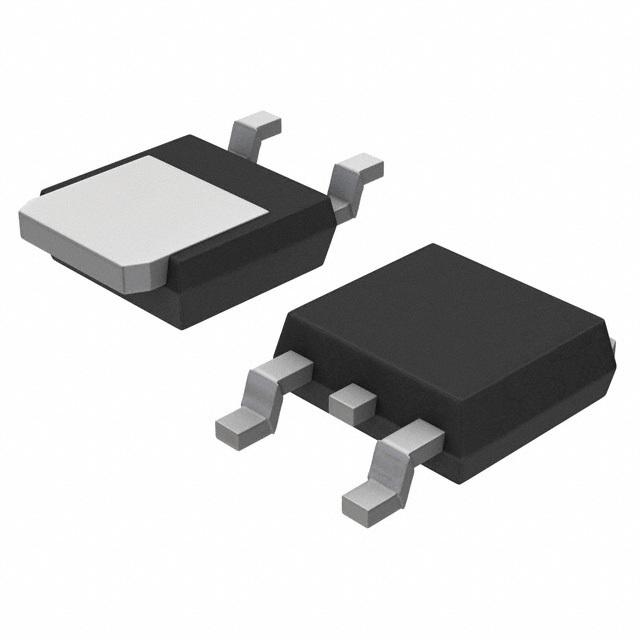
|
| Category | Transistors - Bipolar (BJT) - Single | Transistors - Bipolar (BJT) - Single |
| Manufacturer | ON Semiconductor | ON Semiconductor |
| Description | TRANS NPN 150V 2A TPFA | TRANS PNP 50V 8A DPAK-4 |
| Package | Tape & Reel (TR) | Bulk |
| Series | - | - |
| Operating Temperature | 150°C (TJ) | -55°C ~ 150°C (TJ) |
| Mounting Type | Surface Mount | Surface Mount |
| Package / Case | TO-252-3, DPak (2 Leads + Tab), SC-63 | TO-252-3, DPak (2 Leads + Tab), SC-63 |
| Supplier Device Package | TP-FA | DPAK |
| Power - Max | 1 W | 1.75 W |
| Transistor Type | NPN | PNP |
| Current - Collector (Ic) (Max) | 2 A | 8 A |
| Voltage - Collector Emitter Breakdown (Max) | 150 V | 50 V |
| Vce Saturation (Max) @ Ib, Ic | 165mV @ 100mA, 1A | 1V @ 400mA, 8A |
| Current - Collector Cutoff (Max) | 1µA (ICBO) | 1µA |
| DC Current Gain (hFE) (Min) @ Ic, Vce | 200 @ 100mA, 5V | 40 @ 4A, 1V |
| Frequency - Transition | 140MHz | 90MHz |
-
1. What is a bipolar transistor?
A bipolar transistor, or bipolar junction transistor (BJT), is an electronic device with three terminals, consisting of three semiconductors with different doping levels. It was successfully developed by William Shockley, John Bardeen and Walter Brattain of Bell Labs in 1947, marking the birth of semiconductor device technology.
-
2. Is BJT bipolar or unipolar?
BJT (bipolar junction transistor) is bipolar. BJT (bipolar junction transistor) is composed of two N-type semiconductors sandwiched between a P-type semiconductor, with an emitter junction formed between the emitter and the base, and a collector junction formed between the collector and the base. When the power is turned on, the majority carriers (electrons) in the emitter and the majority carriers (holes) in the base diffuse with each other, forming a current amplification effect.
The working principle of BJT is to achieve current amplification through the control of two PN junctions (emitter junction and collector junction). When the emitter junction is forward biased, electrons are injected from the emitter region into the base region; when the collector junction is reverse biased, electrons are injected from the base region into the collector region. Because the base region is very thin and the impurity content is strictly controlled, most electrons can enter the collector region through the collector junction to form the collector current Ic, and only a small number of electrons recombine with holes in the base region to form the base current Ib. Therefore, by controlling the base current Ib, the collector current Ic can be amplified to achieve current amplification. -
3. What is the difference between bipolar transistors and CMOS transistors?
The main differences between bipolar transistors and CMOS transistors are in working principles, structures, application scenarios, and power consumption.
Working principle
Bipolar transistor: Bipolar transistors have two types of carriers (holes and electrons) involved in conduction, and they are made of three parts of semiconductors with different doping levels. In bipolar transistors, the emitter emits free electrons, the collector receives holes, and the base controls the on and off of the current.
CMOS transistor: CMOS transistors have only one type of carrier (electrons or holes) involved in conduction, usually using a combination of P-type semiconductors and N-type semiconductors. In CMOS transistors, when the gate voltage is zero, the current does not flow. Only when the gate voltage reaches a certain value, the current will flow, which makes the CMOS transistor consume almost no power when static.
-
4. Are bipolar transistors still in use?
Bipolar transistors are still in use and play an important role in many fields. Bipolar transistors, the full name of which is bipolar junction transistor (BJT), commonly known as triode, are electronic devices with three terminals, made of three parts of semiconductors with different doping levels. Its working principle involves the flow of two carriers, electrons and holes, so it is called bipolar.
