
VS-8TQ100STRLPBF vs VS-16EDH02HM3/I
| Part Number |
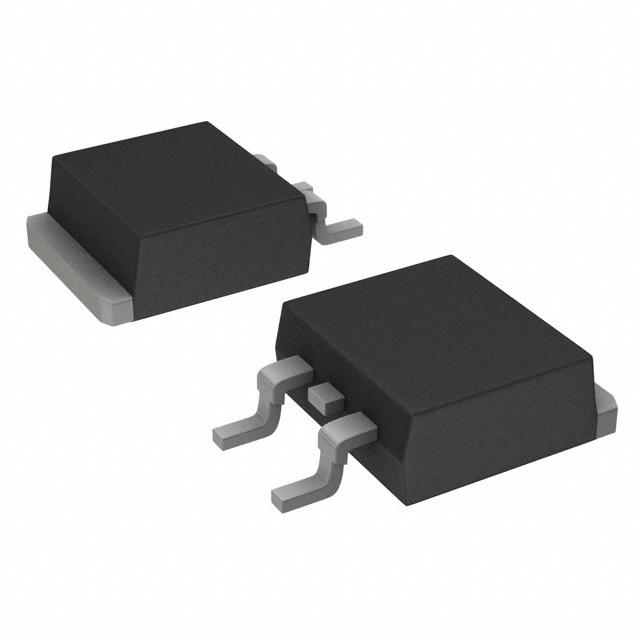
|

|
| Category | Diodes - Rectifiers - Single | Diodes - Rectifiers - Single |
| Manufacturer | Vishay Semiconductor - Diodes Division | Vishay Semiconductor - Diodes Division |
| Description | DIODE SCHOTTKY 100V 8A D2PAK | DIODE GEN PURP 200V 16A TO263AC |
| Package | Tape & Reel (TR) | Cut Tape (CT) |
| Series | - | Automotive, AEC-Q101, FRED Pt® |
| Mounting Type | Surface Mount | Surface Mount |
| Package / Case | TO-263-3, D²Pak (2 Leads + Tab), TO-263AB | TO-263-3, D²Pak (2 Leads + Tab) Variant |
| Supplier Device Package | TO-263AB (D²PAK) | TO-263AC (SMPD) |
| Diode Type | Schottky | Standard |
| Current - Average Rectified (Io) | 8A | 16A |
| Voltage - Forward (Vf) (Max) @ If | 720 mV @ 8 A | 1 V @ 16 A |
| Current - Reverse Leakage @ Vr | 550 µA @ 100 V | 15 µA @ 200 V |
| Capacitance @ Vr, F | 500pF @ 5V, 1MHz | - |
| Voltage - DC Reverse (Vr) (Max) | 100 V | 200 V |
| Speed | Fast Recovery =< 500ns, > 200mA (Io) | Fast Recovery =< 500ns, > 200mA (Io) |
| Reverse Recovery Time (trr) | - | 32 ns |
| Operating Temperature - Junction | -55°C ~ 175°C | -40°C ~ 150°C |
-
1. What is the working principle of a single rectifier diode?
A rectifier diode conducts current when forward biased, converting the positive half wave of alternating current into direct current. When reverse biased, the diode blocks the current, thereby preventing the negative half wave from passing through and achieving rectification effect.
-
2. What is the difference between a single rectifier diode and a bridge rectifier?
A single rectifier diode can only rectify the positive half wave of AC power (half wave rectification), while a bridge rectifier composed of four diodes can rectify the positive and negative half waves of AC power (full wave rectification), with higher efficiency and smoother output.
-
3. Can a single rectifier diode be used for high-frequency applications?
Traditional silicon rectifier diodes are not suitable for high-frequency applications because their reverse recovery time is relatively long. For high-frequency applications, fast recovery diodes or Schottky diodes are typically used to reduce switching losses and improve efficiency.
-
4. What is the reverse recovery time of a rectifier diode?
Reverse recovery time refers to the time required for a diode to transition from a forward conducting state to a reverse blocking state. A shorter reverse recovery time is particularly important in high-frequency applications to reduce power loss.
