
ON Semiconductor NCV1117DT18T5G

The picture is for reference only, please refer to the product specification
- NCV1117DT18T5G
- ON Semiconductor
- IC REG LINEAR 1.8V 1A DPAK
- PMIC - Voltage Regulators - Linear
- NCV1117DT18T5G Datasheet
- TO-252-3, DPak (2 Leads + Tab), SC-63
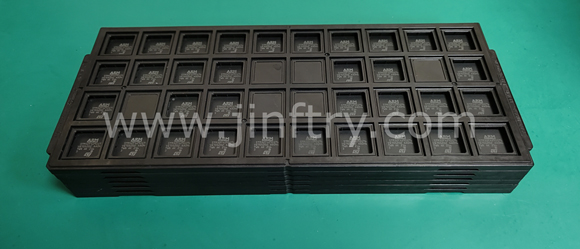
- Tape & Reel (TR)
-
 Lead free / RoHS Compliant
- 3344
- Spot Inventory / Athorized Dstributor / Factory Excess Stock
- 1 year quality assurance 》
- Click to get rates


What is NCV1117DT18T5G
ON Semiconductor Part Number NCV1117DT18T5G(PMIC - Voltage Regulators - Linear), developed and manufactured by ON Semiconductor, distributed globally by Jinftry. We distribute various electronic components from world-renowned brands and provide one-stop services, making us a trusted global electronic component distributor.
NCV1117DT18T5G is one of the part numbers distributed by Jinftry, and you can learn about its specifications/configurations, package/case, Datasheet, and other information here. Electronic components are affected by supply and demand, and prices fluctuate frequently. If you have a demand, please do not hesitate to send us an RFQ or email us immediately [email protected] Please inquire about the real-time unit price, Data Code, Lead time, payment terms, and any other information you would like to know. We will do our best to provide you with a quotation and reply as soon as possible.
NCV1117DT18T5G Specifications
- Part NumberNCV1117DT18T5G
- CategoryPMIC - Voltage Regulators - Linear
- ManufacturerON Semiconductor
- DescriptionIC REG LINEAR 1.8V 1A DPAK
- PackageTape & Reel (TR)
- SeriesAutomotive, AEC-Q100
- Operating Temperature-40°C ~ 125°C (TA)
- Mounting TypeSurface Mount
- Package / CaseTO-252-3, DPak (2 Leads + Tab), SC-63
- Supplier Device PackageDPAK
- Output TypeFixed
- Voltage - Output (Min/Fixed)1.8V
- Voltage - Output (Max)-
- Current - Output1A
- Output ConfigurationPositive
- Control Features-
- Voltage - Input (Max)20V
- Number of Regulators1
- Voltage Dropout (Max)1.2V @ 800mA
- Current - Quiescent (Iq)10 mA
- Current - Supply (Max)-
- PSRR70dB (120Hz)
- Protection FeaturesOver Current, Over Temperature
Application of NCV1117DT18T5G
NCV1117DT18T5G Datasheet
NCV1117DT18T5G Datasheet , Tape & Reel (TR),Automotive, AEC-Q100,-40°C ~ 125°C (TA),Surface Mount,TO-252-3, DPak (2 Leads + Tab), SC-63,DPAK,Fixed,1.8V,1A,Positive,20V,1,1.2V @ 800mA,10 mA,70dB (120Hz),Over Current, Over Temperature
NCV1117DT18T5G Classification
PMIC - Voltage Regulators - Linear
FAQ about PMIC - Voltage Regulators - Linear
-
1. What is a linear regulator?
A linear regulator is an electronic device that is primarily used to maintain a specified output voltage stable when the input voltage or load conditions change. It is an important component in electronics that acts as a buffer to protect the components of the circuit from damage. A linear regulator works by using an active device (such as a BJT or MOSFET) controlled by a high-gain amplifier, using the variable conductivity of the active pass device to maintain the output voltage. This regulator acts as a voltage divider to produce a regulated output voltage, where a linear element (such as a resistive load) is used to regulate the output voltage. The transistor stays in its active region of operation during voltage regulation. To maintain a constant output voltage, the internal resistance can be varied, providing a variable resistance by using a transistor controlled by the amplifier feedback loop.
A linear regulator is also called a buck converter, where the output voltage is always -
2. When should a linear regulator be used instead of a switching regulator?
In low-power and low-frequency application scenarios, a linear regulator should be used instead of a switching regulator.
Linear regulator Suitable for low-power and low-frequency applications, with simple circuit structure, low noise and good stability. They control the output voltage of the transistor through a current amplifier to keep the output voltage stable. This working mode makes linear regulators perform well in low-power and low-frequency applications, although they are less efficient and generate more heat, and their application range is limited. In contrast, switching regulators use high-frequency pulse modulation technology to convert input voltage into a stable output voltage. They have the advantages of high efficiency, small size and fast response, and are suitable for high-power and high-frequency applications. Therefore, when the application requirements are not the main considerations for circuit complexity and cost, but have high requirements for the stability and -
3. Can a linear regulator be up?
Linear regulators cannot be boost.
The main function of a linear regulator is to stabilize the output voltage, protecting the electrical equipment from high or unstable voltage effects. It realizes a stable output voltage by adjusting the gap between the output voltage and the input voltage, but this process is limited to lowering the voltage, not including the voltage. The working principle of a linear regulator is to regulate the voltage by converting excess voltage into heat loss, thereby realizing the voltage regulation. This feature determines that it does not have the voltage function.
We are a professional PCB manufacturer who offers comprehensive PCB manufacturing services including: professional Ceramic PCB HDI PCB Heavy Copper PCB High-TG PCB High Speed PCB High Frequency PCB Metal Core PCB PCB fabrication and PCB assembly, providing fast turnaround prototypes for high-end products.



• Prompt Responsiveness
• Guaranteed Quality
• Global Access
• Competitive Market Price
• One-Stop support services of supply chain
Jinftry, Your most trustworthy component supplier, welcome to send us the inquiry, thank you!
Do you have any questions about NCV1117DT18T5G ?
Feel free to contact us:
NCV1117DT18T5G Related Products


IC REG LINEAR 2.9V 150MA SOT23-5

LP2985 150MA LOW-NOISE LOW-DROPO


IC REG LINEAR 2.5V 500MA 3DDPAK

IC REG LINEAR 0.8V 500MA TO220-3

IC REG LINEAR 3V 500MA 5DDPAK

IC REG LINEAR 1.8V 500MA 3DDPAK

IC REG LINEAR 1.2V 500MA TO220-5