
10065127-001LF vs QR/P15-8P-C(52)
| Part Number |
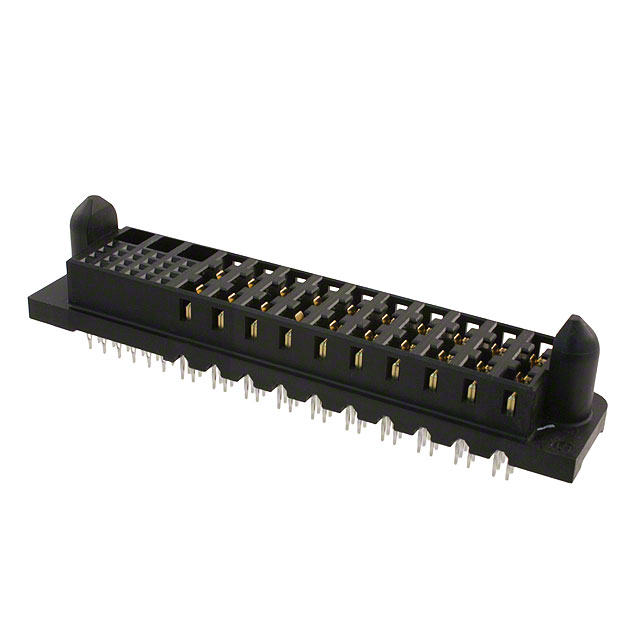
|

|
| Category | Backplane Connectors - Specialized | Backplane Connectors - Specialized |
| Manufacturer | Amphenol ICC (FCI) | Hirose Electric Co Ltd |
| Description | CONN RECEPT 10PWR+24SGNL VERT | CONN PLUG HOUSING 8 POS |
| Package | - | - |
| Series | HCI? | QR/P15 |
| Features | Guide Pin | - |
| Mounting Type | Through Hole | - |
| Termination | Press-Fit | Crimp |
| Color | Black | Black |
| Number of Positions | 34 | 8 |
| Connector Type | Receptacle, Female Sockets and Blade Sockets | Plug, Male Pins |
| Contact Layout, Typical | 24 Signal, 10 Power | - |
| Contact Finish Thickness | 30µin (0.76µm) | - |
| Number of Positions Loaded | All | All |
| Number of Rows | 4 | 2 |
| Connector Style | Blade Power | Drawer |
| Connector Usage | Daughtercard | - |
| Contact Finish | - | Gold |
| Pitch | - | 0.079" (2.00mm) |
-
1. What are the main functions of backplane connectors?
The main function of backplane connectors is to connect multiple printed circuit boards (PCBs) through reliable electrical interfaces and provide high-speed data transmission capabilities, while ensuring signal integrity and power distribution.
-
2. What is the difference between Specialized Backplane Connectors and Conventional Backplane Connectors?
Specialized backplane connectors are typically optimized according to specific application requirements, and may have special structures, signal processing capabilities, higher durability, or higher frequency processing capabilities, making them suitable for specific industries or devices.
-
3. What types of signals does the backplane connector support?
Backplane connectors typically support multiple signal types, including power signals, high-speed data signals (such as PCIe, SATA, Ethernet, etc.), and control signals. Some dedicated backplane connectors also support fiber optic signals.
-
4. How do backplane connectors ensure signal integrity?
Backplane connectors ensure signal integrity in high-speed data transmission and reduce the impact of noise and interference through optimized designs such as shielding technology, differential signal transmission, and low crosstalk design.
