
1N4738ATR vs 1N4747ATR
| Part Number |
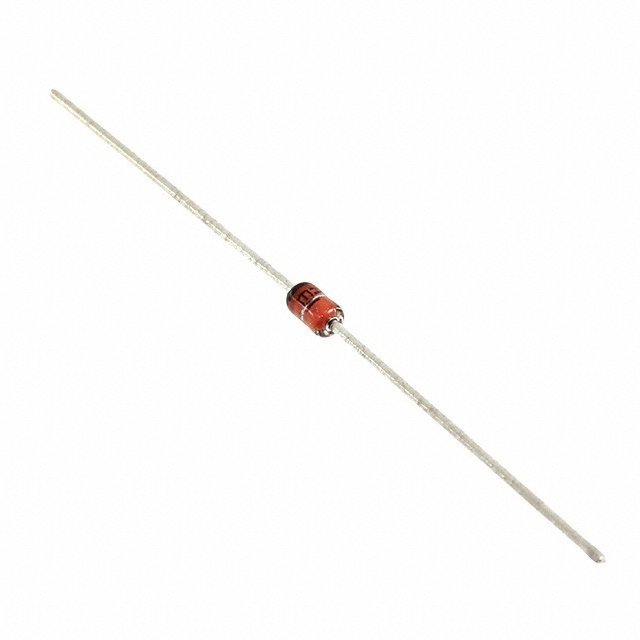
|

|
| Category | Diodes - Zener - Single | Diodes - Zener - Single |
| Manufacturer | ON Semiconductor | Fairchild Semiconductor |
| Description | DIODE ZENER 8.2V 1W DO41 | DIODE ZENER 20V 1W 5% |
| Package | Tape & Reel (TR) | Bulk |
| Series | - | - |
| Operating Temperature | -65°C ~ 200°C | -65°C ~ 200°C |
| Mounting Type | Through Hole | Through Hole |
| Package / Case | DO-204AL, DO-41, Axial | DO-204AL, DO-41, Axial |
| Supplier Device Package | DO-41 | DO-41 |
| Tolerance | ±5% | ±5% |
| Power - Max | 1 W | 1 W |
| Voltage - Forward (Vf) (Max) @ If | - | - |
| Current - Reverse Leakage @ Vr | 10 µA @ 6 V | 5 µA @ 15.2 V |
| Voltage - Zener (Nom) (Vz) | 8.2 V | 20 V |
| Impedance (Max) (Zzt) | 4.5 Ohms | 22 Ohms |
-
1. Is every diode a Zener diode?
No. Although all Zener diodes are a type of diode, not all diodes can be called Zener diodes.
-
2. What are the disadvantages of Zener diodes?
Disadvantages include relatively high power consumption, sensitivity to temperature, and the need for proper heat dissipation.
-
3. What happens if a Zener diode is connected in reverse?
When a Zener diode is properly connected in reverse and a sufficient reverse voltage is applied to exceed its Zener voltage, it will begin to conduct and remain at a relatively constant voltage level.
-
4. What happens when a Zener diode fails?
If it is overheated or subjected to excessive current, it may cause permanent damage, which will appear as an open or short circuit state.
