
1N4738ATR vs 1N4752ATR
| Part Number |
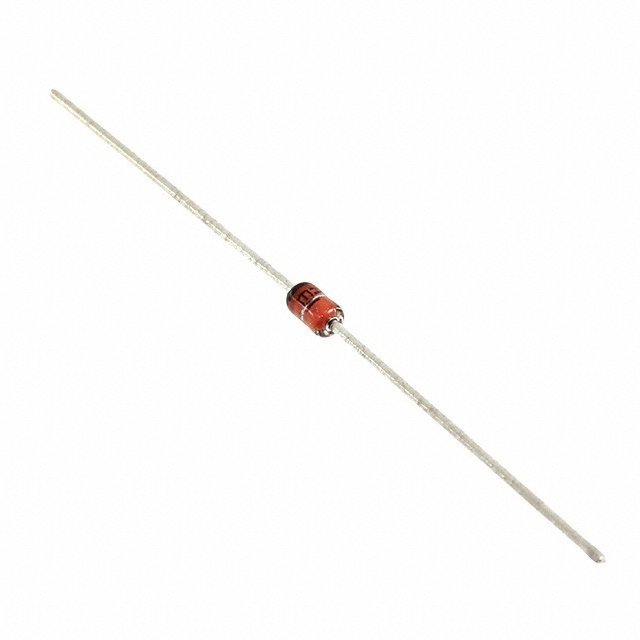
|
|
| Category | Diodes - Zener - Single | Diodes - Zener - Single |
| Manufacturer | ON Semiconductor | Fairchild Semiconductor |
| Description | DIODE ZENER 8.2V 1W DO41 | DIODE ZENER 33V 1W DO41 |
| Package | Tape & Reel (TR) | Bulk |
| Series | - | - |
| Operating Temperature | -65°C ~ 200°C | -65°C ~ 200°C |
| Mounting Type | Through Hole | Through Hole |
| Package / Case | DO-204AL, DO-41, Axial | DO-204AL, DO-41, Axial |
| Supplier Device Package | DO-41 | DO-41 |
| Tolerance | ±5% | ±5% |
| Power - Max | 1 W | 1 W |
| Voltage - Forward (Vf) (Max) @ If | - | - |
| Current - Reverse Leakage @ Vr | 10 µA @ 6 V | 5 µA @ 25.1 V |
| Voltage - Zener (Nom) (Vz) | 8.2 V | 33 V |
| Impedance (Max) (Zzt) | 4.5 Ohms | 45 Ohms |
-
1. Can 2 Zener diodes be connected in series?
Yes, two or more Zener diodes can be used in series to obtain higher stable voltage values. But pay attention to the power rating and heat dissipation of each diode.
-
2. What is the difference between a Zener diode and a Schottky diode?
Schottky diodes have a low forward voltage drop and fast switching speed, making them suitable for high-frequency applications. In contrast, Zener diodes are mainly used for voltage regulation and voltage stabilization.
-
3. How to tell if a diode is a Zener diode?
You can tell by looking at its symbol (which is slightly different from ordinary diodes), the description in the data sheet, or by testing its reverse characteristic curve. Using a multimeter, you can also measure its forward and reverse resistance values and the voltage drop under specific conditions.
-
4. Can Zener diodes be used as rectifiers?
This is generally not recommended because they are not designed to efficiently convert AC to DC. Rectification is usually done by specialized rectifier diodes.
