
1SS302TE85LF vs BAT54AW-7
| Part Number |
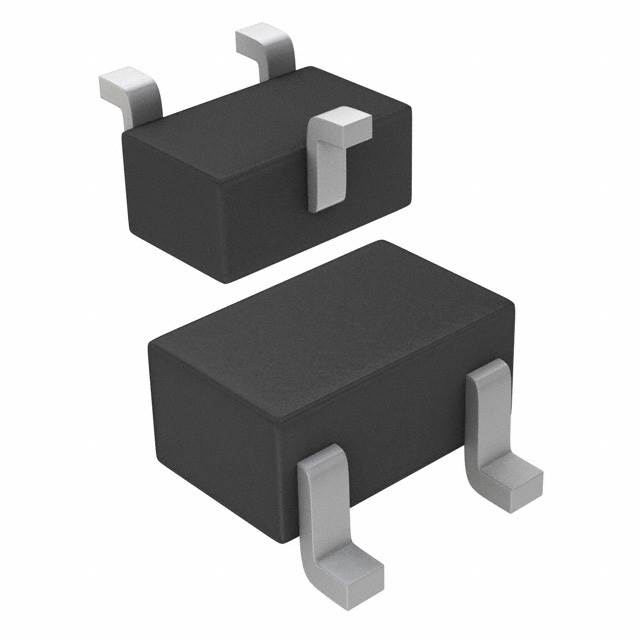
|
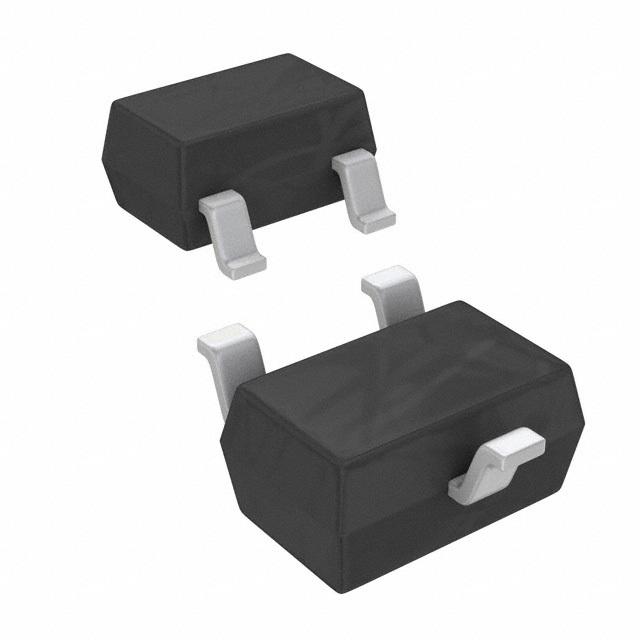
|
| Category | Diodes - Rectifiers - Arrays | Diodes - Rectifiers - Arrays |
| Manufacturer | Toshiba Semiconductor and Storage | Diodes Incorporated |
| Description | DIODE ARRAY GP 80V 100MA SC70 | DIODE ARRAY SCHOTTKY 30V SOT323 |
| Package | Tape & Reel (TR) | Tape & Reel (TR) |
| Series | - | - |
| Mounting Type | Surface Mount | Surface Mount |
| Package / Case | SC-70, SOT-323 | SC-70, SOT-323 |
| Supplier Device Package | SC-70 | SOT-323 |
| Diode Type | Standard | Schottky |
| Voltage - Forward (Vf) (Max) @ If | 1.2 V @ 100 mA | 1 V @ 100 mA |
| Current - Reverse Leakage @ Vr | 500 nA @ 80 V | 2 µA @ 25 V |
| Diode Configuration | 1 Pair Series Connection | 1 Pair Common Anode |
| Voltage - DC Reverse (Vr) (Max) | 80 V | 30 V |
| Current - Average Rectified (Io) (per Diode) | 100mA | 200mA (DC) |
| Speed | Small Signal =< 200mA (Io), Any Speed | Small Signal =< 200mA (Io), Any Speed |
| Reverse Recovery Time (trr) | 4 ns | 5 ns |
| Operating Temperature - Junction | 125°C (Max) | -65°C ~ 125°C |
-
1. What is a rectifier diode array?
A rectifier diode array is a group of multiple diodes packaged in a single component, typically used for multiple rectifier applications or circuit protection. They can simplify circuit design and save space, and are widely used in power conversion, signal rectification, and circuit protection.
-
2. What is the function of a rectifier diode array?
The rectifier diode array is used to convert alternating current (AC) to direct current (DC), or for circuit protection (such as preventing current backflow), and is also commonly used for voltage clamping and surge protection in circuits.
-
3. How can rectifier diode arrays simplify circuit design?
The use of rectifier diode arrays can reduce the need to install multiple diodes separately, simplify circuit layout, reduce PCB space occupation, and improve the overall reliability of the circuit.
-
4. What packaging types does the rectifier diode array support?
Common packaging includes SMD (Surface Mount), DIP (Dual In Line), and TO packaging, which are suitable for different installation requirements. SMD packaging is suitable for space constrained designs, while DIP and TO packaging are suitable for higher power applications.
