
1SS302TE85LF vs MBRTA500100
| Part Number |
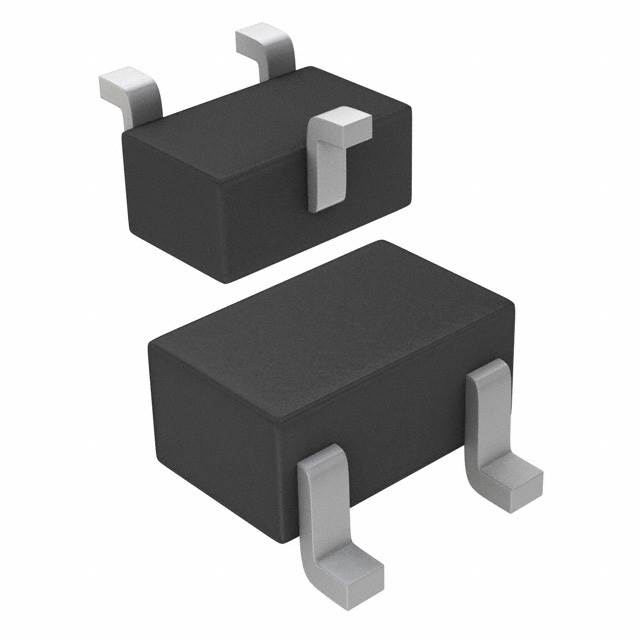
|
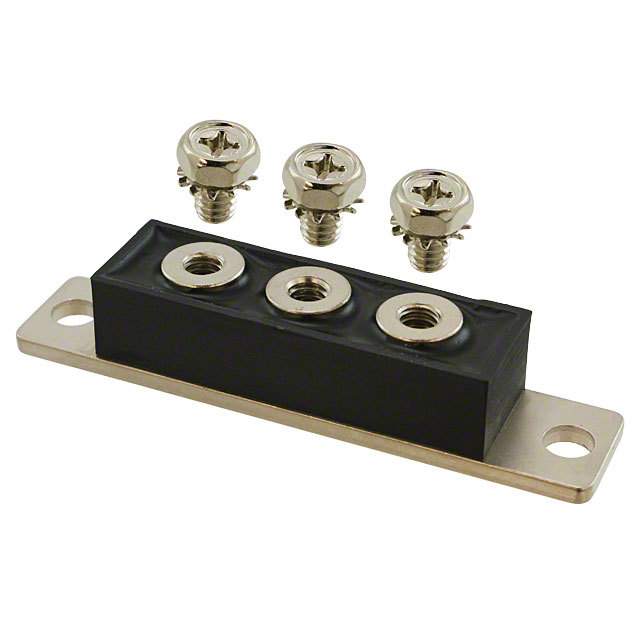
|
| Category | Diodes - Rectifiers - Arrays | Diodes - Rectifiers - Arrays |
| Manufacturer | Toshiba Semiconductor and Storage | GeneSiC Semiconductor |
| Description | DIODE ARRAY GP 80V 100MA SC70 | DIODE SCHOTTKY 100V 250A 3TOWER |
| Package | Tape & Reel (TR) | Bulk |
| Series | - | - |
| Mounting Type | Surface Mount | Chassis Mount |
| Package / Case | SC-70, SOT-323 | Three Tower |
| Supplier Device Package | SC-70 | Three Tower |
| Diode Type | Standard | Schottky |
| Voltage - Forward (Vf) (Max) @ If | 1.2 V @ 100 mA | 840 mV @ 250 A |
| Current - Reverse Leakage @ Vr | 500 nA @ 80 V | 1 mA @ 100 V |
| Diode Configuration | 1 Pair Series Connection | 1 Pair Common Cathode |
| Voltage - DC Reverse (Vr) (Max) | 80 V | 100 V |
| Current - Average Rectified (Io) (per Diode) | 100mA | 250A |
| Speed | Small Signal =< 200mA (Io), Any Speed | Fast Recovery =< 500ns, > 200mA (Io) |
| Reverse Recovery Time (trr) | 4 ns | - |
| Operating Temperature - Junction | 125°C (Max) | -55°C ~ 150°C |
-
1. What is the function of a rectifier diode array?
The rectifier diode array is used to convert alternating current (AC) to direct current (DC), or for circuit protection (such as preventing current backflow), and is also commonly used for voltage clamping and surge protection in circuits.
-
2. What are the typical applications of rectifier diode arrays?
They are widely used in power modules, chargers, communication equipment, automotive electronics, industrial control systems, and motor drives, especially in complex circuits that require multiple rectification paths.
-
3. How can rectifier diode arrays simplify circuit design?
The use of rectifier diode arrays can reduce the need to install multiple diodes separately, simplify circuit layout, reduce PCB space occupation, and improve the overall reliability of the circuit.
-
4. What are the advantages of a rectifier diode array compared to a single rectifier diode?
The array design integrates multiple diodes, which can reduce the number of components, simplify circuit design, save PCB space, and improve installation and production efficiency. It can also help reduce parasitic inductance and resistance, thereby improving performance.
