
74LS32SC vs CD4030CSJX
| Part Number |
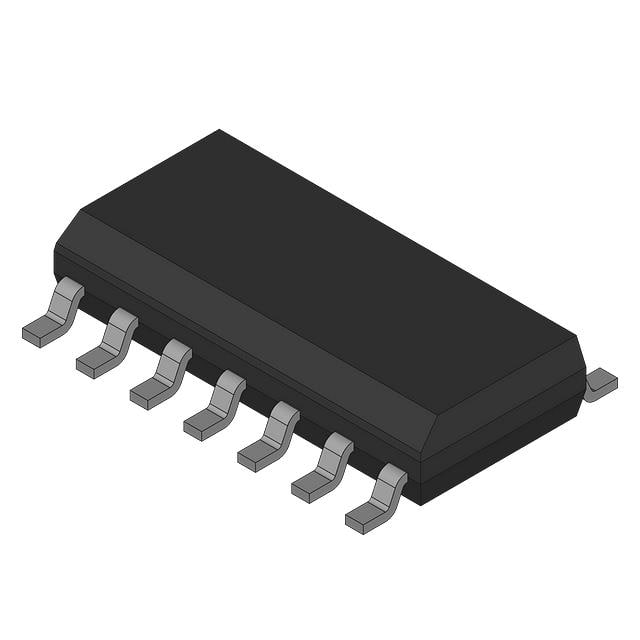
|

|
| Category | Logic - Gates and Inverters | Logic - Gates and Inverters |
| Manufacturer | National Semiconductor | Fairchild Semiconductor |
| Description | OR GATE, TTL | XOR GATE |
| Package | Bulk | Bulk |
| Series | - | - |
| Features | - | - |
| Voltage - Supply | - | 3V ~ 15V |
| Operating Temperature | - | -55°C ~ 125°C |
| Mounting Type | - | Through Hole |
| Package / Case | - | 14-DIP (0.300\", 7.62mm) |
| Supplier Device Package | - | 14-PDIP |
| Number of Circuits | - | 4 |
| Number of Inputs | - | 2 |
| Current - Output High, Low | - | - |
| Current - Quiescent (Max) | - | 1 µA |
| Logic Type | - | XOR (Exclusive OR) |
| Max Propagation Delay @ V, Max CL | - | 150ns @ 10V, 15pF |
| Logic Level - Low | - | - |
| Logic Level - High | - | - |
-
1. What is an inverter IC?
An inverter IC is a core component used to control and manage the various electronic components inside the inverter. The inverter IC is responsible for receiving input signals, processing data, generating control signals, and driving other components of the inverter.
The main functions of the inverter IC include:
Signal processing: Receive signals from sensors and process them to determine the operating status and requirements of the inverter.
Control strategy implementation: Based on the processing results, implement corresponding control strategies, such as PWM (pulse width modulation) control, to adjust the output voltage and frequency.
Protection function: Implement overcurrent, overvoltage, undervoltage and other protection functions to ensure the safe operation of the inverter.
Application scenarios of different types of inverter ICs include:
Motor drive inverter: Such as BridgeSwitch™-2 IC, used for BLDC motors, improve power output and efficiency, and introduce predictive maintenance functions.
Automotive traction inverter: Use ICs produced by ABLIC, suitable for converting DC power from batteries to AC power to drive traction motors.
Energy storage inverter: The core components are power semiconductors (such as IGBTs and MOSFETs), which are responsible for converting DC power into AC power and supporting efficient energy conversion. -
2. Which logic gate is used as an inverter?
NAND gate can be used as an inverter. In digital logic, NAND gate can realize the logic negation function, which is equivalent to an inverter or NOT gate.
The working principle of the NAND gate is to perform an AND operation on two input signals and then take the negation. When both input signals are 0, the output is 1; otherwise, the output is 0. This characteristic enables the NAND gate to achieve signal inversion, that is, when the input is high, the output is low, and when the input is low, the output is high.
In addition to the NAND gate, the inverter can also be implemented through other logic gates, such as the NOR gate, which can also be used as an inverter. The NOR gate performs an OR operation on an input signal and a signal that is always 1 and then takes the negation, which can also achieve the signal inversion function. -
3. How many gates are there in ICs?
There are usually one or more gates in an IC, and the specific number depends on the type and design of the IC. For example, MOS tubes and transistors are common components in ICs, and they usually have one or more gates.
In a chip, a transistor is one of the most basic components. A transistor has three poles: source, drain and gate. The gate is located on the insulating layer between the source and the drain, and controls the conduction and cutoff of the channel by changing the gate voltage.
In addition, there is a special type of transistor in the flash memory chip, called a floating gate transistor, which has two gates: the control gate and the floating gate. The floating gate is located between the control gate and the channel, wrapped by an insulating layer, and can store charge, thereby realizing data storage. -
4. What is the use of the logic gate?
The main function of the logic gate is to control the switching and logical operation of the signal. The logic gate receives the input signal and controls the state of the output signal according to the logical state of the input signal (such as high level or low level), thereby realizing basic logical operation functions such as AND, OR, NOT, etc.
Specifically, the working principle of the logic gate is based on the structure and characteristics of the transistor. The transistor has three main parts: source, drain and gate. The gate adjusts the current flow between the source and drain by controlling the voltage, thereby realizing the switching function. When the gate voltage reaches a certain threshold, a conductive channel is formed between the source and the drain, and the current can pass; otherwise, the current is blocked.
Logic gates have a variety of applications in digital circuits, including but not limited to:
Remove noise coupled into the circuit, improve system reliability.
Speed up the turn-on and turn-off of transistors, reduce turn-on and turn-off losses.
Reduce transistor DI/DT, protect transistors and suppress EMI interference.
Protect the gate, prevent gate breakdown under abnormal high voltage conditions.
Increase drive capability, and drive transistors under smaller signals.
