
95003-2661 vs 95003-6441
| Part Number |
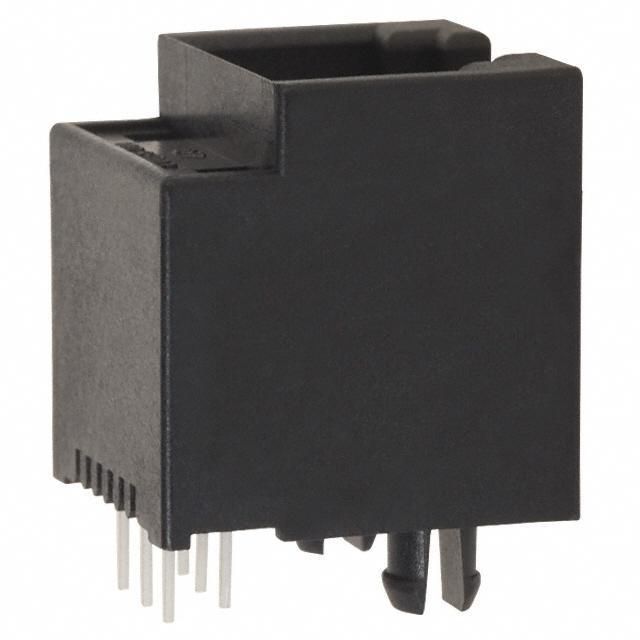
|

|
| Category | Modular Connectors - Jacks | Modular Connectors - Jacks |
| Manufacturer | Molex Connector Corporation | Molex Connector Corporation |
| Description | CONN MOD JACK 6P6C VERT UNSHLD | CONN MOD JACK 4P4C VERT UNSHLD |
| Package | - | - |
| Series | 95003 | 95003 |
| Features | Board Lock | Board Lock |
| Mounting Type | Through Hole | Surface Mount |
| Termination | Solder | Solder |
| Contact Material | Phosphor Bronze | Phosphor Bronze |
| Contact Finish | Gold | Gold |
| Orientation | Vertical | Vertical |
| Ratings | Cat3 | Cat3 |
| Connector Type | Jack | Jack |
| Shielding | Unshielded | Unshielded |
| Number of Rows | 1 | 1 |
| Number of Positions/Contacts | 6p6c (RJ11, RJ12, RJ14, RJ25) | 4p4c (RJ9, RJ10, RJ22) |
| Number of Ports | 1 | 1 |
| LED Color | Does Not Contain LED | Does Not Contain LED |
| Tab Direction | User Selectable | User Selectable |
-
1. What is a jack connector?
A jack connector is an electronic device that provides a hole or other connection method that allows a compatible plug to be connected to the jack. In the computer field, jacks are usually used to describe audio jacks, which are used to connect audio devices such as headphones or microphones. Jack connectors are used with plugs to connect and disconnect circuits through their engagement and separation. This connection method is very common in electronic devices because it provides a simple and reliable way to connect and disconnect wires or cables, thereby connecting or disconnecting circuits between electronic devices.
-
2. What is a modular connector?
A modular connector is a device used to connect different electronic modules. It can connect electronic modules of different powers, different types and different manufacturers together to form a fully functional electronic device. Modular connectors usually consist of multiple connecting sub-components, conductive sheets, contact agents, etc.
-
3. What are the different types of RJ45 modular jacks?
There are two main types of RJ45 modular jacks, namely DTE (data terminal equipment) type and DCE (digital communication equipment) type.
The difference between these two types lies in the way they are connected to different devices.
The DTE type is mainly used in Ethernet network cards, routers and other devices. When two DTE type devices use RJ45 interface connection for communication, they must be connected using a crossover cable. This is because the data sending and receiving pins of the DTE type interface cannot perform normal data communication if they are not cross-connected.
The DCE type is usually used in devices such as switches. When connected to a DTE type device, the DCE type device can automatically negotiate with the other party. At this time, a straight-through line or a parallel line can be used for connection, depending on the automatic negotiation capability of the device. -
4. What is the difference between RJ50 and RJ45 connectors?
The main differences between RJ50 and RJ45 connectors are transmission rate, application scenarios, number of pins, line sequence, transmission distance, and anti-interference ability.
Transmission rate and application scenarios:
The transmission rate of the RJ50 interface is low, and it can usually only transmit voice and low-speed data signals. It is mainly used for telephone lines and low-speed network devices such as modems and routers.
The transmission rate of the RJ45 interface is high, and it can transmit high-speed data signals. It is mainly used for Ethernet and high-speed network devices such as computers, switches and routers.
Number of pins and line sequence:
The RJ50 interface has 4 pins, and the line sequence is 1-2-3-4.
The RJ45 interface has 8 pins, and the line sequence is 1-2-3-4-5-6-7-8.
Transmission distance and anti-interference ability:
The transmission distance of the RJ50 interface is short, and it can usually only be used within a few dozen meters. It h
