
A273M20X7RH5TAA vs A333K20X7RH5UAA
| Part Number |
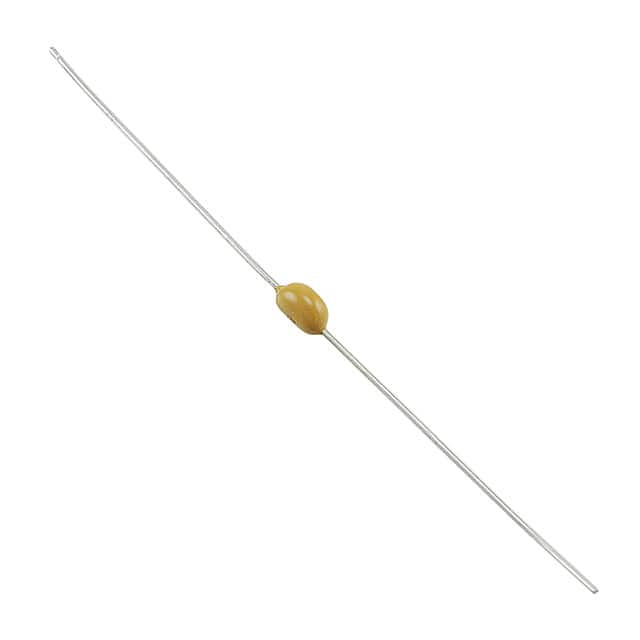
|
|
| Category | Ceramic Capacitors | Ceramic Capacitors |
| Manufacturer | Vishay Beyschlag/Draloric/BC Components | Vishay Beyschlag/Draloric/BC Components |
| Description | CAP CER 0.027UF 100V X7R AXIAL | CAP CER 0.033UF 100V X7R AXIAL |
| Package | Tape & Reel (TR) | Tape & Box (TB) |
| Series | A | A |
| Features | - | - |
| Operating Temperature | -55°C ~ 125°C | -55°C ~ 125°C |
| Mounting Type | Through Hole | Through Hole |
| Package / Case | Axial | Axial |
| Applications | General Purpose | General Purpose |
| Tolerance | ±20% | ±10% |
| Temperature Coefficient | X7R | X7R |
| Size / Dimension | 0.118" Dia x 0.197" L (3.00mm x 5.00mm) | 0.118" Dia x 0.197" L (3.00mm x 5.00mm) |
| Voltage - Rated | 100V | 100V |
| Lead Spacing | - | - |
| Thickness (Max) | - | - |
| Ratings | - | - |
| Height - Seated (Max) | - | - |
| Capacitance | 0.027 µF | 0.033 µF |
| Lead Style | Straight | Straight |
| Failure Rate | - | - |
-
1. Why are ceramic capacitors better?
Small size: suitable for high-density circuit board design.
Good temperature resistance: can work over a wide temperature range.
High reliability: no electrolyte, so it is not easy to age.
Good frequency response: suitable for high-frequency applications.
Low ESR: low equivalent series resistance, which helps to improve efficiency. -
2. Why are mica capacitors so expensive?
Mica capacitors are expensive because of their excellent electrical properties (such as very low dissipation factor and stable temperature coefficient) and their high production costs.
-
3. Do ceramic capacitors degrade over time?
The capacitance value of ceramic capacitors may decrease slightly over time and environmental factors, but this is usually a slow process.
-
4. Can I replace ceramic capacitors with film capacitors?
Film capacitors can be used to replace ceramic capacitors in some application scenarios, especially when better temperature stability and lower losses are required.
