
ABS20M RGG vs CD-MBL106SL
| Part Number |
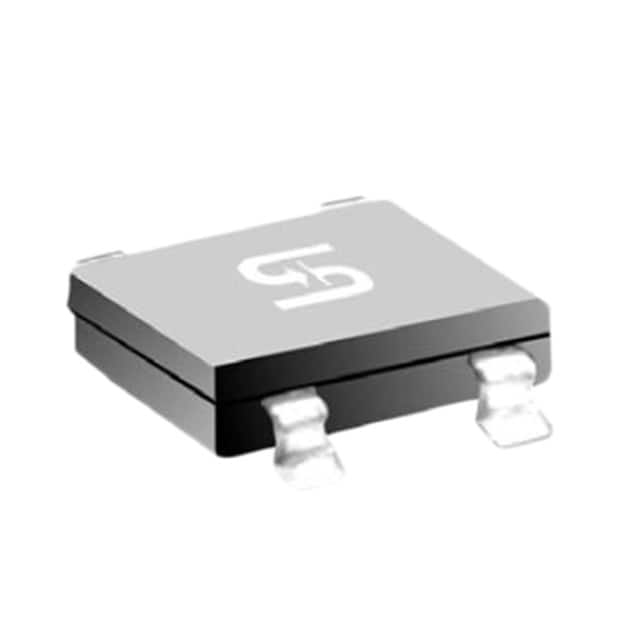
|

|
| Category | Diodes - Bridge Rectifiers | Diodes - Bridge Rectifiers |
| Manufacturer | Taiwan Semiconductor Corporation | Bourns Inc. |
| Description | BRIDGE RECT 1PHASE 1KV 1.6A ABS | BRIDGE RECT 1PHASE 600V 1A |
| Package | Tape & Reel (TR) | Tape & Reel (TR) |
| Series | - | - |
| Operating Temperature | -55°C ~ 150°C (TJ) | -55°C ~ 175°C (TJ) |
| Mounting Type | Surface Mount | Surface Mount |
| Package / Case | 4-SMD, Gull Wing | Chip, Concave Terminals |
| Supplier Device Package | ABS | - |
| Technology | Standard | Standard |
| Diode Type | Single Phase | Single Phase |
| Voltage - Peak Reverse (Max) | 1 kV | 600 V |
| Current - Average Rectified (Io) | 1.6 A | 1 A |
| Voltage - Forward (Vf) (Max) @ If | 1.1 V @ 2 A | 950 mV @ 1 A |
| Current - Reverse Leakage @ Vr | 5 µA @ 1000 V | 5 µA @ 600 V |
-
1. What is a bridge rectifier?
A bridge rectifier is a circuit composed of four diodes used to convert alternating current (AC) to direct current (DC). It is a common type of rectifier circuit widely used in devices such as power supplies and chargers.
-
2. How to improve the efficiency of bridge rectifier?
The use of Schottky diodes in bridge rectifiers can reduce forward voltage drop and improve efficiency. In addition, increasing the filtering capacitor and optimizing the heat dissipation design can also improve the performance and efficiency of the rectifier.
-
3. Does the bridge rectifier require heat dissipation?
Yes, high-power bridge rectifiers typically generate a large amount of heat and require cooling through radiators or cooling schemes to reduce temperature and prevent component damage due to overheating.
-
4. Can bridge rectifiers be used for high-frequency applications?
Traditional silicon bridge rectifiers have low efficiency in high-frequency applications and are prone to significant power losses. However, bridge rectifiers using Schottky diodes or fast recovery diodes can significantly improve high-frequency rectification performance.
