
AD7478ARTZ-REEL7 vs ADC12D1600RFIUT/NOPB
| Part Number |
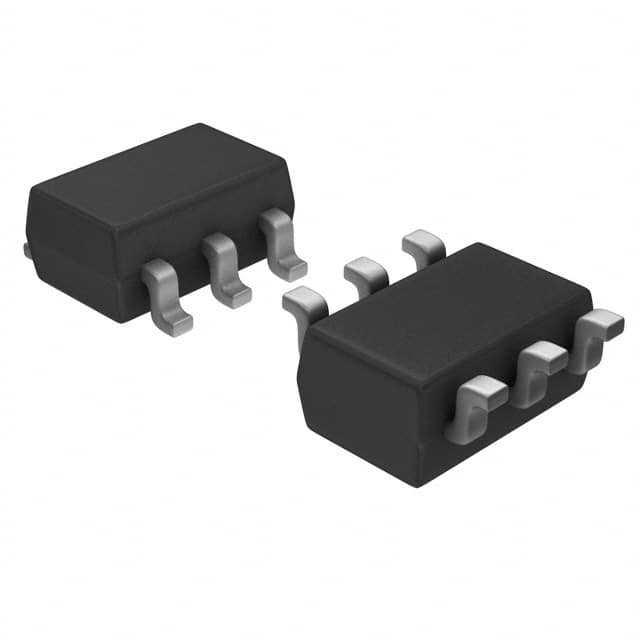
|
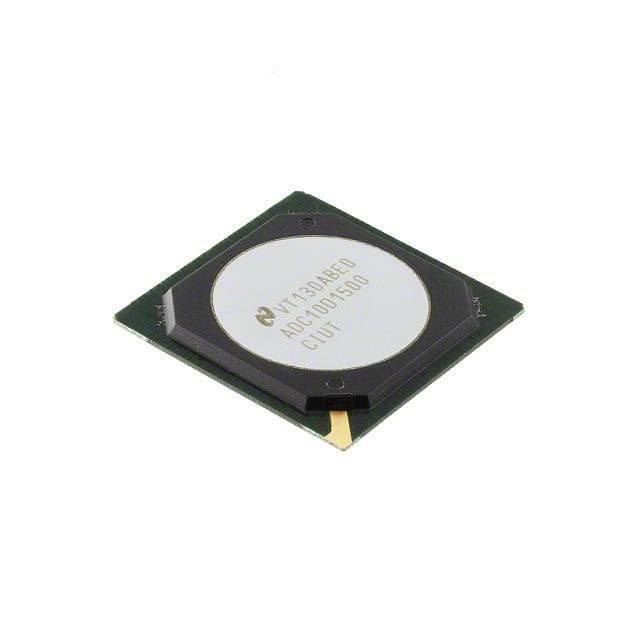
|
| Category | Data Acquisition - Analog to Digital Converters (ADC) | Data Acquisition - Analog to Digital Converters (ADC) |
| Manufacturer | Analog Devices Inc. | Texas Instruments |
| Description | IC ADC 8BIT SAR SOT23-6 | IC ADC 12BIT FOLD INTERP 292BGA |
| Package | Tape & Reel (TR) | Tube |
| Series | - | - |
| Features | - | Simultaneous Sampling |
| Operating Temperature | -40°C ~ 85°C | -40°C ~ 85°C |
| Mounting Type | Surface Mount | Surface Mount |
| Package / Case | SOT-23-6 | 292-BBGA |
| Supplier Device Package | SOT-23-6 | 292-BGA (27x27) |
| Reference Type | Supply | Internal |
| Sampling Rate (Per Second) | 1M | 3.2G |
| Data Interface | SPI, DSP | LVDS - Parallel |
| Number of Bits | 8 | 12 |
| Voltage - Supply, Analog | 2.7V ~ 5.25V | 1.8V ~ 2V |
| Voltage - Supply, Digital | 2.7V ~ 5.25V | 1.8V ~ 2V |
| Number of Inputs | 1 | 2 |
| Input Type | Single Ended | Differential |
| Configuration | S/H-ADC | MUX-S/H-ADC |
| Ratio - S/H:ADC | 1:1 | 1:1 |
| Number of A/D Converters | 1 | 2 |
| Architecture | SAR | Folding Interpolating |
-
1. How does ADC convert analog to digital?
The technology that converts analog sound signals into digital signals is called analog-to-digital conversion technology (Analog to Digital Converter, referred to as ADC). The function of ADC is to convert continuously changing analog signals into discrete digital signals. The process of analog-to-digital conversion can be completed by steps such as sampling, holding, quantization, and encoding.
-
2. What process converts analog to digital?
There are three basic processes for analog to digital conversion:
The first process is "sampling", which is to extract the sample value of the analog signal at equal intervals to turn the continuous signal into a discrete signal.
The second process is called "quantization", which is to convert the extracted sample value into the closest digital value to represent the size of the extracted sample value.
The third process is "encoding", which is to represent the quantized value with a set of binary digits. After these three processes, the digitization of the analog signal can be completed. This method is called "pulse encoding".
After the digital signal is transmitted to the receiving end, a restoration process is required, that is, the received digital signal is converted back to an analog signal so that it can be understood by the receiver. This process is called "digital-to-analog conversion", which reproduces it as sound or image. -
3. When is ADC used?
ADC (Analog-to-Digital Converter) is widely used in a variety of scenarios, including but not limited to:
Sensor interface: For example, temperature sensors, pressure sensors, and light sensors, ADC converts analog voltages into digital signals for the use of digital thermometers, temperature control systems, barometers, air pressure sensing systems, light intensity detection and control systems.
Audio signal processing: In microphones, ADC converts analog audio signals into digital signals for digital audio processing, recording, and playback.
Medical equipment: Such as electrocardiograms (ECGs) and oximeters, ADC converts analog signals of ECG signals and blood oxygen saturation into digital signals for heart health monitoring and diagnosis and blood oxygen level monitoring.
Data acquisition system: In various applications that need to collect data from analog signals, ADC is used to convert analog signals into digital signals for storage, processing, and analysis. -
4. What is the principle of analog-to-digital converters?
The working principle of the analog-to-digital converter (ADC) is to convert analog signals into digital signals through four processes: sampling, holding, quantization, and encoding.
The main components of the analog-to-digital converter include samplers and quantizers, which work together to convert continuous analog signals into discrete digital signals. This process requires a reference analog quantity as a standard, and the maximum convertible signal size is usually used as the reference standard. The basic principles of the analog-to-digital converter can be summarized as follows:
Sampling: The analog-to-digital converter first samples the input analog signal through a sampling circuit, that is, discretizes the analog signal on the time axis.
Holding: The sampled signal is held by the holding circuit for the next quantization and encoding process.
Quantization: The quantization process is to divide the amplitude of the sampled and held analog signal into a finite number of le
