
ADC083000CIYB/NOPB vs ADS5400IPZP
| Part Number |
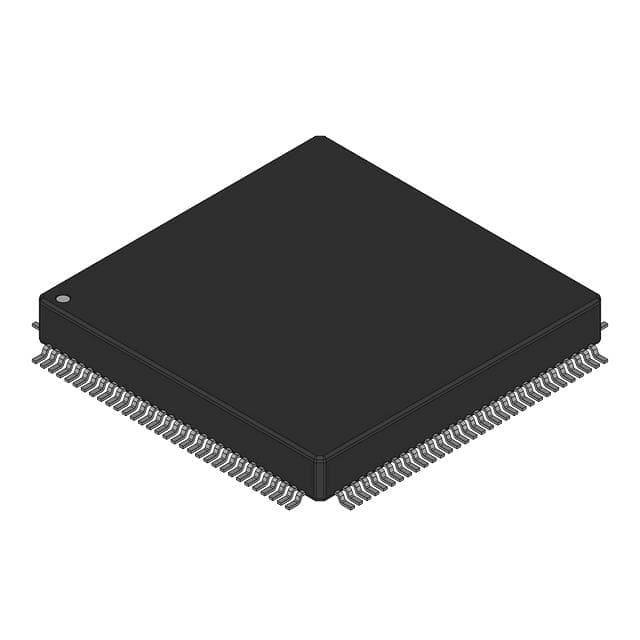
|

|
| Category | Data Acquisition - Analog to Digital Converters (ADC) | Data Acquisition - Analog to Digital Converters (ADC) |
| Manufacturer | National Semiconductor | Texas Instruments |
| Description | IC ADC 8BIT FOLD INTERP 128HLQFP | IC ADC 12BIT PIPELINED 100HTQFP |
| Package | Bulk | -Reel® |
| Series | - | - |
| Features | - | Temperature Sensor |
| Operating Temperature | -40°C ~ 85°C | -40°C ~ 85°C |
| Mounting Type | Surface Mount | Surface Mount |
| Package / Case | 128-LQFP Exposed Pad | 100-TQFP Exposed Pad |
| Supplier Device Package | 128-HLQFP (20x20) | 100-HTQFP (14x14) |
| Reference Type | Internal | External, Internal |
| Sampling Rate (Per Second) | 3G | 1G |
| Data Interface | LVDS - Parallel | LVDS - Parallel |
| Number of Bits | 8 | 12 |
| Voltage - Supply, Analog | 1.8V ~ 2V | 3.135V ~ 3.465V, 5V |
| Voltage - Supply, Digital | 1.8V ~ 2V | 3.135V ~ 3.465V |
| Number of Inputs | 1 | 1 |
| Input Type | Differential | Differential |
| Configuration | S/H-ADC | S/H-ADC |
| Ratio - S/H:ADC | 1:1 | 1:1 |
| Number of A/D Converters | 1 | 1 |
| Architecture | Folding Interpolating | Pipelined |
-
1. What is ADC for data acquisition?
A data collector is an electronic device used to convert various data (such as barcodes, RFID tags, etc.) into a storable and editable format and transmit it to a computer or system in real time. Data collectors are usually operated using handheld devices (such as inventory counting machines or PDAs) and have functions such as real-time acquisition, automatic storage, instant display, instant feedback, automatic processing, and automatic transmission. They can be widely used in warehouse management, logistics transportation, retail, medical, military and other fields. The main functions of data collectors include data acquisition, real-time data processing, data storage and transmission.
ADC, or analog-to-digital converter, is an electronic device that can convert continuously changing analog signals into discrete digital signals. It is mainly used in data acquisition, signal processing, communication and other fields.
-
2. How does ADC convert analog to digital?
The technology that converts analog sound signals into digital signals is called analog-to-digital conversion technology (Analog to Digital Converter, referred to as ADC). The function of ADC is to convert continuously changing analog signals into discrete digital signals. The process of analog-to-digital conversion can be completed by steps such as sampling, holding, quantization, and encoding.
-
3. What is the main purpose of ADC?
The main purpose of ADC is to convert the input analog signal into a digital signal.
ADC, or analog-to-digital converter, is mainly used to convert continuously changing analog signals into discrete digital signals. The implementation process of ADC usually includes four steps: sampling, holding, quantization, and encoding.
-
4. When is ADC used?
ADC (Analog-to-Digital Converter) is widely used in a variety of scenarios, including but not limited to:
Sensor interface: For example, temperature sensors, pressure sensors, and light sensors, ADC converts analog voltages into digital signals for the use of digital thermometers, temperature control systems, barometers, air pressure sensing systems, light intensity detection and control systems.
Audio signal processing: In microphones, ADC converts analog audio signals into digital signals for digital audio processing, recording, and playback.
Medical equipment: Such as electrocardiograms (ECGs) and oximeters, ADC converts analog signals of ECG signals and blood oxygen saturation into digital signals for heart health monitoring and diagnosis and blood oxygen level monitoring.
Data acquisition system: In various applications that need to collect data from analog signals, ADC is used to convert analog signals into digital signals for storage, processing, and analysis.
