
ADC08B3000CIYB/NOPB vs ADS5401IZAY
| Part Number |
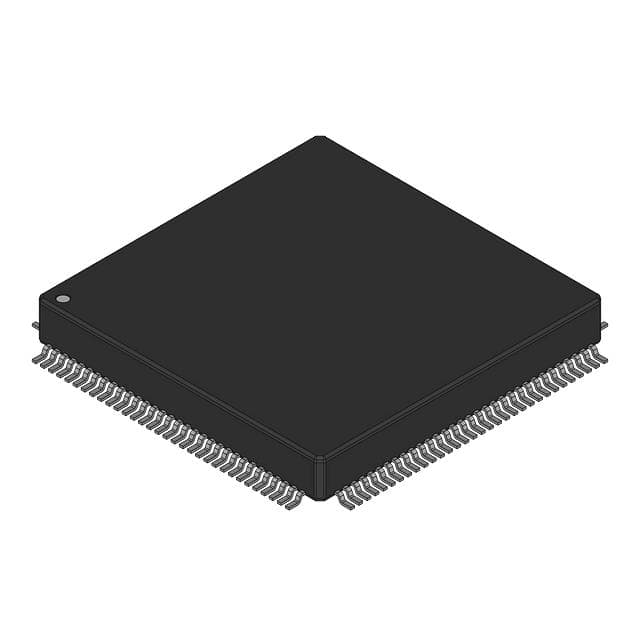
|
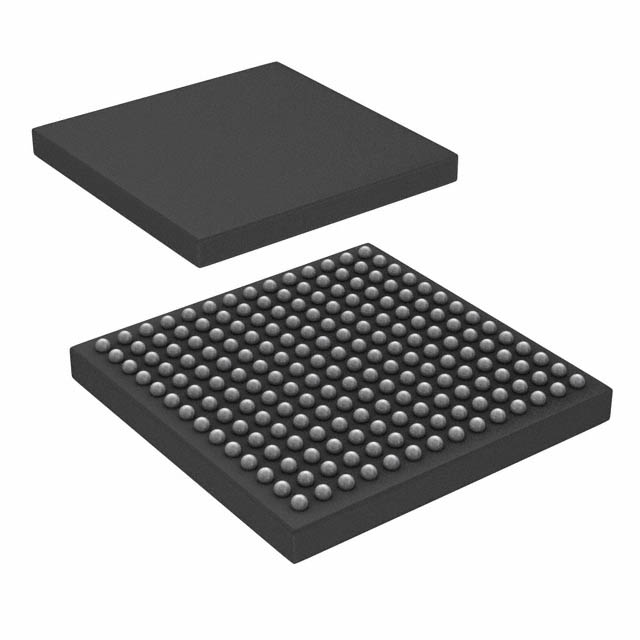
|
| Category | Data Acquisition - Analog to Digital Converters (ADC) | Data Acquisition - Analog to Digital Converters (ADC) |
| Manufacturer | National Semiconductor | Texas Instruments |
| Description | IC ADC 8BIT FOLD INTERP 128HLQFP | IC ADC 12BIT PIPELINED 196NFBGA |
| Package | Bulk | Tape & Reel (TR) |
| Series | - | - |
| Features | - | - |
| Operating Temperature | -40°C ~ 85°C | -40°C ~ 85°C |
| Mounting Type | Surface Mount | Surface Mount |
| Package / Case | 128-LQFP Exposed Pad | 196-LFBGA |
| Supplier Device Package | 128-HLQFP (20x20) | 196-NFBGA (12x12) |
| Reference Type | Internal | External, Internal |
| Sampling Rate (Per Second) | 3G | 800M |
| Data Interface | SPI, Parallel | Parallel |
| Number of Bits | 8 | 12 |
| Voltage - Supply, Analog | 1.8V ~ 2V | 1.7V ~ 1.9V, 3.15V ~ 3.45V |
| Voltage - Supply, Digital | 1.8V ~ 2V | 1.7V ~ 1.9V |
| Number of Inputs | 1 | 1 |
| Input Type | Differential | Differential |
| Configuration | S/H-ADC | S/H-ADC |
| Ratio - S/H:ADC | 2:2 | 1:1 |
| Number of A/D Converters | 1 | 1 |
| Architecture | Folding Interpolating | Pipelined |
-
1. What is the main purpose of ADC?
The main purpose of ADC is to convert the input analog signal into a digital signal.
ADC, or analog-to-digital converter, is mainly used to convert continuously changing analog signals into discrete digital signals. The implementation process of ADC usually includes four steps: sampling, holding, quantization, and encoding.
-
2. How to convert analog to digital without ADC?
Analog to digital conversion without ADC can be achieved through PWM circuit. This method is suitable for those main control chips without built-in ADC, which needs to be solved by two GPIOs and an operational amplifier. The basic principle is to use an integral circuit to convert the PWM wave into a smooth DC voltage, and then continuously adjust the PWM duty cycle by comparing it with the voltage to be measured until the output of the comparator changes from 0 to 1, and record the current PWM duty cycle, thereby realizing the measurement of the analog voltage.
-
3. Why do we need analog-to-digital converters?
The reasons why we need analog-to-digital converters mainly include the following:
Digital system processing: Many computers and electronic devices are digital systems, which are more suitable for processing digital signals. Analog signals are difficult to process in digital systems, and after analog-to-digital conversion, the signals can be represented, stored and processed in digital form.
Noise immunity: Digital signals are more noise-resistant than analog signals. Digital signals can be protected and restored by means such as error correction codes, while analog signals are easily interfered by noise.
Accuracy: Digital signals are more accurate because they can be represented with higher resolution. Analog signals have accuracy limitations, and analog-to-digital conversion can improve the resolution of the signal.
Application scenarios: Analog-to-digital converters are widely used in many fields, including automatic control systems, audio and video processing, sensor interfaces -
4. What is the difference between the input and output of an ADC?
The input of ADC (Analog-to-Digital Converter) is analog quantity and the output is digital quantity.
The main function of ADC is to convert continuous analog signal into discrete digital signal. In electronic systems, analog signal usually refers to continuously changing voltage or current, such as the signal obtained from microphone or sensor. The amplitude and frequency of these analog signals can change continuously, while digital signals are composed of a series of discrete values, usually expressed in binary form.
Input: The input of ADC receives analog signals, which can be in the form of continuously changing physical quantities such as voltage and current. The amplitude and frequency of analog signals can change continuously, such as the voltage range from 0V to 5V.
Output: The output of ADC is digital signal, which is composed of a series of discrete values, usually expressed in binary form. The advantage of digital signals is that they can be calculated and processed quic
