
ADC12D1000CIUT/NOPB vs ADC12D1000RFIUT/NOPB
| Part Number |
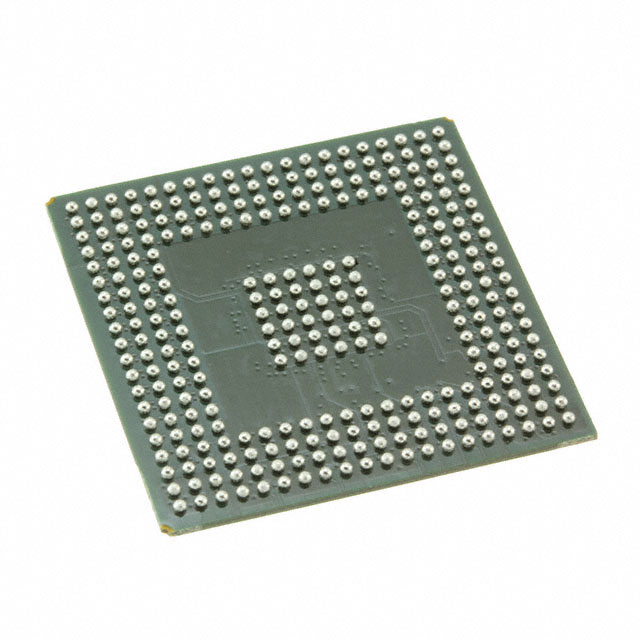
|

|
| Category | Data Acquisition - Analog to Digital Converters (ADC) | Data Acquisition - Analog to Digital Converters (ADC) |
| Manufacturer | Texas Instruments | Texas Instruments |
| Description | IC ADC 12BIT 292BGA | IC ADC 12BIT FOLD INTERP 292BGA |
| Package | Tray | Tube |
| Series | - | - |
| Features | - | Simultaneous Sampling |
| Operating Temperature | -40°C ~ 85°C | -40°C ~ 85°C |
| Mounting Type | Surface Mount | Surface Mount |
| Package / Case | 292-BBGA | 292-BBGA |
| Supplier Device Package | 292-BGA (27x27) | 292-BGA (27x27) |
| Reference Type | - | Internal |
| Sampling Rate (Per Second) | 2G | 2G |
| Data Interface | - | LVDS - Parallel |
| Number of Bits | 12 | 12 |
| Voltage - Supply, Analog | - | 1.8V ~ 2V |
| Voltage - Supply, Digital | - | 1.8V ~ 2V |
| Number of Inputs | - | 2 |
| Input Type | - | Differential |
| Configuration | - | MUX-S/H-ADC |
| Ratio - S/H:ADC | - | 1:1 |
| Number of A/D Converters | 2 | 2 |
| Architecture | - | Folding Interpolating |
-
1. What is ADC for data acquisition?
A data collector is an electronic device used to convert various data (such as barcodes, RFID tags, etc.) into a storable and editable format and transmit it to a computer or system in real time. Data collectors are usually operated using handheld devices (such as inventory counting machines or PDAs) and have functions such as real-time acquisition, automatic storage, instant display, instant feedback, automatic processing, and automatic transmission. They can be widely used in warehouse management, logistics transportation, retail, medical, military and other fields. The main functions of data collectors include data acquisition, real-time data processing, data storage and transmission.
ADC, or analog-to-digital converter, is an electronic device that can convert continuously changing analog signals into discrete digital signals. It is mainly used in data acquisition, signal processing, communication and other fields.
-
2. How does ADC convert analog to digital?
The technology that converts analog sound signals into digital signals is called analog-to-digital conversion technology (Analog to Digital Converter, referred to as ADC). The function of ADC is to convert continuously changing analog signals into discrete digital signals. The process of analog-to-digital conversion can be completed by steps such as sampling, holding, quantization, and encoding.
-
3. What are DAC and ADC?
ADC and DAC are two important concepts in digital electronics. ADC stands for "analog-to-digital converter", which can convert analog signals into digital signals. DAC stands for "digital-to-analog converter", which can convert digital signals into analog signals. Both converters play an important role in many electronic products, such as mobile phones, televisions, stereos, etc.
-
4. How to convert analog to digital without ADC?
Analog to digital conversion without ADC can be achieved through PWM circuit. This method is suitable for those main control chips without built-in ADC, which needs to be solved by two GPIOs and an operational amplifier. The basic principle is to use an integral circuit to convert the PWM wave into a smooth DC voltage, and then continuously adjust the PWM duty cycle by comparing it with the voltage to be measured until the output of the comparator changes from 0 to 1, and record the current PWM duty cycle, thereby realizing the measurement of the analog voltage.
