
ADC161S626CIMM/NOPB vs ADS8326IDRBT
| Part Number |
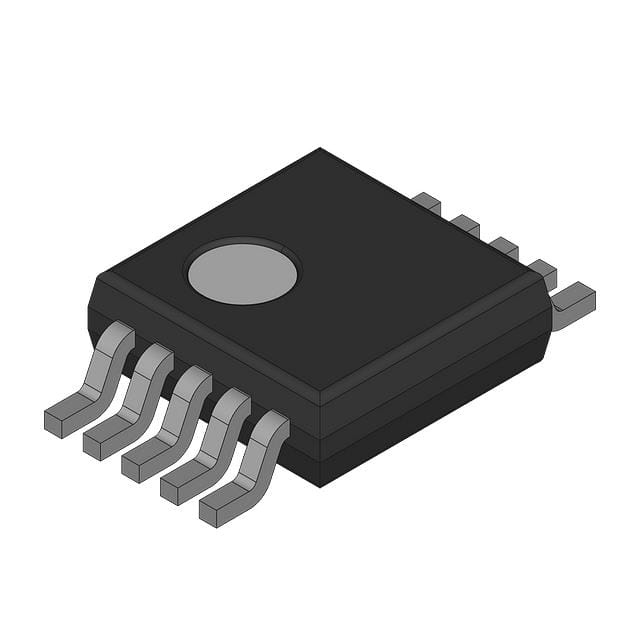
|
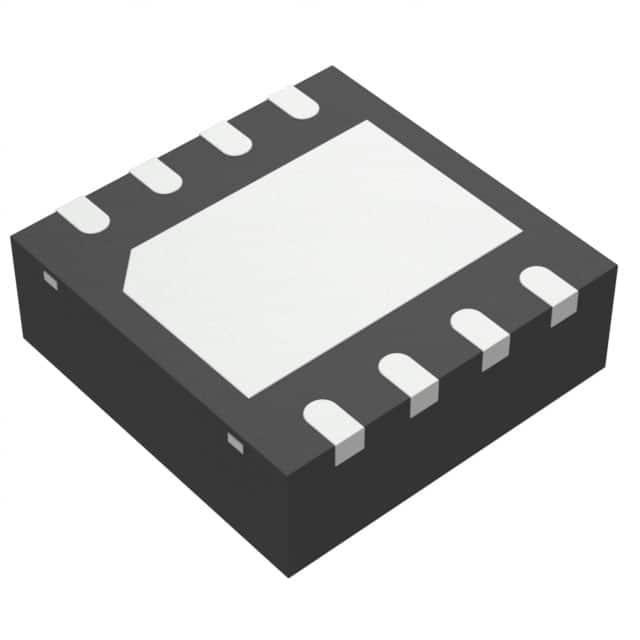
|
| Category | Data Acquisition - Analog to Digital Converters (ADC) | Data Acquisition - Analog to Digital Converters (ADC) |
| Manufacturer | National Semiconductor | Texas Instruments |
| Description | ADC161S626 16-BIT, 50 TO 250 KSP | IC ADC 16BIT SAR 8SON |
| Package | Bulk | Cut Tape (CT) |
| Series | microPOWER™ | microPOWER™ |
| Features | - | - |
| Operating Temperature | -40°C ~ 85°C | -40°C ~ 85°C |
| Mounting Type | Surface Mount | Surface Mount |
| Package / Case | 10-TFSOP, 10-MSOP (0.118\", 3.00mm Width) | 8-VDFN Exposed Pad |
| Supplier Device Package | 10-VSSOP | 8-SON (3x3) |
| Reference Type | External | External |
| Sampling Rate (Per Second) | 250k | 250k |
| Data Interface | SPI | SPI |
| Number of Bits | 16 | 16 |
| Voltage - Supply, Analog | 5V | 2.7V ~ 3.6V, 5V |
| Voltage - Supply, Digital | 2.7V ~ 5.5V | 2.7V ~ 3.6V, 5V |
| Number of Inputs | 1 | 1 |
| Input Type | Differential, Single Ended | Pseudo-Differential, Single Ended |
| Configuration | S/H-ADC | S/H-ADC |
| Ratio - S/H:ADC | 1:1 | 1:1 |
| Number of A/D Converters | 1 | 1 |
| Architecture | SAR | SAR |
-
1. How does ADC convert analog to digital?
The technology that converts analog sound signals into digital signals is called analog-to-digital conversion technology (Analog to Digital Converter, referred to as ADC). The function of ADC is to convert continuously changing analog signals into discrete digital signals. The process of analog-to-digital conversion can be completed by steps such as sampling, holding, quantization, and encoding.
-
2. What are DAC and ADC?
ADC and DAC are two important concepts in digital electronics. ADC stands for "analog-to-digital converter", which can convert analog signals into digital signals. DAC stands for "digital-to-analog converter", which can convert digital signals into analog signals. Both converters play an important role in many electronic products, such as mobile phones, televisions, stereos, etc.
-
3. Why do we need analog-to-digital converters?
The reasons why we need analog-to-digital converters mainly include the following:
Digital system processing: Many computers and electronic devices are digital systems, which are more suitable for processing digital signals. Analog signals are difficult to process in digital systems, and after analog-to-digital conversion, the signals can be represented, stored and processed in digital form.
Noise immunity: Digital signals are more noise-resistant than analog signals. Digital signals can be protected and restored by means such as error correction codes, while analog signals are easily interfered by noise.
Accuracy: Digital signals are more accurate because they can be represented with higher resolution. Analog signals have accuracy limitations, and analog-to-digital conversion can improve the resolution of the signal.
Application scenarios: Analog-to-digital converters are widely used in many fields, including automatic control systems, audio and video processing, sensor interfaces -
4. When is ADC used?
ADC (Analog-to-Digital Converter) is widely used in a variety of scenarios, including but not limited to:
Sensor interface: For example, temperature sensors, pressure sensors, and light sensors, ADC converts analog voltages into digital signals for the use of digital thermometers, temperature control systems, barometers, air pressure sensing systems, light intensity detection and control systems.
Audio signal processing: In microphones, ADC converts analog audio signals into digital signals for digital audio processing, recording, and playback.
Medical equipment: Such as electrocardiograms (ECGs) and oximeters, ADC converts analog signals of ECG signals and blood oxygen saturation into digital signals for heart health monitoring and diagnosis and blood oxygen level monitoring.
Data acquisition system: In various applications that need to collect data from analog signals, ADC is used to convert analog signals into digital signals for storage, processing, and analysis.
