
ADC78H90CIMT/NOPB vs ADS7953SRHBT
| Part Number |
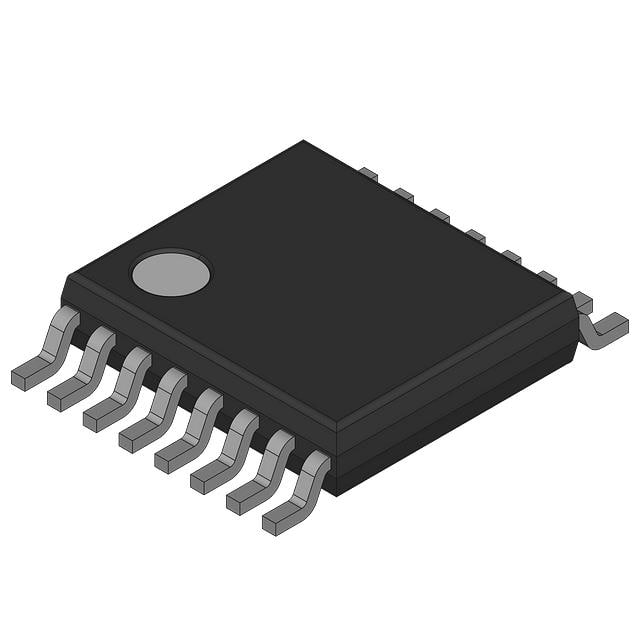
|
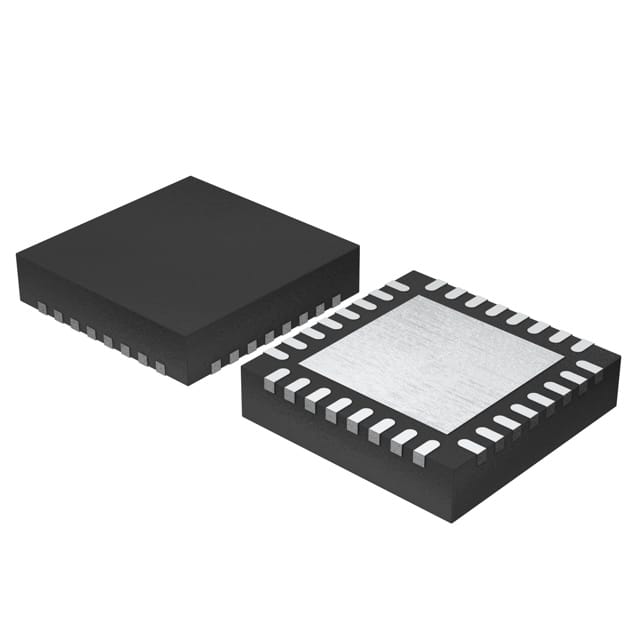
|
| Category | Data Acquisition - Analog to Digital Converters (ADC) | Data Acquisition - Analog to Digital Converters (ADC) |
| Manufacturer | National Semiconductor | Texas Instruments |
| Description | IC ADC 12BIT SAR 16TSSOP | IC ADC 12BIT SAR 32VQFN |
| Package | Bulk | Tube |
| Series | - | microPOWER™ |
| Features | - | - |
| Operating Temperature | -40°C ~ 85°C | -40°C ~ 125°C |
| Mounting Type | Surface Mount | Surface Mount |
| Package / Case | 16-TSSOP (0.173\", 4.40mm Width) | 32-VFQFN Exposed Pad |
| Supplier Device Package | 16-TSSOP | 32-VQFN (5x5) |
| Reference Type | Supply | External |
| Sampling Rate (Per Second) | 500k | 1M |
| Data Interface | SPI, DSP | SPI |
| Number of Bits | 12 | 12 |
| Voltage - Supply, Analog | 2.7V ~ 5.25V | 2.7V ~ 5.25V |
| Voltage - Supply, Digital | 2.7V ~ 5.25V | 1.7V ~ 5.25V |
| Number of Inputs | 8 | 16 |
| Input Type | Single Ended | Single Ended |
| Configuration | MUX-S/H-ADC | MUX-S/H-ADC |
| Ratio - S/H:ADC | 1:1 | 1:1 |
| Number of A/D Converters | 1 | 1 |
| Architecture | SAR | SAR |
-
1. What process converts analog to digital?
There are three basic processes for analog to digital conversion:
The first process is "sampling", which is to extract the sample value of the analog signal at equal intervals to turn the continuous signal into a discrete signal.
The second process is called "quantization", which is to convert the extracted sample value into the closest digital value to represent the size of the extracted sample value.
The third process is "encoding", which is to represent the quantized value with a set of binary digits. After these three processes, the digitization of the analog signal can be completed. This method is called "pulse encoding".
After the digital signal is transmitted to the receiving end, a restoration process is required, that is, the received digital signal is converted back to an analog signal so that it can be understood by the receiver. This process is called "digital-to-analog conversion", which reproduces it as sound or image. -
2. How to convert analog to digital without ADC?
Analog to digital conversion without ADC can be achieved through PWM circuit. This method is suitable for those main control chips without built-in ADC, which needs to be solved by two GPIOs and an operational amplifier. The basic principle is to use an integral circuit to convert the PWM wave into a smooth DC voltage, and then continuously adjust the PWM duty cycle by comparing it with the voltage to be measured until the output of the comparator changes from 0 to 1, and record the current PWM duty cycle, thereby realizing the measurement of the analog voltage.
-
3. When is ADC used?
ADC (Analog-to-Digital Converter) is widely used in a variety of scenarios, including but not limited to:
Sensor interface: For example, temperature sensors, pressure sensors, and light sensors, ADC converts analog voltages into digital signals for the use of digital thermometers, temperature control systems, barometers, air pressure sensing systems, light intensity detection and control systems.
Audio signal processing: In microphones, ADC converts analog audio signals into digital signals for digital audio processing, recording, and playback.
Medical equipment: Such as electrocardiograms (ECGs) and oximeters, ADC converts analog signals of ECG signals and blood oxygen saturation into digital signals for heart health monitoring and diagnosis and blood oxygen level monitoring.
Data acquisition system: In various applications that need to collect data from analog signals, ADC is used to convert analog signals into digital signals for storage, processing, and analysis. -
4. What is the difference between the input and output of an ADC?
The input of ADC (Analog-to-Digital Converter) is analog quantity and the output is digital quantity.
The main function of ADC is to convert continuous analog signal into discrete digital signal. In electronic systems, analog signal usually refers to continuously changing voltage or current, such as the signal obtained from microphone or sensor. The amplitude and frequency of these analog signals can change continuously, while digital signals are composed of a series of discrete values, usually expressed in binary form.
Input: The input of ADC receives analog signals, which can be in the form of continuously changing physical quantities such as voltage and current. The amplitude and frequency of analog signals can change continuously, such as the voltage range from 0V to 5V.
Output: The output of ADC is digital signal, which is composed of a series of discrete values, usually expressed in binary form. The advantage of digital signals is that they can be calculated and processed quic
