
AS1112B-BQFT vs AS1110-BQFT
| Part Number |
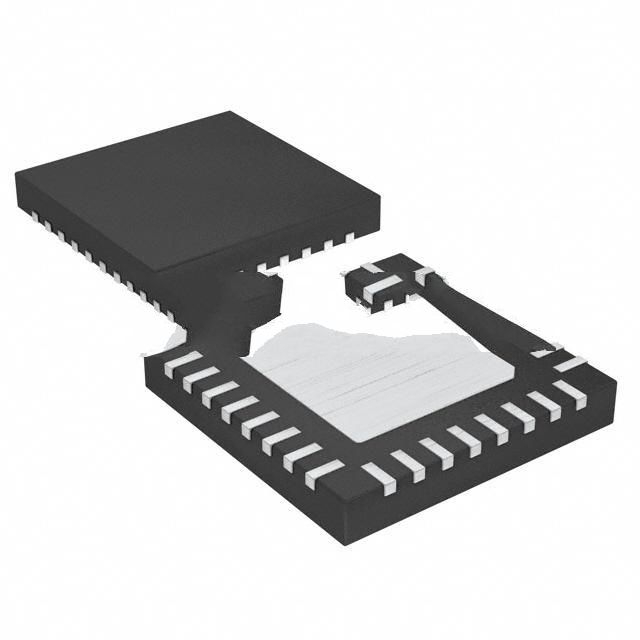
|
|
| Category | PMIC - LED Drivers | PMIC - LED Drivers |
| Manufacturer | ams | ams |
| Description | IC LED DRIVER LIN 100MA 32TQFN | IC LED DRIVER LINEAR 100MA 28QFN |
| Package | -Reel® | Tube |
| Series | - | - |
| Type | Linear | Linear |
| Operating Temperature | -40°C ~ 85°C (TA) | -40°C ~ 85°C (TA) |
| Mounting Type | Surface Mount | Surface Mount |
| Package / Case | 32-VFQFN Exposed Pad | 28-WFQFN Exposed Pad |
| Supplier Device Package | 32-TQFN (5x5) | 28-QFN (5x5) |
| Topology | Shift Register | Shift Register |
| Applications | Backlight, Signage | Signage |
| Number of Outputs | 16 | 16 |
| Voltage - Output | 15V | 15V |
| Frequency | 30MHz | 50MHz |
| Current - Output / Channel | 100mA | 100mA |
| Internal Switch(s) | Yes | Yes |
| Dimming | - | - |
| Voltage - Supply (Max) | 5.5V | 5.5V |
| Voltage - Supply (Min) | 3V | 3V |
-
1. How can I tell if an LED driver is broken?
If the LED does not light up or the brightness drops significantly.
The driver is heating abnormally.
There is a distinct burnt smell.
Measure the input and output voltage/current and it does not meet the specification.
Test the status of its internal components through professional equipment. -
2. Do all LED lights need a driver?
Not all LED lights require independent drivers. Some small or integrated LED lamps may already have built-in driver circuits. However, for most high-power LEDs or applications that require specific current control, using a dedicated driver is very necessary.
-
3. Why do I need to program an LED driver?
Programming is usually for advanced drivers with programmable functions, such as achieving finer dimming control, color adjustment or other intelligent functions. This allows users to customize the behavior of the driver according to specific needs.
-
4. Can I use an LED light without a driver?
As mentioned before, in theory yes, but in practice it is strongly recommended to use a proper driver to ensure optimal performance and extend life.
