
BMP280 vs HSCSAND030PAAA5
| Part Number |
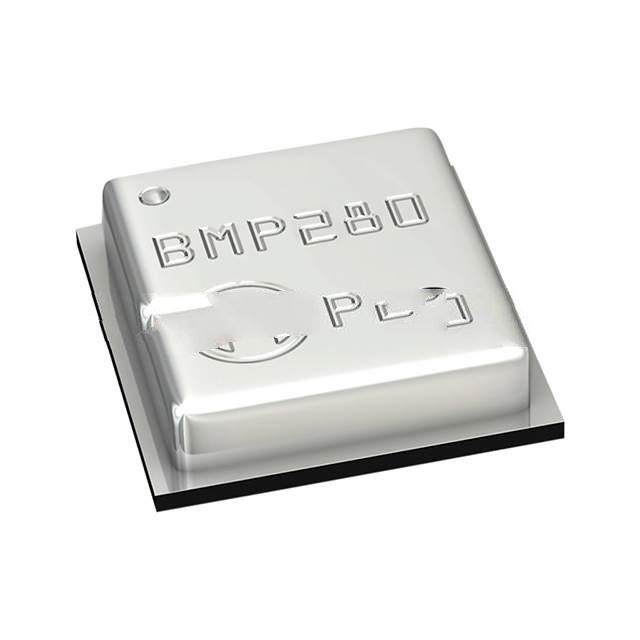
|
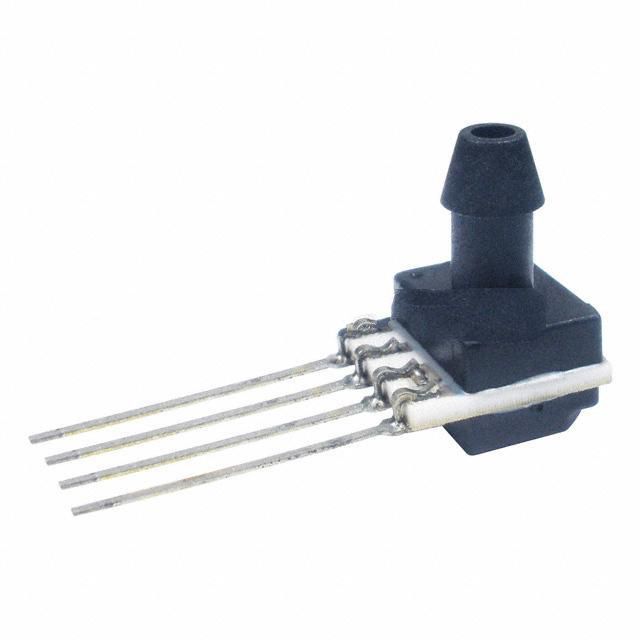
|
| Category | Pressure Sensors, Transducers | Pressure Sensors, Transducers |
| Manufacturer | Bosch Sensortec | Honeywell Sensing and Productivity Solutions |
| Description | SENSOR PRESSURE ABS | SENSOR PRES 30PSI ABSO 5V SIP |
| Package | 8-SMD | 4-SIP, Side Port |
| Series | - | TruStability? HSC |
| Features | Standby Mode | Amplified Output, Temperature Compensated |
| Voltage - Supply | 1.71 V ~ 3.6 V | 4.75 V ~ 5.25 V |
| Operating Temperature | -40°C ~ 85°C | -20°C ~ 85°C |
| Package / Case | 8-SMD | 4-SIP, Side Port |
| Supplier Device Package | 8-SMD | 4-SIP |
| Output | 16b | 0.5 V ~ 4.5 V |
| Accuracy | ±0.0145 PSI (±0.1 kPa) | ±0.25% |
| Output Type | I²C, SPI | Analog Voltage |
| Termination Style | SMD (SMT) Tab | PC Pin |
| Pressure Type | Absolute | Absolute |
| Operating Pressure | 4.35 PSI ~ 15.95 PSI (30 kPa ~ 110 kPa) | 30 PSI (206.84 kPa) |
| Maximum Pressure | 290.08 PSI (2000 kPa) | 60 PSI (413.69 kPa) |
| Port Style | - | Barbed |
| Port Size | - | Male - 0.19" (4.93mm) Tube |
-
1. Is a transducer a sensor?
A transducer is not a sensor. Although both sensors and transducers are devices for measuring physical quantities, they have obvious differences in definition and application.
Definition and function
Sensor: A sensor is a device that converts non-electrical signals into electrical signals. It is usually used to convert physical quantities (such as temperature, pressure, humidity, light intensity, etc.) into electrical signals. Sensors are widely used in industry, medical care, environmental monitoring and other fields.
Transducer: A transducer is a device that converts one form of energy into another form. It can convert any form of physical quantity (such as pressure, force, torque, displacement, sound, light, heat, etc.) into electrical signals or other forms of energy output. Transducers are widely used in the control, measurement and detection of various industrial processes.
-
2. Application field
Sensor: Mainly used for industrial process control and monitoring, equipment control and monitoring in the fields of automobiles, machinery, electronics, medical equipment, aerospace, etc., as well as environmental monitoring and weather forecasting.
Transducers: Mainly used in exploration and production processes in the fields of ocean, petroleum, aviation, energy, etc., engineering measurement and control fields (such as monitoring and control of structures such as buildings, bridges and tunnels), scientific research fields (such as physics, chemistry, biology, etc.), and music and art fields (such as electronic musical instruments and sound amplifiers). -
3. What are the three types of pressure sensors?
There are three main types of pressure sensors:
Gage pressure sensor: This sensor is used to measure pressure relative to atmospheric pressure. It is usually used to measure the pressure of liquids or gases and convert pressure changes into electrical signal output.
Differential pressure sensor: The differential pressure sensor uses two different pressure ports to measure the pressure difference relative to each other. It is often used to measure the pressure difference between two different locations, such as measuring flow in a fluid system.
Absolute pressure sensor: Absolute pressure sensor is used to measure absolute pressure, that is, pressure relative to a vacuum. It is not affected by atmospheric pressure and is often used for high-precision measurements and applications that require stable pressure readings.
In addition, there are other types of pressure sensors, such as piezoresistive, capacitive, piezoelectric, strain gauge, fiber optic pressure sensor, and magnetostrictive. These sensors have different characteristics and application fields.
For example:
Piezoresistive pressure sensor: simple structure, small size, low cost, high sensitivity and accuracy, widely used in consumer electronics, medical equipment and industrial control.
Capacitive pressure sensor: has good dynamic response characteristics and stability, suitable for aerospace, automobile manufacturing and precision instruments.
Piezoelectric pressure sensor: does not require external power supply, has extremely high sensitivity and fast response time, and is often used for high-frequency vibration measurement and dynamic pressure monitoring.
Strain pressure sensor: has a wide measurement range, high accuracy and good stability, and is widely used in industrial automation, engineering machinery and aerospace.
Fiber optic pressure sensor: has strong anti-electromagnetic interference ability, corrosion resistance, high temperature resistance, suitable for pressure measurement in harsh environments.
Magnetostrictive pressure sensor: has high accuracy, fast response and good reliability, and is often used in high-precision pressure measurement and control systems. -
4. What is the difference between sensors and actuators?
The main difference between sensors and actuators lies in their functions, design principles and application scenarios.
Function and design principle
Sensor: A sensor is a device that converts various physical quantities (such as temperature, pressure, light intensity, etc.) into easy-to-process electrical signals. Its main function is to detect and collect physical quantities in the environment, and convert these physical quantities into electrical signal output for further processing and analysis.
Actuator: An actuator is a device that converts electrical signals, air pressure, hydraulic pressure and other energies into physical motion. Its main function is to perform corresponding action control according to the received electrical signal, such as controlling the movement of the robot, adjusting the cutting of the machine tool, etc.
Application scenarios
Sensors: Sensors are usually used in areas that require monitoring environmental information, controlling automation equipment, adjusting motion control systems, such as smart homes, aircraft, robots, etc.
Actuators: Actuators are used to adjust control systems, convert energy, complete mechanical work, etc., such as hydraulic pumps driven by electric motors, pneumatic control valves, etc.
