
C0603C629C5GAC7867 vs CL31B104KBP5PNF
| Part Number |
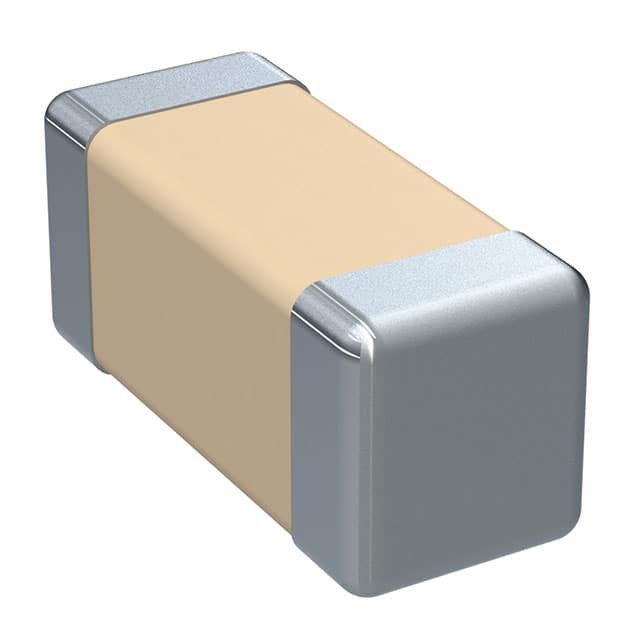
|
|
| Category | Ceramic Capacitors | Ceramic Capacitors |
| Manufacturer | KEMET | Samsung Electro-Mechanics |
| Description | CAP CER 6.2PF 50V NP0 0603 | CAP CER 0.1UF 50V X7R 1206 |
| Package | Tape & Reel (TR) | Tape & Reel (TR) |
| Series | SMD Comm C0G | CL |
| Features | Low ESL | - |
| Operating Temperature | -55°C ~ 125°C | -55°C ~ 125°C |
| Mounting Type | Surface Mount, MLCC | Surface Mount, MLCC |
| Package / Case | 0603 (1608 Metric) | 1206 (3216 Metric) |
| Applications | General Purpose | Automotive |
| Tolerance | ±0.25pF | ±10% |
| Temperature Coefficient | C0G, NP0 | X7R |
| Size / Dimension | 0.063" L x 0.031" W (1.60mm x 0.80mm) | 0.126" L x 0.063" W (3.20mm x 1.60mm) |
| Voltage - Rated | 50V | 50V |
| Lead Spacing | - | - |
| Thickness (Max) | 0.034\" (0.87mm) | 0.049\" (1.25mm) |
| Ratings | - | AEC-Q200 |
| Height - Seated (Max) | - | - |
| Capacitance | 6.2 pF | 0.1 µF |
| Lead Style | - | - |
| Failure Rate | - | - |
-
1. What are ceramic capacitors used for?
Ceramic capacitors are widely used in various electronic devices, mainly for:
Coupling and decoupling: used in circuits to isolate DC signals while transmitting AC signals.
Filtering: remove noise from the power supply or smooth the output voltage.
Resonant circuit: such as oscillators in radio frequency (RF) circuits.
Temperature compensation: some types of ceramic capacitors have temperature coefficients that can be used to stabilize circuit performance.
Bypass: provide a low impedance path for high-frequency signals, thereby reducing the impact on other parts. -
2. Can I replace film capacitors with ceramic capacitors?
In many cases, ceramic capacitors can be used to replace film capacitors, especially when smaller size and lower cost are required. However, it is important to note that ceramic capacitors may have different temperature coefficients and self-healing characteristics, which may affect performance in a specific application.
-
3. Should ceramic capacitors have continuity?
A properly functioning ceramic capacitor should show a certain capacitance value between its pins, not completely on or off.
-
4. Why are mica capacitors so expensive?
Mica capacitors are expensive because of their excellent electrical properties (such as very low dissipation factor and stable temperature coefficient) and their high production costs.
