
C901U120JYSDAAWL45 vs C901U120JYSDAAWL20
| Part Number |

|
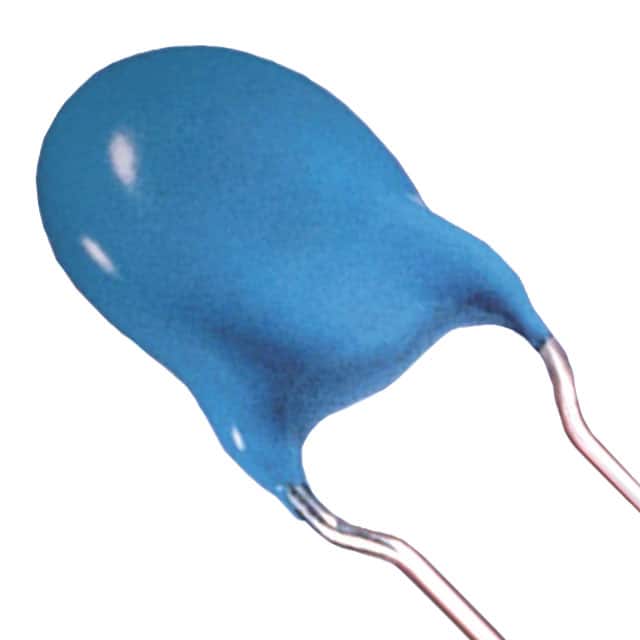
|
| Category | Ceramic Capacitors | Ceramic Capacitors |
| Manufacturer | KEMET | KEMET |
| Description | CAP CER 12PF 400VAC SL RADIAL | CAP CER 12PF 400VAC SL RADIAL |
| Package | Bulk | Bulk |
| Series | C900AC SFTY X1-400 Y2-250 | C900AC SFTY X1-400 Y2-250 |
| Features | - | - |
| Operating Temperature | -40°C ~ 125°C | -40°C ~ 125°C |
| Mounting Type | Through Hole | Through Hole |
| Package / Case | Radial, Disc | Radial, Disc |
| Applications | Safety | Safety |
| Tolerance | ±5% | ±5% |
| Temperature Coefficient | SL | SL |
| Size / Dimension | 0.276\" Dia (7.00mm) | 0.276\" Dia (7.00mm) |
| Voltage - Rated | 400VAC | 400VAC |
| Lead Spacing | 0.394\" (10.00mm) | 0.394\" (10.00mm) |
| Thickness (Max) | - | - |
| Ratings | X1, Y2 | X1, Y2 |
| Height - Seated (Max) | - | - |
| Capacitance | 12 pF | 12 pF |
| Lead Style | Straight | Straight |
| Failure Rate | - | - |
-
1. What is the difference between ceramic capacitors and electrolytic capacitors?
Polarity: Ceramic capacitors are non-polar, while electrolytic capacitors are polar.
Capacity range: Electrolytic capacitors generally offer larger capacitance values.
Stability: Ceramic capacitors are more stable, especially when the temperature changes.
Lifespan: Ceramic capacitors have a longer lifespan because there is no liquid electrolyte to dry out. -
2. Why are mica capacitors so expensive?
Mica capacitors are expensive because of their excellent electrical properties (such as very low dissipation factor and stable temperature coefficient) and their high production costs.
-
3. Why do ceramic capacitors make noise?
Some types of ceramic capacitors (particularly Class 2 ceramic capacitors) produce micro-vibrations when the voltage changes due to their material properties, which in turn cause faint mechanical noise.
-
4. Which side of a ceramic capacitor is the positive side?
Ceramic capacitors are non-polarized, so there is no positive or negative side.
