
CAT5419WI00 vs DS1667-010
| Part Number |

|

|
| Category | Digital Potentiometers ICs | Digital Potentiometers ICs |
| Manufacturer | ON Semiconductor | Maxim Integrated |
| Description | DIGIPOT, 2 FUNC, 64 POSITIONS | DIGITAL RESISTOR WITH OP AMP |
| Package | Bulk | Bulk |
| Series | - | - |
| Features | - | Cascade Pin |
| Interface | - | Serial |
| Voltage - Supply | - | 4.5V ~ 5.5V |
| Operating Temperature | - | 0°C ~ 70°C |
| Mounting Type | - | - |
| Package / Case | - | - |
| Supplier Device Package | - | - |
| Tolerance | - | ±20% |
| Number of Circuits | - | 2 |
| Configuration | - | Potentiometer |
| Memory Type | - | Volatile |
| Taper | - | Linear |
| Number of Taps | - | 256 |
| Resistance (Ohms) | - | 10k |
| Temperature Coefficient (Typ) | - | 750ppm/°C |
| Resistance - Wiper (Ohms) (Typ) | - | 400 |

-
1. What is a digital potentiometer IC?
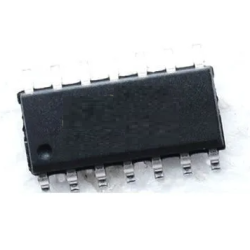
A digital potentiometer IC is a new type of CMOS digital and analog mixed signal processing integrated circuit that generates an analog output through digital input control and can replace traditional mechanical potentiometers. Digital potentiometers are also called programmable resistors or digitally controlled programmable resistors. They achieve circuit adjustment through CPU digital communication without the need to build a complex circuit environment.
Digital potentiometer ICs have many unique features and advantages. First, they do not require a wiper, making them more rugged and reliable. Second, digital potentiometers can be controlled, set, and change resistance values or voltage divider ratios through processors and software, providing flexibility and precision that mechanical devices cannot match. In addition, digital potentiometers can also be remotely adjusted through firmware to meet the requirements of high reliability and precise control.
There are several factors to consider when selecting a digital potentiometer IC. First, select the number of potentiometers and the number of sliders based on application requirements. Second, consider the resistance value of the resistor and whether there is a buffer contact. Finally, you also need to consider the packaging form and whether you need to remember the position when power is off. -
2. What is the value of a digital potentiometer?
The value of a digital potentiometer depends on its wiper position and bit value. The value of a digital potentiometer is usually determined by its tap position. The more taps, the higher the resolution and the finer the value change. For example, an 8-bit digital potentiometer has 256 taps, while a 5-bit digital potentiometer has 32 taps.
The value of a digital potentiometer can be changed by programming its tap position. For example, when the potentiometer is coded in the middle position, the upper and lower resistance values are equal; at the full scale position, the upper resistance is 0 and the lower resistance is the maximum value; at the 0 position, the lower resistance is 0 and the upper resistance is the maximum value. Specifically, the value range and accuracy of a digital potentiometer depend on its design and bit value. For example, an 8-bit digital potentiometer can provide 256 different resistance values, while a 5-bit digital potentiometer provides 32 different resistance values. -
3. What is the difference between IC and digital IC?
The main difference between IC and digital IC is that they process different types of signals. IC processes continuously changing analog signals, while digital IC processes discrete digital signals.
Specifically, IC (integrated circuit) is a microelectronic device or component that uses a certain process to interconnect transistors, resistors, capacitors and other components and wiring, and is made on a small piece of semiconductor wafer, and then packaged to form a circuit with specific functions. Integrated circuits have the advantages of small size, light weight, long life and high reliability.
Digital IC specializes in processing digital signals, which are discrete in time and amplitude. The design focus of digital IC is on the optimization of logical relationships and system architecture, pursuing the smallest line width, lowest power consumption and fastest transmission speed. Examples of digital ICs include CPUs, microprocessors, microcontrollers, etc., which are widely used in computers and other digital systems. -
4. What is the difference between potentiometers and digital potentiometers?
The main difference between potentiometers and digital potentiometers is their working principle, structure and application scenarios.
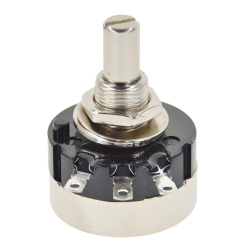
Potentiometer is a traditional electronic component that adjusts the resistance value mechanically. Potentiometers usually consist of a resistor and a movable brush. When the brush moves on the resistor, the resistance value can be changed, thereby adjusting the current or voltage in the circuit. The structure of the potentiometer is relatively simple. It mainly consists of a resistor and a rotating or sliding system. The resistance value is changed by manually adjusting the shaft or slider.
Digital potentiometer is a programmable electronic component that controls the resistance value through digital signals. It consists of a register unit and a digital isolator. The digital isolator can be a matrix, tree or serial type. Digital potentiometers do not require mechanical contacts and control the resistance value through a microprocessor and digital signals. They have high precision and flexibility. Digital potentiometers are more accurate and reliable when adjusting circuit parameters and are not easily affected by wear or environment.
