
CB182D0475KBC vs BFC238304334
| Part Number |
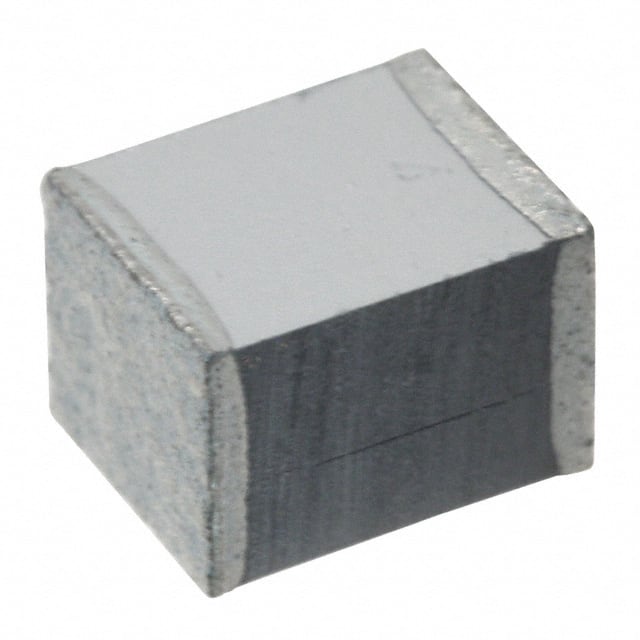
|
|
| Category | Film Capacitors | Film Capacitors |
| Manufacturer | KYOCERA AVX | Vishay Beyschlag/Draloric/BC Components |
| Description | CAP FILM 4.7UF 10% 63VDC 6054 | CAP FILM 0.33UF 5% 250VDC RADIAL |
| Package | Tape & Reel (TR) | Bulk |
| Series | CB | MMKP383 |
| Features | - | - |
| Operating Temperature | -55°C ~ 125°C | -55°C ~ 105°C |
| Mounting Type | Surface Mount | Through Hole |
| Package / Case | 6054 (153137 Metric) | Radial |
| Applications | General Purpose | High Pulse, DV/DT |
| Tolerance | ±10% | ±5% |
| Size / Dimension | 0.602" L x 0.539" W (15.30mm x 13.70mm) | 0.689" L x 0.394" W (17.50mm x 10.00mm) |
| Termination | Solder Pads | PC Pins |
| Voltage Rating - AC | 40V | 125V |
| Voltage Rating - DC | 63V | 250V |
| Lead Spacing | - | 0.591\" (15.00mm) |
| Ratings | - | - |
| Height - Seated (Max) | - | 0.650\" (16.50mm) |
| Capacitance | 4.7 µF | 0.33 µF |
| ESR (Equivalent Series Resistance) | - | - |
| Dielectric Material | Polyester, Polyethylene Terephthalate (PET), Metallized - Stacked | Polypropylene (PP), Metallized |
-
1. What are the uses of film capacitors?
High-frequency filtering, power decoupling, power noise bypass
The main uses of film capacitors include high-frequency filtering, power decoupling, power noise bypass, etc. In electronic devices, film capacitors are widely used in various circuits due to their high insulation impedance, wide frequency response and self-healing properties.
Specific application scenarios
High-frequency filtering: Film capacitors have excellent high-frequency insulation performance, and the capacitance and loss angle are independent of frequency in a large frequency range and change little with temperature, so they are often used in high-frequency filtering circuits.
Power decoupling: In car audio systems, film capacitors are used for power decoupling to ensure stable power supply and avoid noise caused by feedback generated by the power supply.
Power noise bypass: Film capacitors are also widely used for power noise bypass (reverse cross-connection) to reduce the impact of power noise on the circuit.
Different types of applications
CBB film capacitors: widely used in circuit boards because of their high insulation impedance and wide frequency response.
Organic film capacitors: Made of materials such as polypropylene film and polyester film, they have excellent performance, a wide variety of varieties, and a wide range of applications. They are suitable for a variety of electronic devices.
-
2. What is a paper film capacitor?
Paper film capacitors are actually a conceptual error because "paper film capacitors" are not a standard type of capacitor. Based on the information provided, you may want to ask about paper capacitors and film capacitors.
Paper capacitors
Paper capacitors are capacitors that use paper as a dielectric. It consists of thin paper as the dielectric and aluminum foil as the electrode, which is wound into a cylindrical shape and then impregnated with a shell or epoxy resin. Paper capacitors have the following characteristics:
Low cost: Paper capacitors are usually low-cost and suitable for mass production.
Large loss: Due to its material properties, paper capacitors have large losses.
Application scenarios: Mainly used for bypass, coupling, filtering, etc. in low-frequency circuits. -
3. Will the performance of film capacitors degrade?
Yes
The performance of film capacitors will degrade. The performance degradation of film capacitors is mainly due to their internal structure and material properties.
Reasons for performance degradation
Metal plating oxidation: During the capacitor manufacturing process, there is a trace amount of air between the film layers, which may be ionized under the action of the electric field to produce ozone. Ozone is a strong oxidant that oxidizes the metal plating to produce non-conductive metal oxides, resulting in a reduction in the plate area and a decrease in the capacitor capacity.
Humid air: During the winding process of film capacitors, if the workshop environment is not properly controlled, there will be a large amount of humid air. These humid air will produce air ionization reactions when the capacitor is working, generating ozone, which further causes the capacitor capacity to decay.
Poor quality materials: The film materials used are of poor quality, such as uneven evaporation and defects on the film, which will cause the capacitor capacity to decay.
-
4. What are the alternatives to film capacitors?
CL21 capacitors, MPB capacitors, CBB13, CBB81, MMKP82 capacitors
Alternatives to film capacitors mainly include CL21 capacitors, MPB capacitors, CBB13, CBB81 and MMKP82 capacitors. These alternatives have their own advantages and disadvantages in performance and applicable scenarios, and the specific choice depends on specific needs.
CL21 capacitors
CL21 capacitors and CBB22 capacitors can replace each other in applications such as filtering. CL21 capacitors are more stable than CBB22 capacitors under high-frequency conditions, so CL21 capacitors are more preferred in high-frequency circuits. However, CL21 capacitors are more expensive and perform better in high-frequency circuits.
MPB capacitors
MPB capacitors are boxed metallized polypropylene film capacitors with the same core as CBB22 capacitors, but with a plastic shell, which has better resistance to high temperature, moisture and sealing performance. MPB capacitors can replace CBB22 capacitors in high frequency, DC, AC and pulse high current applications, but their prices are relatively high.
CBB13, CBB81 and MMKP82 capacitors
These capacitors have a higher voltage resistance, up to 3000V, and are suitable for applications requiring higher voltages. However, they are also relatively expensive and larger in size.
