
CD4541BEX vs HEF4541BT-Q100518
| Part Number |
|
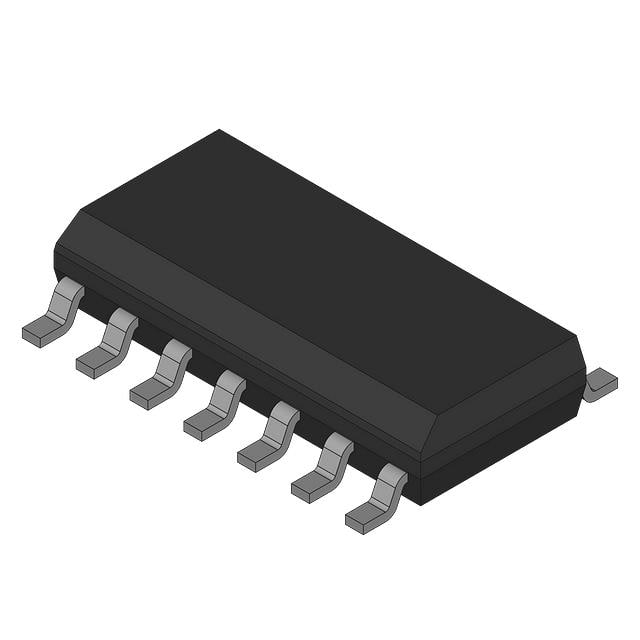
|
| Category | Clock/Timing - Programmable Timers and Oscillators | Clock/Timing - Programmable Timers and Oscillators |
| Manufacturer | Harris Corporation | NXP USA Inc. |
| Description | PROGRAMMABLE TIMER | PROGRAMMABLE TIMER |
| Package | Bulk | Bulk |
| Series | - | - |
| Type | - | - |
| Voltage - Supply | - | - |
| Operating Temperature | - | - |
| Mounting Type | - | - |
| Package / Case | - | - |
| Supplier Device Package | - | - |
| Current - Supply | - | - |
| Frequency | - | - |
| Count | - | - |
-
1. What is a programmable timer?
A programmable timer is a device that can be preset by manually setting programming instructions and accumulate timing according to clock pulses. It allows users to set specific timing tasks as needed, and automatically perform corresponding operations after reaching the preset time. Programmable timers are widely used in various occasions, from computer rooms, schools and mechanical institutions to kitchen appliances in homes.
Programmable timers are based on the accumulation of clock pulses, and clock pulses have different specifications such as 1ms, 10ms, and 100ms. (The working process of the timer is actually counting clock pulses) Due to work needs, in addition to occupying its own numbered memory bit, the timer also occupies a set value register (word) and a current value register (word). The set value register (word) stores the timing time setting value assigned during programming. -
2. What is the timer in the system used for?
he timer in the system is mainly used to synchronize various gate circuits in the CPU, generate clock frequency, or provide pulse signal counting to peripherals. The system timer can display time and record time, generate time interrupts, and count years, months, days, weeks, hours, minutes, and seconds.
Specifically, timers have the following uses in computer systems:
Time interval generator: Generates periodic time stamp signals for various related purposes.
Various time limiters: Used as "time-out warning" or "timeout alarm".
Baud rate generator: Flexible determination of serial transmission rate.
Speed control of DC motor (PWM output): Control of DC motor speed is achieved by controlling pulse width modulation (PWM) output. -
3. What is the purpose of a programmable interval timer?
Programmable interval timers are widely used in various occasions that require precise time control, including computer rooms, schools, mechanical equipment, and various electrical appliances in the home. They can be used to achieve functions such as timed switching, controlling power-on time, frequent power-on and power-off occasions, and automatic control of home anti-theft systems.
Specific application scenarios include:
Home applications: In the home, programmable interval timers can be used to control the switching time of electrical appliances such as water dispensers, water heaters, air conditioners, and rice cookers to achieve automatic control. In addition, it can also be used to control the charging time of electric bicycle batteries, mobile phone batteries and storage batteries, as well as intermittent irrigation of flower beds and lawns, periodic oxygenation and filtration of fish tanks, fountains and other power-consuming occasions that require frequent on and off.
Industrial and mechanical equipment: In industrial and mechanical equipment, programmable interval timers are used to control various automation processes, such as delayed start, timed operation and periodic operation. Through the preset time interval, it can accurately control the start and stop or state switching of the equipment to meet the needs of industrial automation systems.
Fitness and sports training: For fitness enthusiasts and professional athletes, programmable interval timers can help accurately control the time intervals during training. Whether it is HIIT training, yoga or strength training, it can provide flexible timing settings to help users better manage training time and rest time.
-
4. What is the difference between an oscillator and a clock?
The main difference between an oscillator and a clock is that they have different functions and uses. An oscillator is an electronic component that can convert DC power into AC power with a certain frequency, and autonomously generate periodic signals, and is often used in clock circuits, communications and other fields. The clock is used to generate and maintain stable and accurate time signals to ensure the synchronization and coordination of electronic equipment.
An oscillator is an electronic circuit or device whose function is to convert direct current (DC) energy into alternating current (AC) energy with a certain frequency, amplitude and waveform. It can spontaneously generate and maintain a stable oscillation state without external periodic signal drive, and output continuous and repetitive AC signals. Oscillators are widely used in many fields such as electronic engineering, communications, measurement, computer systems, clock synchronization, and control equipment.
