
DS36C278MX/NOPB vs SN65HVD251QDRQ1
| Part Number |

|
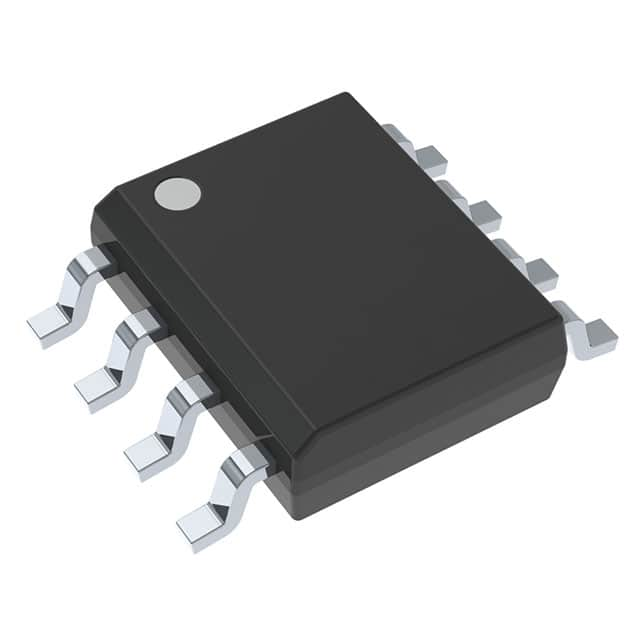
|
| Category | Interface - Drivers, Receivers, Transceivers | Interface - Drivers, Receivers, Transceivers |
| Manufacturer | Texas Instruments | Texas Instruments |
| Description | IC TRANSCEIVER HALF 1/1 8SOIC | IC TRANSCEIVER HALF 1/1 8SOIC |
| Package | Tape & Reel (TR) | Cut Tape (CT) |
| Series | - | Automotive, AEC-Q100 |
| Type | Transceiver | Transceiver |
| Voltage - Supply | 4.75V ~ 5.25V | 4.5V ~ 5.5V |
| Operating Temperature | 0°C ~ 70°C | -40°C ~ 125°C |
| Mounting Type | Surface Mount | Surface Mount |
| Package / Case | 8-SOIC (0.154\", 3.90mm Width) | 8-SOIC (0.154\", 3.90mm Width) |
| Supplier Device Package | 8-SOIC | 8-SOIC |
| Protocol | RS422, RS485 | CANbus |
| Data Rate | - | 1Mbps |
| Number of Drivers/Receivers | 1/1 | 1/1 |
| Receiver Hysteresis | 70 mV | 100 mV |
| Duplex | Half | Half |
-
1. What is an interface driver?
An interface driver is a special program that allows the operating system to control hardware devices through a specific interface. The interface driver is equivalent to a bridge between the hardware and the system, enabling the operating system to identify and control various hardware devices.
The main function of the interface driver is to handle tasks such as data transmission, device identification and resource allocation, ensuring that the hardware devices can be correctly connected and recognized and used by the system. -
2. What is an IC driver?
An IC driver is an integrated circuit that is mainly used to control and drive various devices, such as LCDs, motors, etc. It integrates the circuits that drive and control these devices, making the entire circuit design more concise and reducing the risk of overcurrent and overheating.
The role of the IC driver is to convert the signal from the host or controller into the signal required by the peripheral or sensor so that it can work properly. Depending on the function, the driver chip can be divided into many types, such as motor driver IC, LCD driver IC, etc. -
3. What is a sensor interface IC?
A sensor interface IC is an integrated circuit used to connect sensors and system processors to realize data conversion and transmission. It is mainly responsible for converting analog signals collected by sensors into digital signals, or performing signal conditioning, amplification, filtering and other processing so that the system can recognize and process them.
The main functions of the sensor interface IC include signal conversion, signal conditioning and data transmission. It can amplify and filter the weak signal output by the sensor to improve the quality and stability of the signal, and then convert the processed signal into a digital signal for the system to process. In addition, the interface IC can also realize multiplexing to improve the efficiency and flexibility of the system. -
4. What is the difference between a transmitter and a transceiver?
The core difference between a transmitter and a transceiver lies in their functions and uses. The transmitter is mainly responsible for converting electrical signals into optical signals and transmitting them through optical fibers; while the transceiver has both transmitting and receiving functions, which can convert electrical signals into optical signals for transmission and also convert optical signals into electrical signals for reception.
The transmitter is usually composed of an optical transmitting module, whose function is to convert electrical signals into optical signals and transmit them through optical fibers. It is mainly used to connect devices that need to send data, such as computers, servers, etc. 12. The transceiver contains two modules, optical transmitting and optical receiving, which can complete the two-way transmission of signals, and can both send and receive data.
