
DS90CP22MX-8/NOPB vs 74HC253D,653
| Part Number |
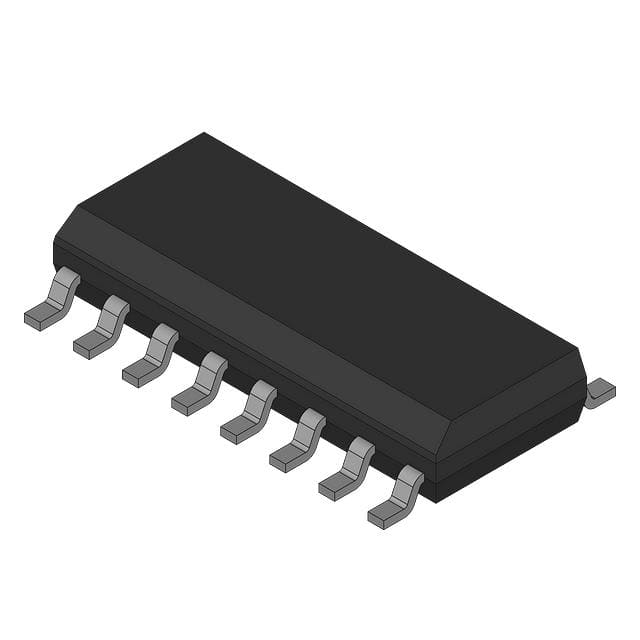
|

|
| Category | Logic - Signal Switches, Multiplexers, Decoders | Logic - Signal Switches, Multiplexers, Decoders |
| Manufacturer | National Semiconductor | NXP USA Inc. |
| Description | IC CROSSPOINT SW 1 X 2:2 16SOIC | IC DUAL 4-IN MUX 3-ST 16SOIC |
| Package | Bulk | Bulk |
| Series | - | 74HC |
| Type | Crosspoint Switch | Multiplexer |
| Voltage - Supply | 3V ~ 3.6V | 2V ~ 6V |
| Operating Temperature | -40°C ~ 85°C | -40°C ~ 125°C |
| Mounting Type | Surface Mount | Surface Mount |
| Package / Case | 16-SOIC (0.154\", 3.90mm Width) | 16-SOIC (0.154\", 3.90mm Width) |
| Supplier Device Package | 16-SOIC | 16-SO |
| Voltage Supply Source | Single Supply | Single Supply |
| Circuit | 1 x 2:2 | 2 x 4:1 |
| Current - Output High, Low | - | 7.8mA, 7.8mA |
| Independent Circuits | 1 | 1 |
-
1. What is the difference between power switches and signal switches?
The difference between power switches and signal switches is mainly the energy level they handle. Power switches are designed to carry larger currents and powers, and are usually used to directly control power supplies; while signal switches handle smaller currents and are mainly used to control logic levels or routing of small signals.
-
2. What are the advantages of a multiplexer?
Save communication resources
Improve bandwidth utilization
Reduce hardware complexity -
3. What are some examples of decoders?
BCD to 7-segment decoder
Binary to Octal Decoder
Address Decoder in memory systems -
4. What are the applications of decoders?
Display driver
Address decoding
Control signal generation
Data conversion
