
E-TA2012 T 2DB N1 vs MAATCC0009
| Part Number |

|
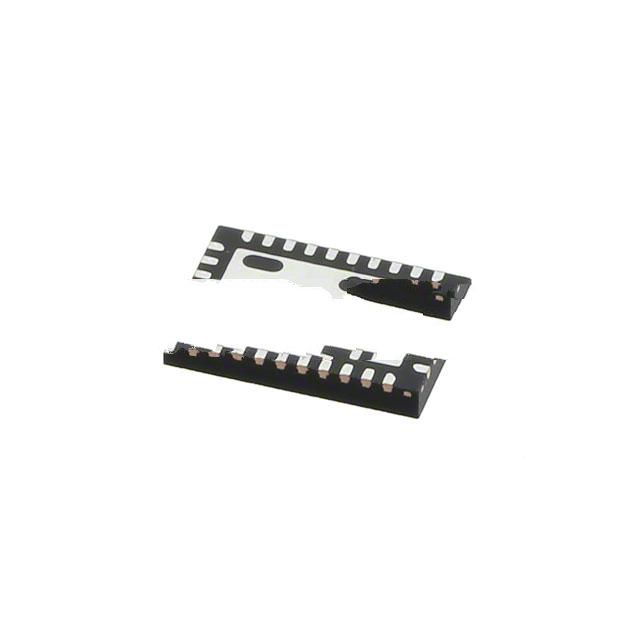
|
| Category | Attenuators | Attenuators |
| Manufacturer | Nidec Copal Electronics | MACOM Technology Solutions |
| Description | ATTENUATOR 2DB 0805 SMD | DIGITAL ATTENUATOR |
| Package | 0805 (2012 Metric) | 32-VFQFN Exposed Pad |
| Series | - | - |
| Package / Case | 0805 (2012 Metric) | 32-VFQFN Exposed Pad |
| Tolerance | ±0.5dB | - |
| Attenuation Value | 2dB | 31.5dB |
| Frequency Range | 0 ~ 3GHz | 0Hz ~ 4GHz |
| Power (Watts) | 63mW | - |
| Impedance | 50 Ohm | 50 Ohms |
-
1. What are the uses of attenuators?
The main uses of attenuators include the following aspects:
Adjust the size of the signal in the circuit: The attenuator can reduce the signal strength passing through the attenuator, thereby protecting the receiving device from damage by large signals.
In the comparison method measurement circuit, directly read the attenuation value of the measured network: The attenuator can be used to measure the attenuation value in the circuit to help make accurate measurements and analysis.
Improve impedance matching: In the circuit that requires stable load impedance, the attenuator can buffer the impedance change and ensure the stable operation of the circuit. -
2. What types of attenuators are there?
There are mainly the following types of attenuators:
Displacement optical attenuator: This attenuator controls the attenuation by adjusting the centering accuracy of the optical fiber. It is specifically divided into lateral displacement type and axial displacement type. Lateral displacement optical attenuators are usually used for the production of fixed attenuators, while axial displacement optical attenuators are mainly used for the production of fixed optical attenuators and some small variable optical attenuators.
Thin film optical attenuator: This attenuator is made based on the principle that the reflected light intensity of light on the surface of the metal film is related to the thickness of the film. Fixed attenuators are realized by fixing the thickness of metal films, while variable attenuators change the intensity of reflected light by inserting metal films of different thicknesses to obtain different attenuation amounts.
Attenuator-type optical attenuator: This attenuator directly fixes the attenuator with absorption characteristics on the end face of the optical fiber or in the optical path to achieve the purpose of attenuating the optical signal. This method can make both fixed attenuators and variable attenuators.
Passive attenuators and active attenuators: Passive attenuators include fixed attenuators and adjustable attenuators, which are mainly used to adjust the size of signals in circuits and improve impedance matching. Active attenuators are combined with other thermosensitive elements to form variable attenuators, which are used in automatic gain or slope control circuits. -
3. Can attenuators reduce noise?
Attenuators can reduce noise, but the specific effect depends on their type and usage scenario.
Basic principles and types of attenuators
An attenuator is an electronic component that is mainly used to adjust the size of signals in circuits and improve impedance matching. It shunts the signal through a special resistive network, absorbs part of the power, and thus reduces the signal level without changing the waveform and frequency characteristics of the signal1. Different types of attenuators have different effects in reducing noise:
Internal attenuator: Usually located in the Amplitude menu of the spectrum analyzer, it reduces the signal level by increasing the attenuation value, but it will increase the noise floor of the spectrum analyzer, resulting in a decrease in the signal-to-noise ratio.
External attenuator: Connected externally to the spectrum analyzer, it can be independent of the internal attenuation setting of the spectrum analyzer, and reduce the noise floor by reducing the signal level without affecting the sensitivity of the test. -
4. What is the attenuator in CRO?
The attenuator in CRO is an electronic component that is mainly used to adjust the size of the signal in the circuit, improve impedance matching, and directly read the attenuation value of the network under test in the comparison method measurement circuit. The attenuator reduces the signal strength by reducing the voltage, current or power of the signal. It is usually composed of a resistor or a thermistor, which converts the energy of the signal into heat energy.
