
EP1AGX35CF484C6 vs 5CEBA9F31C8N
| Part Number |
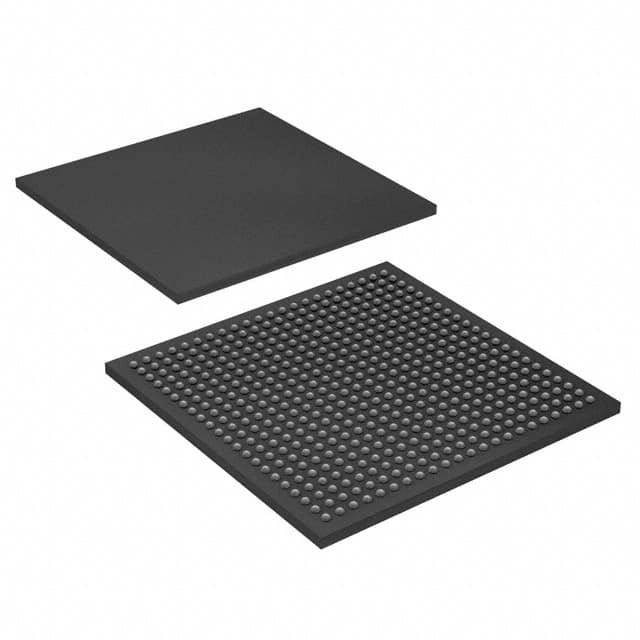
|
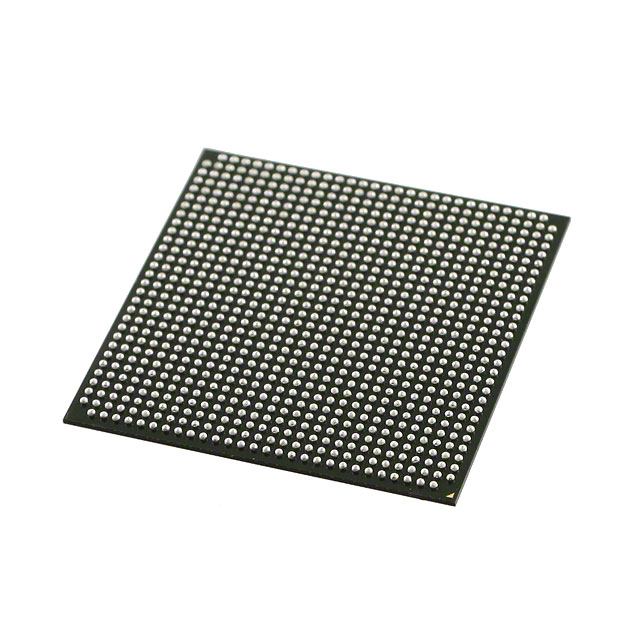
|
| Category | Embedded - FPGAs (Field Programmable Gate Array) | Embedded - FPGAs (Field Programmable Gate Array) |
| Manufacturer | Intel | Intel |
| Description | IC FPGA 230 I/O 484FBGA | IC FPGA 480 I/O 896FBGA |
| Package | 484-BBGA | 896-BGA |
| Series | Arria GX | Cyclone® V E |
| Voltage - Supply | 1.15 V ~ 1.25 V | 1.07 V ~ 1.13 V |
| Operating Temperature | 0°C ~ 85°C (TJ) | 0°C ~ 85°C (TJ) |
| Mounting Type | Surface Mount | Surface Mount |
| Package / Case | 484-BBGA | 896-BGA |
| Supplier Device Package | 484-FBGA (23x23) | 896-FBGA (31x31) |
| Number of I/O | 230 | 480 |
| Number of LABs/CLBs | 1676 | 113560 |
| Number of Logic Elements/Cells | 33520 | 301000 |
| Total RAM Bits | 1348416 | 14251008 |
-
1. What is FPGA Field Programmable Gate Array?
FPGA (Field Programmable Gate Array) is a semiconductor device that allows users to change and configure the internal connection structure and logic units of the device through software means after manufacturing to complete the digital integrated circuit of the established design function. FPGA consists of programmable logic resources, programmable interconnection resources and programmable input and output resources, and is mainly used to implement sequential logic circuits with state machines as the main feature.
FPGA is a product further developed on the basis of programmable devices such as [PAL (Programmable Array Logic) and GAL (General Array Logic). As a semi-custom circuit in the field of application-specific integrated circuits (ASIC), it not only solves the shortcomings of customized circuits, but also overcomes the shortcomings of the limited number of gate circuits of the original programmable devices. FPGA realizes a unique method of digital circuits by providing programmable hardware blocks and interconnections that can be configured to perform various tasks, making hardware development more flexible. -
2. What is FPGA in embedded systems?
FPGA in embedded system is a solution that integrates FPGA technology into embedded system. An embedded system is a computer system designed for a specific application, which usually includes components such as processor, memory, peripheral interface, etc., which are used to control, monitor or perform specific tasks. Combining FPGA with embedded system can bring a series of significant advantages.
FPGA (Field Programmable Gate Array) is a programmable logic device, which consists of a large number of programmable logic units and programmable interconnection resources. It has the characteristics of flexibility and reconfigurability, and is widely used in communication, digital signal processing, embedded systems and other fields. The basic structure of FPGA includes programmable input and output units, configurable logic blocks, digital clock management modules, embedded block RAM, wiring resources, embedded dedicated hard cores and bottom embedded functional units. The design of FPGA can be implemented through hardware description language, which has high flexibility. -
3. Is FPGA a controller or a processor?
FPGA is a programmable integrated circuit. It is neither a traditional controller nor a traditional processor, but a device between the two. FPGAs are programmed with hardware description languages and can customize circuits according to requirements, making them suitable for application scenarios that require flexible configuration and high performance.
The difference between FPGAs and microcontrollers (MCUs) and central processing units (CPUs) lies in their flexibility and application scenarios. MCUs and CPUs are usually microcontrollers and processors with preset functions, suitable for environments that perform single tasks and require efficient execution. FPGAs, on the other hand, have higher flexibility and reconfigurability, can be programmed and reprogrammed according to specific applications, and are suitable for applications that require high customization and optimized performance.
The advantages of FPGAs include their high flexibility and reconfigurability, which makes them ideal for applications that require frequent updates or optimization of logic. Compared with application-specific integrated circuits (ASICs), FPGAs do not require permanent design fixes on silicon, so new features can be developed and tested or bugs can be fixed more quickly.
-
4. Is FPGA good for AI ?
FPGAs are good for AI. FPGAs offer a variety of advantages in the field of AI, including high performance, low latency, cost-effectiveness, energy efficiency and flexibility.
The main advantages of FPGAs in the field of AI include:
High performance and low latency: FPGAs offer low latency as well as deterministic latency, which is critical for many applications with strict deadlines, such as real-time applications such as speech recognition, video streaming and action recognition.
Cost-effectiveness: FPGAs can be reprogrammed for different data types and functions after manufacturing, which creates value compared to replacing applications with new hardware. By integrating additional functions onto the same chip, designers can reduce costs and save board space.
Energy efficiency: FPGAs enable designers to fine-tune hardware according to application requirements, using techniques such as INT8 quantization to reduce memory and computing requirements, thereby reducing energy consumption.
Flexibility and customization: FPGA can be optimized at the hardware level for specific algorithms, reducing unnecessary computing and storage overhead. For example, AMD's Alveo V80 accelerator card uses Versal FPGA adaptive SoC and HBM technology to provide efficient computing power.
In summary, FPGA has significant advantages in the field of AI, including high performance, low latency, cost-effectiveness, energy efficiency and flexibility, making it an ideal solution in AI applications.
