
EP1AGX35CF484C6 vs EP4CGX75CF23I7
| Part Number |
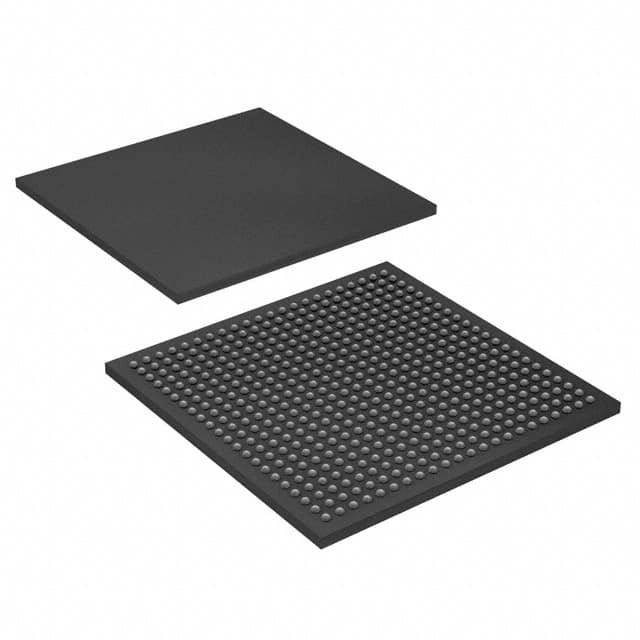
|
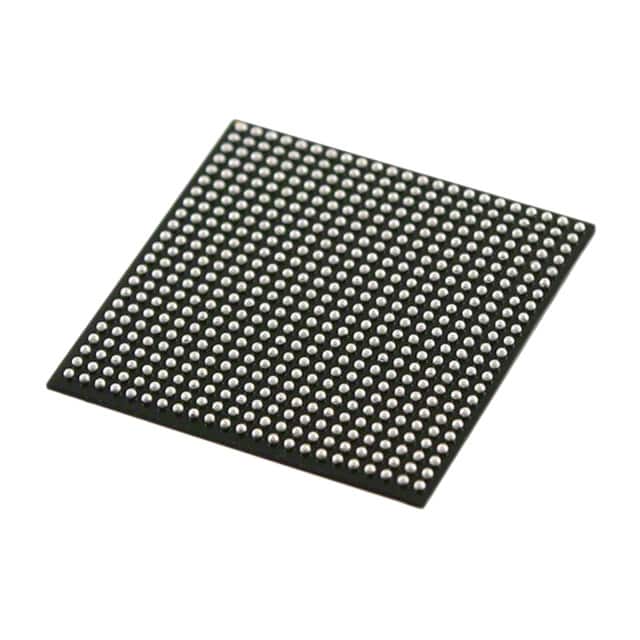
|
| Category | Embedded - FPGAs (Field Programmable Gate Array) | Embedded - FPGAs (Field Programmable Gate Array) |
| Manufacturer | Intel | Intel |
| Description | IC FPGA 230 I/O 484FBGA | IC FPGA 290 I/O 484FBGA |
| Package | 484-BBGA | 484-BGA |
| Series | Arria GX | Cyclone® IV GX |
| Voltage - Supply | 1.15 V ~ 1.25 V | 1.16 V ~ 1.24 V |
| Operating Temperature | 0°C ~ 85°C (TJ) | -40°C ~ 100°C (TJ) |
| Mounting Type | Surface Mount | Surface Mount |
| Package / Case | 484-BBGA | 484-BGA |
| Supplier Device Package | 484-FBGA (23x23) | 484-FBGA (23x23) |
| Number of I/O | 230 | 290 |
| Number of LABs/CLBs | 1676 | 4620 |
| Number of Logic Elements/Cells | 33520 | 73920 |
| Total RAM Bits | 1348416 | 4257792 |
-
1. What is the hardware of FPGA?
FPGA (Field-Programmable Gate Array) is a hardware device, not software. FPGA is a programmable hardware device consisting of a large number of logic units, storage units and interconnection resources, which can realize complex digital circuits and system designs.
The hardware structure of FPGA mainly includes the following parts:
Logic unit: FPGA contains programmable logic blocks that can perform logical and arithmetic operations.
Interconnection resources: These resources act as connections between logic blocks, allowing data to be transferred between different logic blocks.
Memory unit: Used to store configuration information and temporary data, supporting FPGA operations and logic processing.
The characteristics and application scenarios of FPGA include:
Programmability: FPGA can change the structure of its internal circuits by loading configuration information to achieve different functions.
High-speed execution: FPGA performs logic operations at the hardware level, which is usually several orders of magnitude faster than software execution.
Wide application: FPGA is widely used in many fields such as communications, medical, automotive, aerospace, industrial automation, etc. to implement complex digital circuits and algorithms, improve equipment performance, reduce power consumption or achieve specific functional requirements. -
2. What is the hardware of FPGA?
FPGA (Field Programmable Gate Array) is a highly flexible programmable logic chip that users can program to achieve specific logic functions according to their needs. The main uses of FPGA include communications and networks, digital signal processing, automotive and aerospace, industrial automation, high-performance computing, smart Internet of Things and many other aspects.
-
3. Can FPGAs replace microcontrollers?
FPGAs cannot completely replace microcontrollers (MCUs). Although FPGAs and MCUs have their own characteristics and advantages in functions and applications, FPGAs cannot completely replace MCUs. There are significant differences between FPGAs and MCUs in terms of programmability, processing power, flexibility, development cycle, and cost.
The main differences between FPGAs and MCUs include:
Programmability: FPGAs are programmable and can be reprogrammed to achieve new functions, while MCUs are fixed and cannot be changed.
Processing power: FPGAs are usually used in high-performance computing, digital signal processing, image processing, and other fields, while MCUs are usually used for simple tasks such as controlling and monitoring equipment and sensors.
Flexibility: FPGA is more flexible than MCU and can be programmed and reprogrammed according to different applications, while MCU can usually only run predefined programs in its internal memory.
Development cycle: FPGA has a longer development cycle than MCU because FPGA needs to be designed, verified and debugged, while MCU usually only needs to write and debug programs.
Cost: FPGA costs more than MCU because FPGA needs to be manufactured and tested, and a lot of design and verification work is required, while MCU has a relatively low cost.
In specific application scenarios, FPGA and MCU each have their own advantages:
Advantages of FPGA: high programmability, parallel processing capability, high performance, suitable for applications that require rapid prototyping and system upgrades, suitable for scenarios with high real-time requirements.
Advantages of MCU: high integration, low cost, low power consumption, suitable for scenarios with strict power consumption requirements.
In summary, although FPGA performs well in some high-performance and flexible application scenarios, MCU still has irreplaceable advantages in simple control and monitoring tasks. -
4. Is FPGA a microprocessor?
FPGA is not a microprocessor. FPGA (Field-Programmable Gate Array) is a special digital circuit that is mainly used to implement complex logic functions, while microprocessors are processors used to execute instructions.
FPGA and microprocessors have significant differences in function and use. FPGA is a semi-custom digital circuit that can be programmed during the hardware design stage to implement specific logic functions. FPGA solves the shortcomings of customized circuits and overcomes the shortcomings of the limited number of gate circuits of the original programmable devices. It is suitable for occasions that require highly customized logic functions. In contrast, a microprocessor (such as a CPU) is a general-purpose computing device used to execute instructions stored in it, process data, and perform computing tasks. Microprocessors include MCU (microcontroller), DSP (digital signal processor), etc., each of which has different application scenarios and functional characteristics.
Specifically, FPGA and microprocessor are also different in structure and working mode. FPGA consists of a large number of programmable logic units, and users can program to implement any logic function as needed. Microprocessors contain a central processing unit (CPU), memory, and input and output interfaces to execute predefined instruction sets, process data, and perform computing tasks. In addition, FPGAs are usually used in situations that require high-speed processing and parallel computing, such as communications, image processing, etc., while microprocessors are widely used in various computing devices and systems.
