
EP3C55U484C6N vs 10CX220YF672E5G
| Part Number |
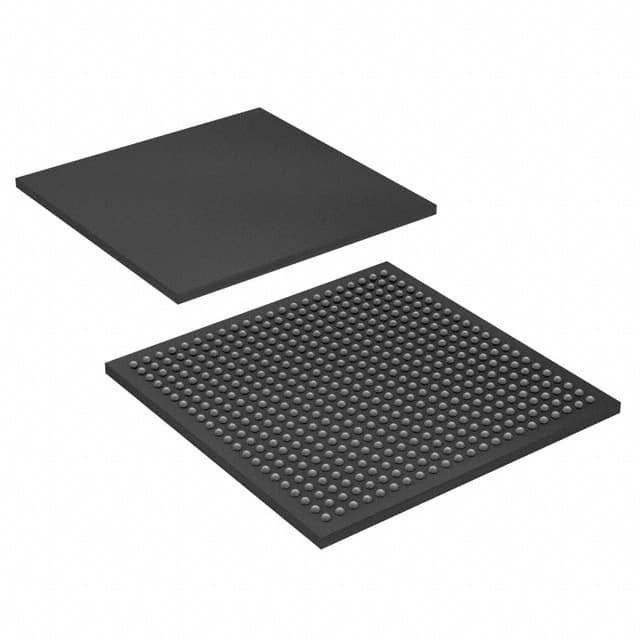
|

|
| Category | Embedded - FPGAs (Field Programmable Gate Array) | Embedded - FPGAs (Field Programmable Gate Array) |
| Manufacturer | Intel | Altera |
| Description | IC FPGA 327 I/O 484UBGA | IC FPGA 236 I/O 672FBGA |
| Package | 484-FBGA | Tray |
| Series | Cyclone® III | Cyclone® 10 GX |
| Voltage - Supply | 1.15 V ~ 1.25 V | 0.9V |
| Operating Temperature | 0°C ~ 85°C (TJ) | 0°C ~ 100°C (TJ) |
| Mounting Type | Surface Mount | Surface Mount |
| Package / Case | 484-FBGA | 672-BBGA, FCBGA |
| Supplier Device Package | 484-UBGA (19x19) | 672-FBGA, FC (27x27) |
| Number of I/O | 327 | 236 |
| Number of LABs/CLBs | 3491 | 80330 |
| Number of Logic Elements/Cells | 55856 | 220000 |
| Total RAM Bits | 2396160 | 13752320 |
| Number of Gates | - | - |
-
1. What is FPGA Field Programmable Gate Array?
FPGA (Field Programmable Gate Array) is a semiconductor device that allows users to change and configure the internal connection structure and logic units of the device through software means after manufacturing to complete the digital integrated circuit of the established design function. FPGA consists of programmable logic resources, programmable interconnection resources and programmable input and output resources, and is mainly used to implement sequential logic circuits with state machines as the main feature.
FPGA is a product further developed on the basis of programmable devices such as [PAL (Programmable Array Logic) and GAL (General Array Logic). As a semi-custom circuit in the field of application-specific integrated circuits (ASIC), it not only solves the shortcomings of customized circuits, but also overcomes the shortcomings of the limited number of gate circuits of the original programmable devices. FPGA realizes a unique method of digital circuits by providing programmable hardware blocks and interconnections that can be configured to perform various tasks, making hardware development more flexible. -
2. What is the hardware of FPGA?
FPGA (Field Programmable Gate Array) is a highly flexible programmable logic chip that users can program to achieve specific logic functions according to their needs. The main uses of FPGA include communications and networks, digital signal processing, automotive and aerospace, industrial automation, high-performance computing, smart Internet of Things and many other aspects.
-
3. Is FPGA a microcontroller?
FPGA is not a microcontroller. There are significant differences between FPGA and microcontroller in terms of function and use.
FPGA is a programmable integrated circuit, which is programmed through hardware description language and can customize the circuit according to needs. It is very suitable for application scenarios that require flexible configuration and high performance. In contrast, microcontrollers (MCUs) are integrated circuits with preset functions, usually used for single tasks and requiring efficient execution.
FPGAs and MCUs also differ in structure and application scenarios. FPGAs offer great flexibility and are suitable for complex applications that require rapid prototyping and reconfigurability. On the other hand, MCUs combine processor cores, memory, and various peripherals in a single chip, designed for specific tasks, and provide cost-effective solutions. -
4. Is FPGA a controller or a processor?
FPGA is a programmable integrated circuit. It is neither a traditional controller nor a traditional processor, but a device between the two. FPGAs are programmed with hardware description languages and can customize circuits according to requirements, making them suitable for application scenarios that require flexible configuration and high performance.
The difference between FPGAs and microcontrollers (MCUs) and central processing units (CPUs) lies in their flexibility and application scenarios. MCUs and CPUs are usually microcontrollers and processors with preset functions, suitable for environments that perform single tasks and require efficient execution. FPGAs, on the other hand, have higher flexibility and reconfigurability, can be programmed and reprogrammed according to specific applications, and are suitable for applications that require high customization and optimized performance.
The advantages of FPGAs include their high flexibility and reconfigurability, which makes them ideal for applications that require frequent updates or optimization of logic. Compared with application-specific integrated circuits (ASICs), FPGAs do not require permanent design fixes on silicon, so new features can be developed and tested or bugs can be fixed more quickly.
