
EP4CGX75CF23C6 vs EP2C50F672C7
| Part Number |
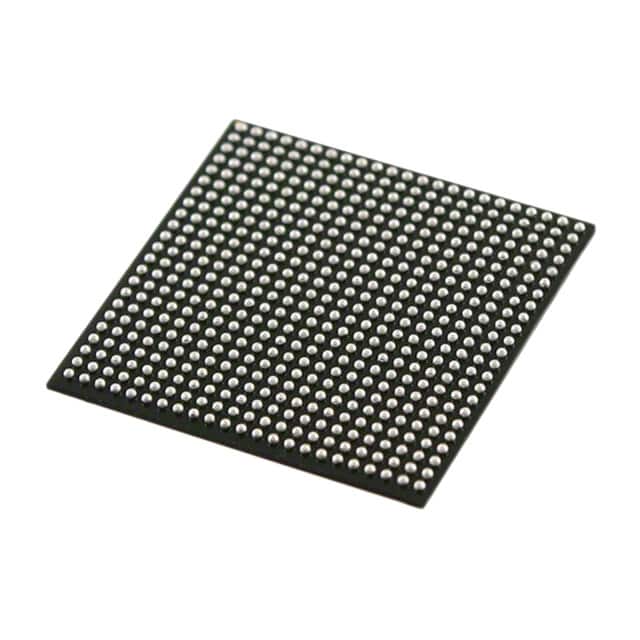
|

|
| Category | Embedded - FPGAs (Field Programmable Gate Array) | Embedded - FPGAs (Field Programmable Gate Array) |
| Manufacturer | Intel | Intel |
| Description | IC FPGA 290 I/O 484FBGA | IC FPGA 450 I/O 672FBGA |
| Package | 484-BGA | 672-BGA |
| Series | Cyclone® IV GX | Cyclone® II |
| Voltage - Supply | 1.16 V ~ 1.24 V | 1.15 V ~ 1.25 V |
| Operating Temperature | 0°C ~ 85°C (TJ) | 0°C ~ 85°C (TJ) |
| Mounting Type | Surface Mount | Surface Mount |
| Package / Case | 484-BGA | 672-BGA |
| Supplier Device Package | 484-FBGA (23x23) | 672-FBGA (27x27) |
| Number of I/O | 290 | 450 |
| Number of LABs/CLBs | 4620 | 3158 |
| Number of Logic Elements/Cells | 73920 | 50528 |
| Total RAM Bits | 4257792 | 594432 |
-
1. What is FPGA Field Programmable Gate Array?
FPGA (Field Programmable Gate Array) is a semiconductor device that allows users to change and configure the internal connection structure and logic units of the device through software means after manufacturing to complete the digital integrated circuit of the established design function. FPGA consists of programmable logic resources, programmable interconnection resources and programmable input and output resources, and is mainly used to implement sequential logic circuits with state machines as the main feature.
FPGA is a product further developed on the basis of programmable devices such as [PAL (Programmable Array Logic) and GAL (General Array Logic). As a semi-custom circuit in the field of application-specific integrated circuits (ASIC), it not only solves the shortcomings of customized circuits, but also overcomes the shortcomings of the limited number of gate circuits of the original programmable devices. FPGA realizes a unique method of digital circuits by providing programmable hardware blocks and interconnections that can be configured to perform various tasks, making hardware development more flexible. -
2. What is the hardware of FPGA?
FPGA (Field Programmable Gate Array) is a highly flexible programmable logic chip that users can program to achieve specific logic functions according to their needs. The main uses of FPGA include communications and networks, digital signal processing, automotive and aerospace, industrial automation, high-performance computing, smart Internet of Things and many other aspects.
-
3. Is FPGA a microcontroller?
FPGA is not a microcontroller. There are significant differences between FPGA and microcontroller in terms of function and use.
FPGA is a programmable integrated circuit, which is programmed through hardware description language and can customize the circuit according to needs. It is very suitable for application scenarios that require flexible configuration and high performance. In contrast, microcontrollers (MCUs) are integrated circuits with preset functions, usually used for single tasks and requiring efficient execution.
FPGAs and MCUs also differ in structure and application scenarios. FPGAs offer great flexibility and are suitable for complex applications that require rapid prototyping and reconfigurability. On the other hand, MCUs combine processor cores, memory, and various peripherals in a single chip, designed for specific tasks, and provide cost-effective solutions. -
4. Is FPGA analog or digital?
FPGAs are digital. FPGAs (field programmable gate arrays) are integrated chips that are mainly digital circuits, not analog. FPGAs are a type of programmable logic device that processes digital signals instead of analog signals.
FPGAs are a type of programmable logic device, a type of programmable logic device (PLD). It solves the shortcomings of traditional custom circuits, while also overcoming the shortcomings of the limited number of gate circuits in the original programmable devices. FPGA is a product that is further developed on the basis of traditional logic circuits and gate arrays such as PAL (Programmable Logic Array), GAL (General Array Logic), and CPLD (Complex Programmable Logic Device).
The design process of FPGA includes the use of computer-aided design, by drawing schematic diagrams that implement user requirements, editing Boolean equations, or using hardware description languages as design inputs. Then after a series of conversion programs, automatic layout and routing, and simulation processes, the FPGA data file is finally generated to initialize the FPGA device.
