
FMX-1106S vs SM74611KTTR
| Part Number |

|
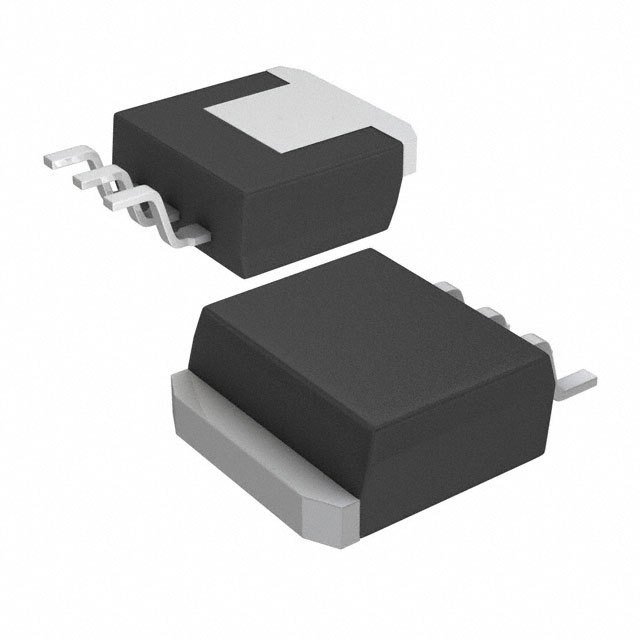
|
| Category | Diodes - Rectifiers - Single | Diodes - Rectifiers - Single |
| Manufacturer | Sanken | Texas Instruments |
| Description | DIODE GEN PURP 600V 10A TO220F | DIODE GEN PURP 30V 15A DDPAK |
| Package | Tape & Reel (TR) | Bulk |
| Series | - | - |
| Mounting Type | Through Hole | Surface Mount |
| Package / Case | TO-220-2 Full Pack | TO-263-3, D²Pak (2 Leads + Tab), TO-263AB |
| Supplier Device Package | TO-220F-2L | DDPAK/TO-263-3 |
| Diode Type | Standard | Standard |
| Current - Average Rectified (Io) | 10A | 15A |
| Voltage - Forward (Vf) (Max) @ If | 1.5 V @ 5 A | 26 mV @ 8 A |
| Current - Reverse Leakage @ Vr | 50 µA @ 600 V | 300 nA @ 28 V |
| Capacitance @ Vr, F | - | - |
| Voltage - DC Reverse (Vr) (Max) | 600 V | 30 V |
| Speed | Fast Recovery =< 500ns, > 200mA (Io) | Standard Recovery >500ns, > 200mA (Io) |
| Reverse Recovery Time (trr) | 30 ns | - |
| Operating Temperature - Junction | -40°C ~ 150°C | -40°C ~ 125°C |
-
1. What is a fast recovery diode?
Fast recovery diode is a special type of rectifier diode with a short reverse recovery time, suitable for high-frequency power supplies and switch mode power supplies (SMPS) applications, reducing switching losses.
-
2. Can a single rectifier diode be used for high-frequency applications?
Traditional silicon rectifier diodes are not suitable for high-frequency applications because their reverse recovery time is relatively long. For high-frequency applications, fast recovery diodes or Schottky diodes are typically used to reduce switching losses and improve efficiency.
-
3. How to identify the polarity of a single rectifier diode?
Rectifying diodes usually have polarity markings, with the positive (anode) of the diode being "+" and the negative (cathode) being "-". On the packaging of diodes, there is usually a circular mark on the cathode side indicating the direction of the diode.
-
4. How to determine if the rectifier diode is damaged?
Use a multimeter to measure the forward and reverse resistance of a diode. If the diode exhibits low impedance or high impedance in both directions, it may have been damaged. Under normal circumstances, there should be low impedance when conducting in the forward direction, and high impedance when conducting in the reverse direction.
