
FT313HP-R vs VNC2-32L1B-REEL
| Part Number |
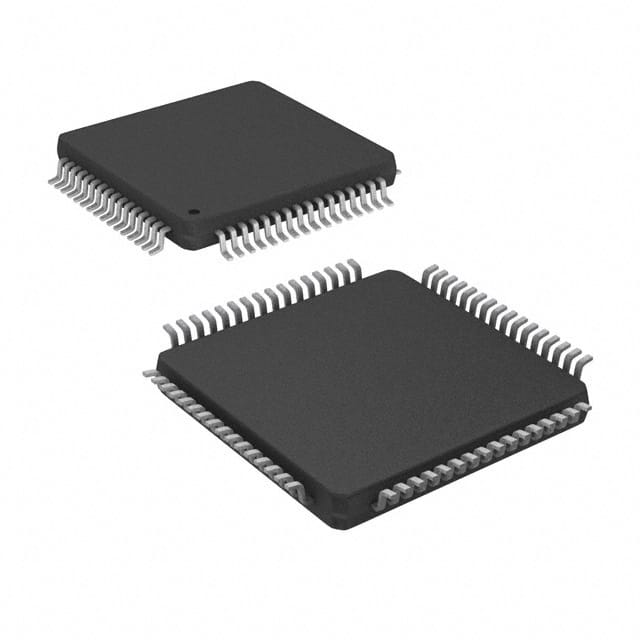
|

|
| Category | Interface - Controllers | Interface - Controllers |
| Manufacturer | FTDI, Future Technology Devices International Ltd | FTDI, Future Technology Devices International Ltd |
| Description | IC USB HS HOST CTRL TQFP-64 | IC USB HOST/DEVICE CTRL 32-LQFP |
| Package | Tube | -Reel® |
| Series | - | Vinculum-II |
| Interface | USB | SPI, UART |
| Voltage - Supply | 2.97V ~ 3.63V | 1.62V ~ 1.98V |
| Operating Temperature | -40°C ~ 85°C | -40°C ~ 85°C |
| Package / Case | 64-TQFP | 32-LQFP |
| Supplier Device Package | 64-TQFP (7x7) | 32-LQFP (7x7) |
| Current - Supply | 35mA | 25mA |
| Function | Controller | Controller |
| Protocol | USB | USB |
| Standards | USB 2.0 | USB 2.0 |
-
1. What types of interface ICs are there?
There are many types of interface ICs, including but not limited to: 1394 interface integrated circuits, CAN interface integrated circuits, LVDS interface integrated circuits, PCI interface ICs, RS-232 interface integrated circuits,
RS-422/RS-485 interface ICs, USB interface integrated circuits, sensor interfaces, serializers/deserializers (Serdes), telecommunications interface ICs, display interface integrated circuits, smart card interface ICs, etc. -
2. What are interface controls?
Interface controls refer to visual graphic "elements" placed on a form, such as buttons, file edit boxes, etc. These controls have the function of executing functions or triggering code to run and complete responses through "events". Interface controls contain properties, methods, and events:
Properties: Determine the appearance of visual controls, usually including the name, shape, display style, font color, etc. of the control. Any control has a specific set of properties, but some of them are common.
Methods: Control methods refer to class methods preset by the .NET Framework for controls. These methods are provided for programmers to set and handle the control's own characteristics.
Events: Events refer to the control's response to keyboard and mouse "operations". Any control has its own event collection. Once an event of a control occurs, it can cause the execution of the corresponding event process. The event object has its own specific name. The event process code is written by the programmer according to his own problem requirements, such as the button click event Click. -
3. What is the use of interface controllers?
The main purpose of interface controllers is to manage shared network access and provide the required reliability and security.
An interface controller is similar to an array controller in a disk array. It adds an intelligent layer between the tape drive and the storage area network (SAN). In this way, the interface controller manages shared network access, connects to Fibre Channel or SCSI tape drives, and ensures the safe transmission and storage of data. -
4. What is a control IC?
A control IC is an integrated circuit (IC) specially designed for control functions. Its main function is to receive input signals, process these signals, and output control signals to drive external devices or systems. Control ICs are widely used in various electronic devices and systems, such as home appliances, automotive electronics, industrial control, etc.
Working principle
The working principle of a control IC is based on its internal circuit design. It receives external input signals, processes them through internal logic, and outputs control signals. These signals can drive external devices such as motors, relays, and LEDs to achieve specific control functions. Control ICs usually have a high degree of integration and can implement complex control logic in a small volume, thereby meeting the needs of modern electronic devices for miniaturization and high reliability.
What are the three basic types of controllers?
Control ICs can be divided into many types according to their functions, the most common ones include:
Microcontroller (MCU): used to control various external devices and systems, with CPU, memory and input/output interface.
Driver IC: used to drive devices such as displays and motors, providing the necessary current and voltage.
Power management IC: responsible for power conversion and management to ensure stable power supply for equipment.
Interface IC: used to connect different devices and systems to achieve data transmission and communication.
