
HA3-2850-5 vs ICL7632CCJE
| Part Number |
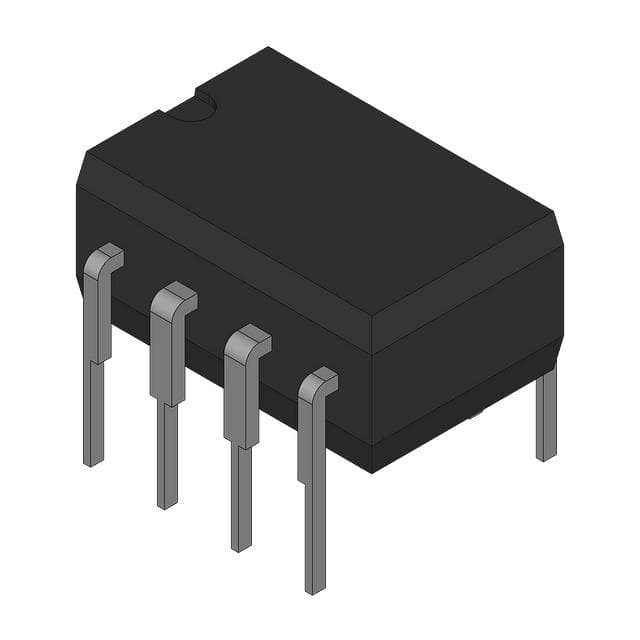
|
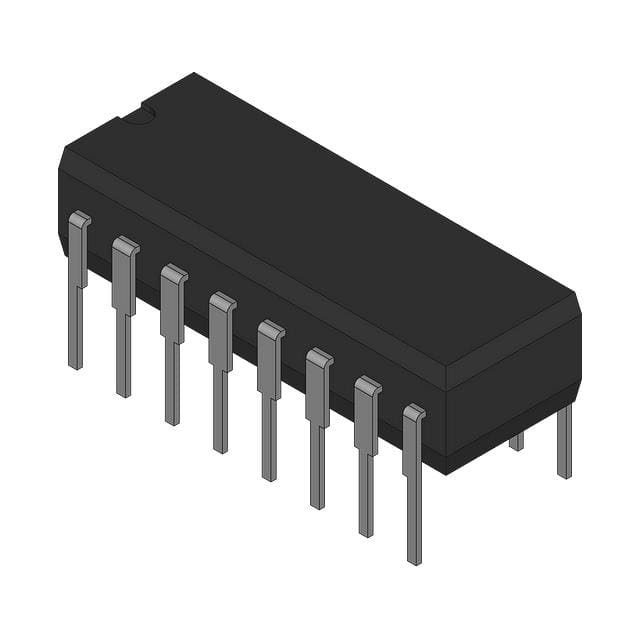
|
| Category | Linear - Amplifiers - Instrumentation, OP Amps, Buffer Amps | Linear - Amplifiers - Instrumentation, OP Amps, Buffer Amps |
| Manufacturer | Harris Corporation | Maxim Integrated |
| Description | IC GP OPAMP 1 CIRCUIT 8DIP | IC GP OPAMP 3 CIRCUIT 16CERDIP |
| Package | Bulk | Bulk |
| Series | - | - |
| Operating Temperature | 0°C ~ 70°C | 0°C ~ 70°C |
| Mounting Type | Through Hole | Through Hole |
| Package / Case | 8-DIP (0.300\", 7.62mm) | 16-CDIP (0.300\", 7.62mm) |
| Supplier Device Package | 8-PDIP | 16-CERDIP |
| Current - Supply | - | 1mA (x3 Channels) |
| Output Type | - | Rail-to-Rail |
| Number of Circuits | 1 | 3 |
| Voltage - Supply, Single/Dual (±) | - | 2V ~ 16V, ±1V ~ 8V |
| Current - Output / Channel | - | - |
| -3db Bandwidth | - | - |
| Amplifier Type | General Purpose | CMOS |
| Current - Input Bias | - | 1 pA |
| Voltage - Input Offset | - | 10 mV |
| Slew Rate | 340V/µs | 1.6V/µs |
| Gain Bandwidth Product | 470 MHz | 1.4 MHz |
-
1. How is the noise performance of instrumentation amplifiers optimized?
Select low-noise amplifiers in your design and use shielding, filters, and precise power management to minimize external noise. High-quality resistors should be used wherever possible and PCB layout should be optimized to reduce noise coupling.
-
2. What are the main application scenarios of Op Amps?
Operational amplifiers are widely used in signal conditioning, voltage follower, filter, comparator, integrator, differentiator, precision level shifter and other circuits, which are widely used in consumer electronics, industrial automation, and instrumentation.
-
3. How are operational amplifiers used in filter circuits?
Operational amplifiers can be used to build a variety of active filter circuits, including low-pass, high-pass, band-pass, and band-reject filters, which are commonly used for noise removal and signal conditioning in signal processing.
-
4. Why do buffer amplifiers have high input impedance and low output impedance?
A high input impedance ensures that no load is applied to the preamplifier circuitry, preventing signal degradation, while a low output impedance provides a large driving capacity, ensuring that the signal can be passed on to subsequent circuits without loss.
