
INA185A1IDRLT vs INA185A4IDRLT
| Part Number |

|
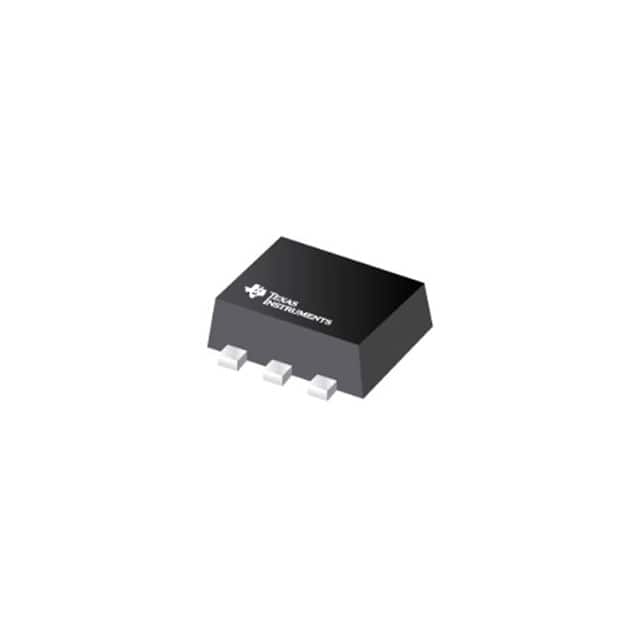
|
| Category | Linear - Amplifiers - Instrumentation, OP Amps, Buffer Amps | Linear - Amplifiers - Instrumentation, OP Amps, Buffer Amps |
| Manufacturer | Texas Instruments | Texas Instruments |
| Description | IC CURR SENSE 1 CIRCUIT SOT563 | IC CURR SENSE 1 CIRCUIT SOT563 |
| Package | -Reel® | Cut Tape (CT) |
| Series | - | - |
| Operating Temperature | -40°C ~ 125°C (TA) | -40°C ~ 125°C (TA) |
| Mounting Type | Surface Mount | Surface Mount |
| Package / Case | SOT-563, SOT-666 | SOT-563, SOT-666 |
| Supplier Device Package | SOT-563 | SOT-563 |
| Current - Supply | 200µA | 200µA |
| Output Type | Rail-to-Rail | Rail-to-Rail |
| Number of Circuits | 1 | 1 |
| Voltage - Supply, Single/Dual (±) | 2.7V ~ 5.5V | 2.7V ~ 5.5V |
| Current - Output / Channel | - | - |
| -3db Bandwidth | - | - |
| Amplifier Type | Current Sense | Current Sense |
| Current - Input Bias | 75 µA | 75 µA |
| Voltage - Input Offset | 100 µV | 25 µV |
| Slew Rate | 2V/µs | 2V/µs |
| Gain Bandwidth Product | 350 kHz | 105 kHz |
-
1. What is Common Mode Rejection Ratio (CMRR) and why is it important for instrumentation amplifiers?
CMRR indicates an instrumentation amplifier's ability to suppress common mode signals, with higher values being better. A high CMRR is especially important in noisy environments to ensure that the amplifier primarily amplifies differential signals and is not affected by common mode interference.
-
2. How is the noise performance of instrumentation amplifiers optimized?
Select low-noise amplifiers in your design and use shielding, filters, and precise power management to minimize external noise. High-quality resistors should be used wherever possible and PCB layout should be optimized to reduce noise coupling.
-
3. How to achieve high accuracy and low drift in instrumentation amplifiers?
Select an amplifier with low bias current, low offset voltage, and low noise, and reduce the effect of temperature drift on accuracy through a stable power supply and proper temperature compensation circuit design.
-
4. What is Slew Rate and how does it affect op amp performance?
Slew rate is the maximum rate of change of an operational amplifier's output voltage over time. Higher slew rates are good for fast-changing signals and can handle higher frequency inputs, while lower slew rates can cause signal distortion.
