
INA185A1IDRLT vs MCP6V77-E/MS
| Part Number |

|
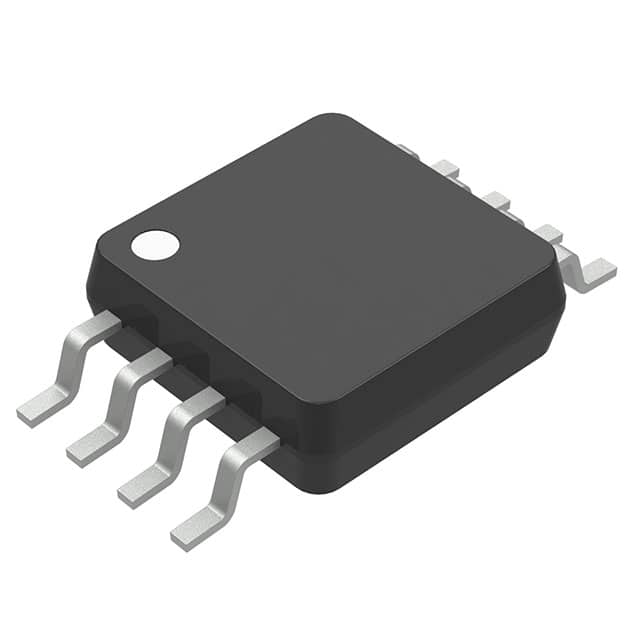
|
| Category | Linear - Amplifiers - Instrumentation, OP Amps, Buffer Amps | Linear - Amplifiers - Instrumentation, OP Amps, Buffer Amps |
| Manufacturer | Texas Instruments | Microchip Technology |
| Description | IC CURR SENSE 1 CIRCUIT SOT563 | IC OPAMP ZERO-DRIFT 2 CIRC 8MSOP |
| Package | -Reel® | Cut Tape (CT) |
| Series | - | Zero-Drift |
| Operating Temperature | -40°C ~ 125°C (TA) | -40°C ~ 125°C (TA) |
| Mounting Type | Surface Mount | Surface Mount |
| Package / Case | SOT-563, SOT-666 | 8-TSSOP, 8-MSOP (0.118\", 3.00mm Width) |
| Supplier Device Package | SOT-563 | 8-MSOP |
| Current - Supply | 200µA | 170µA (x2 Channels) |
| Output Type | Rail-to-Rail | Rail-to-Rail |
| Number of Circuits | 1 | 2 |
| Voltage - Supply, Single/Dual (±) | 2.7V ~ 5.5V | 2V ~ 5.5V |
| Current - Output / Channel | - | 26 mA |
| -3db Bandwidth | - | - |
| Amplifier Type | Current Sense | Zero-Drift |
| Current - Input Bias | 75 µA | 1 pA |
| Voltage - Input Offset | 100 µV | 25 µV |
| Slew Rate | 2V/µs | 1V/µs |
| Gain Bandwidth Product | 350 kHz | 2 MHz |
-
1. How to choose the right instrumentation amplifier?
The input common-mode voltage range, gain-bandwidth product, noise performance, power consumption, temperature drift, and common-mode rejection ratio (CMRR) should be considered when selecting an instrumentation amplifier to ensure that it meets the accuracy requirements of a particular application.
-
2. How to choose the right operational amplifier?
Parameters such as input offset voltage, input bias current, gain bandwidth product, slew rate, noise characteristics, supply voltage, and power consumption should be considered when selecting an operational amplifier to meet the needs of a particular application.
-
3. What is the effect of the op amp's out-of-range voltage on accuracy?
An out-of-phase voltage is the difference in voltage at which the output is not zero when the signal at the input is zero. A large out-of-phase voltage reduces the accuracy of a system, especially in high-gain applications, and selecting an op amp with a low out-of-phase voltage can improve accuracy.
-
4. Why do buffer amplifiers have high input impedance and low output impedance?
A high input impedance ensures that no load is applied to the preamplifier circuitry, preventing signal degradation, while a low output impedance provides a large driving capacity, ensuring that the signal can be passed on to subsequent circuits without loss.
