
LLL317R71H473MA01L vs 0805J6300331KXR
| Part Number |
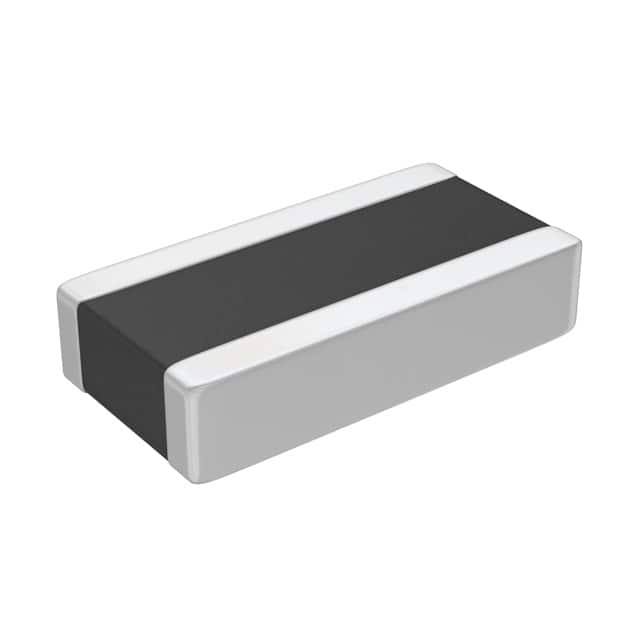
|
|
| Category | Ceramic Capacitors | Ceramic Capacitors |
| Manufacturer | Murata Electronics | Knowles Syfer |
| Description | CAP CER 0.047UF 50V X7R 0612 | CAP CER 330PF 630V X7R 0805 |
| Package | Cut Tape (CT) | 0805 (2012 Metric) |
| Series | LLL | - |
| Features | Low ESL (Reverse Geometry) | - |
| Operating Temperature | -55°C ~ 125°C | -55°C ~ 125°C |
| Mounting Type | Surface Mount, MLCC | Surface Mount, MLCC |
| Package / Case | 0612 (1632 Metric) | 0805 (2012 Metric) |
| Applications | Bypass, Decoupling | General Purpose |
| Tolerance | ±20% | ±10% |
| Temperature Coefficient | X7R | X7R (2R1) |
| Size / Dimension | 0.063" L x 0.126" W (1.60mm x 3.20mm) | 0.079" L x 0.049" W (2.00mm x 1.25mm) |
| Voltage - Rated | 50V | 630V |
| Lead Spacing | - | - |
| Thickness (Max) | 0.031\" (0.80mm) | 0.051" (1.30mm) |
| Ratings | - | - |
| Height - Seated (Max) | - | - |
| Capacitance | 0.047 µF | 330pF |
| Lead Style | - | - |
| Failure Rate | - | - |
-
1. What are ceramic capacitors used for?
Ceramic capacitors are widely used in various electronic devices, mainly for:
Coupling and decoupling: used in circuits to isolate DC signals while transmitting AC signals.
Filtering: remove noise from the power supply or smooth the output voltage.
Resonant circuit: such as oscillators in radio frequency (RF) circuits.
Temperature compensation: some types of ceramic capacitors have temperature coefficients that can be used to stabilize circuit performance.
Bypass: provide a low impedance path for high-frequency signals, thereby reducing the impact on other parts. -
2. Why do ceramic capacitors short?
Overvoltage: Exceeding the rated voltage may cause internal breakdown.
Mechanical damage: External impact or pressure.
Manufacturing defects: Problems with the internal structure. -
3. How do I know if my ceramic capacitor is bad?
Visual inspection: Check for cracks, bulges, or other physical damage.
Multimeter test: Measure the capacitance value to see if it is close to the nominal value, and check for shorts or opens. -
4. Can ceramic capacitors hold a charge?
Ceramic capacitors can store charge, but they have a higher leakage current than electrolytic capacitors, so they are less able to hold a charge.
