
LM5642XMTX/J7002464 vs LM5642XMTX/J7002464-TI
| Part Number |
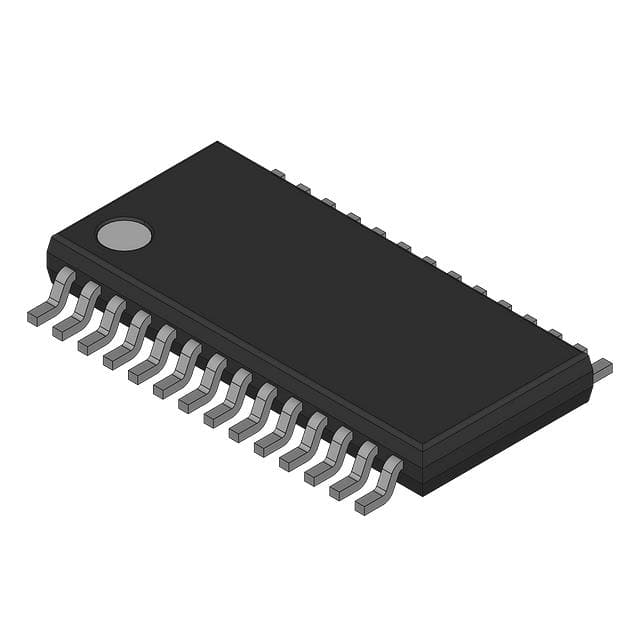
|

|
| Category | Clock/Timing - Programmable Timers and Oscillators | Clock/Timing - Programmable Timers and Oscillators |
| Manufacturer | National Semiconductor | Texas Instruments |
| Description | HIGH VOLTAGE, DUAL SYNCHRONOUS B | HIGH VOLTAGE, DUAL SYNCHRONOUS B |
| Package | Tube | Bulk |
| Series | - | - |
| Type | - | - |
| Voltage - Supply | - | - |
| Operating Temperature | - | - |
| Mounting Type | - | - |
| Package / Case | - | - |
| Supplier Device Package | - | - |
| Current - Supply | - | - |
| Frequency | - | - |
| Count | - | - |
-
1. Which component is usually used in oscillators and timers to control timing signals?
Crystal oscillators are usually used in oscillators and timers to control timing signals. Crystal oscillators provide a stable clock signal as a reference for timers. The stability of this signal determines the accuracy and resolution of the timer.
Crystal oscillators work by generating a continuous periodic signal. This signal is used as a reference for the timer, and the counter inside the timer uses this clock signal to count, thereby realizing the measurement and timing functions of time.
Different types of timers have different requirements in applications. For example, in STM32 microcontrollers, timers are divided into advanced timers, general timers, and basic timers according to their functions and complexity, which are suitable for different application scenarios. -
2. What is a program timer?
A program timer is a tool used to measure the execution time of a program. It provides a simple way to measure the execution time of a code block or an entire program, helping developers better understand the performance of the program and the potential for optimization.
In a computer processor, the program counter (PC) is a register that stores the address of the next instruction. When an instruction is executed, the processor needs to fetch the instruction from the memory according to the instruction address in the PC, and then the address of the PC is automatically increased by one or the address of the next instruction is given by the transfer pointer, and each instruction is executed in this way. -
3. What is the basic principle of an oscillator?
The basic principle of an oscillator is to convert DC power into AC power with a certain frequency. It consists of three parts: an amplifier circuit, a frequency selection circuit, and a positive feedback circuit. When the power is turned on, the amplifier circuit will be turned on, the current will start from nothing, the frequency selection circuit will select the required frequency and feed it back to the input end of the amplifier circuit, the amplifier circuit will amplify the input frequency amplitude and output the signal of the same frequency, and so on and so forth, forming a stable AC signal.
-
4. What is the difference between an oscillator and a clock?
The main difference between an oscillator and a clock is that they have different functions and uses. An oscillator is an electronic component that can convert DC power into AC power with a certain frequency, and autonomously generate periodic signals, and is often used in clock circuits, communications and other fields. The clock is used to generate and maintain stable and accurate time signals to ensure the synchronization and coordination of electronic equipment.
An oscillator is an electronic circuit or device whose function is to convert direct current (DC) energy into alternating current (AC) energy with a certain frequency, amplitude and waveform. It can spontaneously generate and maintain a stable oscillation state without external periodic signal drive, and output continuous and repetitive AC signals. Oscillators are widely used in many fields such as electronic engineering, communications, measurement, computer systems, clock synchronization, and control equipment.
