
LMK04808BISQ/NOPB vs LMK04806BISQ/NOPB
| Part Number |

|
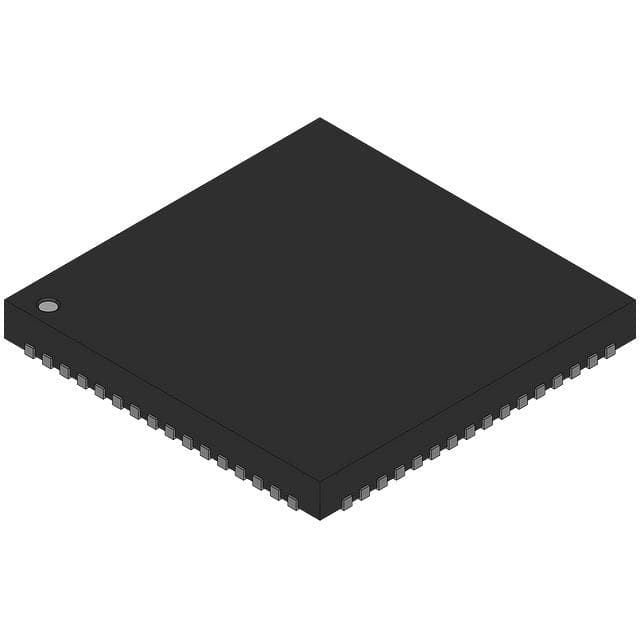
|
| Category | Clock/Timing - Clock Generators, PLLs, Frequency Synthesizers | Clock/Timing - Clock Generators, PLLs, Frequency Synthesizers |
| Manufacturer | Texas Instruments | National Semiconductor |
| Description | IC CLOCK DUAL PLL 64WQFN | LMK04806 LOW NOISE CLOCK JITTER |
| Package | Cut Tape (CT) | Bulk |
| Series | PLLatinum™ | PLLatinum™ |
| Type | Jitter Cleaner | Jitter Cleaner |
| Voltage - Supply | 3.15V ~ 3.45V | 3.15V ~ 3.45V |
| Operating Temperature | -40°C ~ 85°C | -40°C ~ 85°C |
| Mounting Type | Surface Mount | Surface Mount |
| Package / Case | 64-WFQFN Exposed Pad | 64-WFQFN Exposed Pad |
| Supplier Device Package | 64-WQFN (9x9) | 64-WQFN (9x9) |
| Output | LVCMOS, LVDS, LVPECL | LVCMOS, LVDS, LVPECL |
| Frequency - Max | 1.536GHz | 1.536GHz |
| Number of Circuits | 1 | 1 |
| Input | LVCMOS, LVDS, LVPECL | LVCMOS, LVDS, LVPECL |
| PLL | Yes | Yes |
| Ratio - Input:Output | 2:14 | 2:14 |
| Differential - Input:Output | Yes/Yes | Yes/Yes |
| Divider/Multiplier | Yes/No | Yes/No |
-
1. What is a PLL clock generator?
A PLL clock generator (Phase-Locked Loop Clock Generator) is an electronic circuit used to generate and adjust a clock signal. It automatically adjusts the frequency of the internal oscillator by comparing the phase difference between the input signal and the output signal of the internal oscillator so that the phase of the output signal is synchronized with the input signal. PLL clock generator is mainly used to generate high-speed and stable clock signal to provide timing reference for communication system.
The key components of PLL clock generator include:
Phase detector: compare the phase difference between input signal and feedback signal.
Charge pump: adjust the voltage to control the frequency of VCO according to the output of phase detector.
Loop filter: smooth the output of charge pump and reduce noise.
Voltage controlled oscillator (VCO): change the oscillation frequency according to the control voltage to generate output clock signal.
-
2. Why do clocks use PLL?
The reason why clocks use PLL is because PLL can provide a stable high-frequency clock signal to ensure the precise operation and synchronization of electronic systems. PLL (Phase Locked Loop) compares the phase difference between the input signal and the output signal generated by the voltage-controlled oscillator (VCO) and adjusts the frequency of the VCO so that the phase of the output signal is synchronized with the phase of the input signal. This synchronization process is achieved through a closed-loop feedback system, which ensures the stability and accuracy of the clock signal.
The main functions of PLL include:
Providing a stable high-frequency clock signal: PLL generates a stable high-frequency clock based on the reference clock provided by the oscillator to ensure stable circuit timing.
Frequency synthesis: PLL can multiply or divide the frequency of the input signal to generate a clock signal of the required frequency.
Phase control: By adjusting the phase of the output signal, it ensures synchronization with the input signal and reduces phase deviation.
In modern electronic systems, the role of clock signals is very important. It is not only used to synchronize the operation of various components and ensure that key time parameters are within the allowable range, but also regulates the connection speed of data transmission in communication systems. The application of PLL ensures the accuracy and stability of the clock signal and improves the performance and reliability of the entire system. -
3. What is the difference between PLL and oscillator?
The main difference between PLL and oscillator lies in their functions and features. PLL has the ability of phase locking and frequency tracking, which can provide higher frequency stability, especially in the presence of an external reference signal. Oscillators usually generate fixed-frequency signals and do not have these functions of PLL.
Specifically, oscillators are devices used to generate periodic signals. Common types include RC oscillators, LC oscillators, and crystal oscillators. RC oscillators have a simple structure and low cost, but poor frequency stability and accuracy; LC oscillators have good frequency stability, but are large in size and high in cost; crystal oscillators have extremely high frequency stability, but are expensive.
PLL is a feedback control circuit that can compare the output of the oscillator with a reference signal, generate a control voltage based on the phase difference, and thus adjust the frequency and phase of the oscillator to synchronize it with the reference signal. PLL can generate output signals with higher or lower frequencies than the reference signal, and is usually more complex to design and implement than oscillators, with higher power consumption and cost.
Whether to choose an oscillator or PLL depends on the specific application requirements. If a fixed frequency signal is required and cost and complexity are a concern, an oscillator is the appropriate choice. If precise frequency control and low phase noise are required and a stable reference signal is available in the system, a PLL is a better choice. -
4. What are the three types of frequency synthesizers?
There are three main types of frequency synthesizers: direct analog frequency synthesis, indirect frequency synthesis, and direct digital frequency synthesis.
Direct analog frequency synthesis: This method uses one or more different crystal oscillators as reference signal sources to directly generate many discrete frequency output signals through frequency multiplication, frequency division, mixing, etc. The advantages of direct analog frequency synthesis are high long-term and short-term frequency stability and fast frequency conversion speed, but it is difficult to debug and difficult to suppress spurious signals.
Indirect frequency synthesis: also known as phase-locked loop frequency synthesis technology (PLL), using one or several reference frequency sources, through harmonic generator mixing and frequency division, etc. to generate a large number of harmonics or combined frequencies, and then use a phase-locked loop to lock the frequency of the voltage-controlled oscillator to a certain harmonic or combined frequency. The advantages of indirect frequency synthesis are low cost and the ability to synthesize any frequency, but slow response, mainly used in civilian equipment.
Direct digital frequency synthesis: This method performs frequency synthesis based on the concept of phase, using digital sampling and storage technology, with the advantages of precise phase and frequency resolution, fast conversion time, etc. The key components of direct digital frequency synthesis include digital-to-analog converters, phase accumulators, and memories, etc., which store the required waveform version in digital format and create signals.
